














Register

NASA Begins Engine Tests on Experimental X-59

Supersonic research aircraft's powerplant fired up for the first time at Lockheed Martin's Skunk Works facility in Palmdale, California.

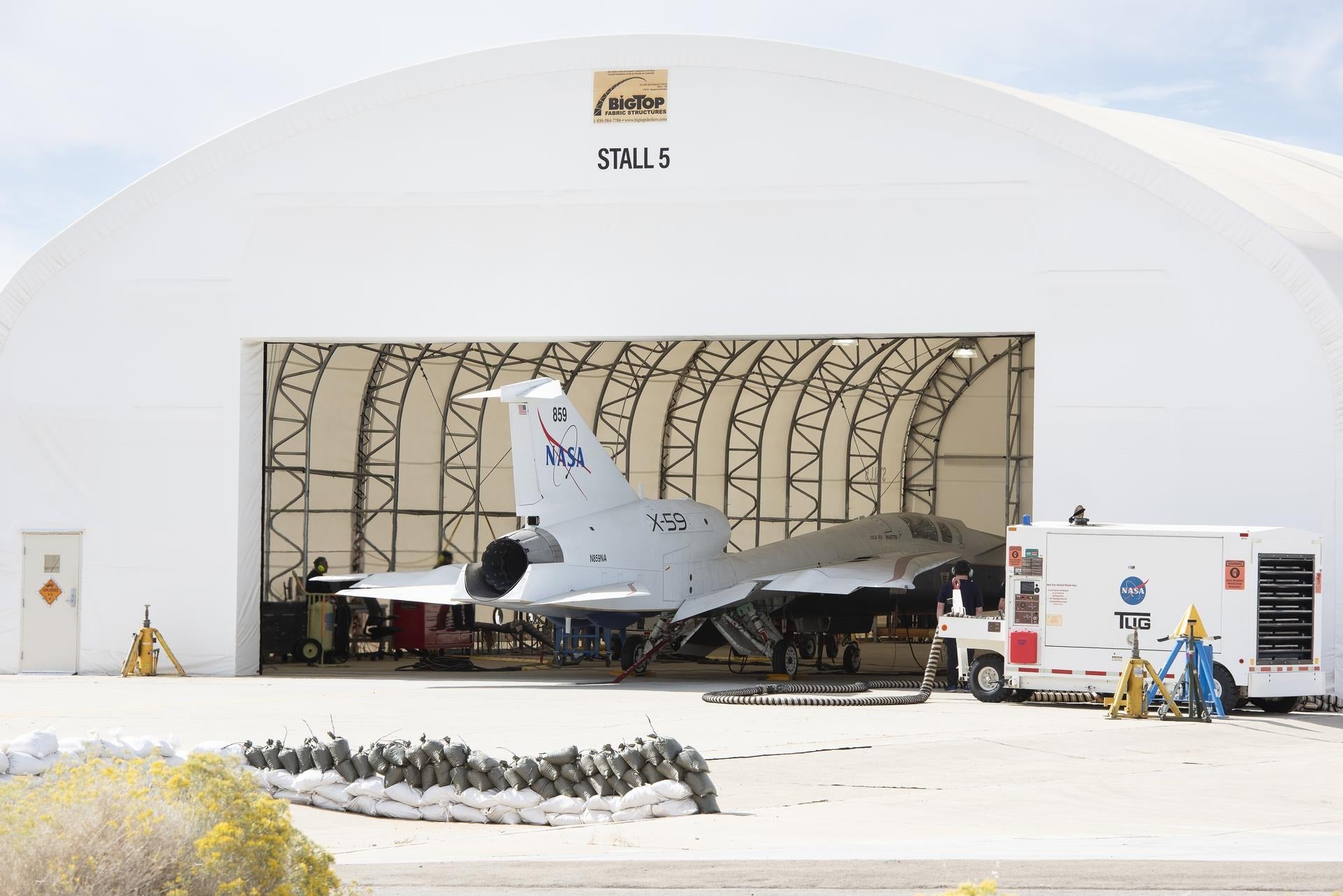
NASA’s X-59 quiet supersonic research aircraft sits in its run stall at Lockheed Martin’s Skunk Works facility in Palmdale, California. [Credit: NASA/Carla Thomas]
Gemini Sparkle

Key Takeaways:

  • NASA's experimental X-59 Quiet SuperSonic Technology (QueSST) aircraft successfully fired up its engine for the first time, marking the launch of system integration testing.
  • The X-59 project aims to gather data to help shape future regulations for commercial supersonic flight over land, overcoming the issue of loud sonic booms.
  • Designed to fly at Mach 1.4 (925 mph) with a modified F414-GE-100 engine uniquely placed for quieter operation, the aircraft is undergoing phased testing leading up to its first flight.
See a mistake? Contact us.

NASA has fired up the engine of its experimental X-59 supersonic aircraft for the first time, marking the launch of testing to ensure the powerplant and systems work together.

The one-of-a-kind X-59 Quiet SuperSonic Technology (QueSST) aircraft is part of NASA’s Low Boom Flight Demonstration project aimed at collecting data to help shape regulations for possible future commercial supersonic flight over land 50 years after it was banned by the FAA due to the noise of the sonic boom.


Ready to Sell Your Aircraft?

List your airplane on AircraftForSale.com and reach qualified buyers.

List Your Aircraft
AircraftForSale Logo | FLYING Logo
Pilot in aircraft
Sign-up for newsletters & special offers!

Get the latest stories & special offers delivered directly to your inbox.

SUBSCRIBE
