
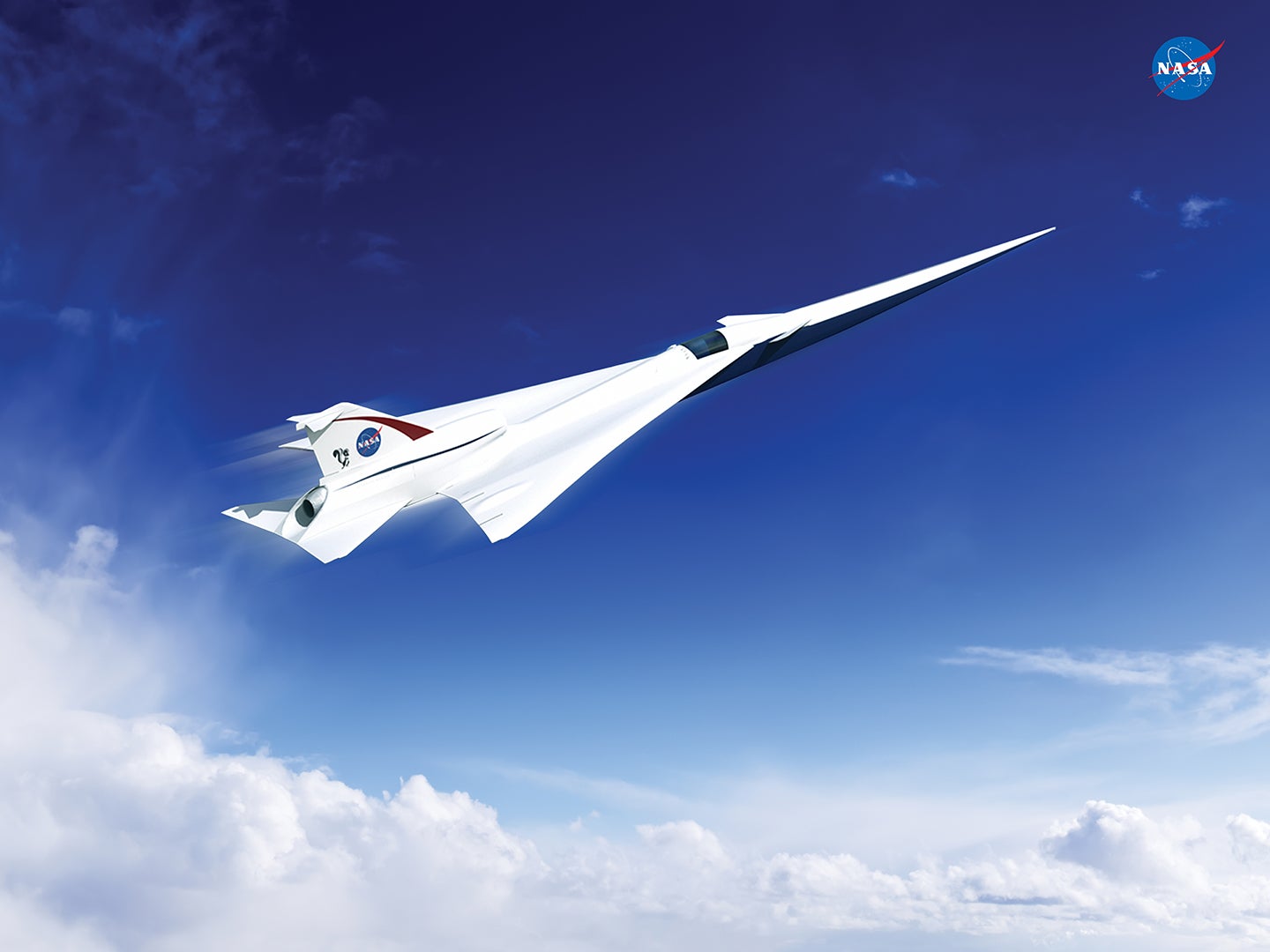
Watch out, Aerion. There may be some competition in the development of supersonic passenger airplanes in the not so distant future. NASA announced yesterday that it has awarded a $20 million contract to Lockheed Martin for the primary design of a commercially viable supersonic flight demonstrator aircraft. The ultimate goal is to produce a supersonic aircraft with a “low boom,” using what NASA has termed Quiet Supersonic Technology (QueSST). The FAA currently prohibits supersonic civilian flights over land due to the extreme noise produced by supersonic booms.
NASA Announces Supersonic Passenger Aircraft Project

Key Takeaways:
- NASA has awarded Lockheed Martin a $20 million contract for the preliminary design of a commercially viable supersonic flight demonstrator aircraft.
- The core objective is to develop "Quiet Supersonic Technology" (QueSST) to achieve "low boom" supersonic flight, addressing current FAA prohibitions on supersonic civilian flights over land due to noise.
- This project is the first in a series of X-planes under NASA's New Aviation Horizons initiative, aiming to make future flight greener, safer, quieter, and faster.
Key takeaways sponsored by Aviator Pro | Start Your Training ->
See a mistake? Contact us.