















Military Moves One Step Closer to Self-Flying C-130J

Merlin Labs completes preliminary design review for the integration of its autonomy system on the tactical and transport aircraft.

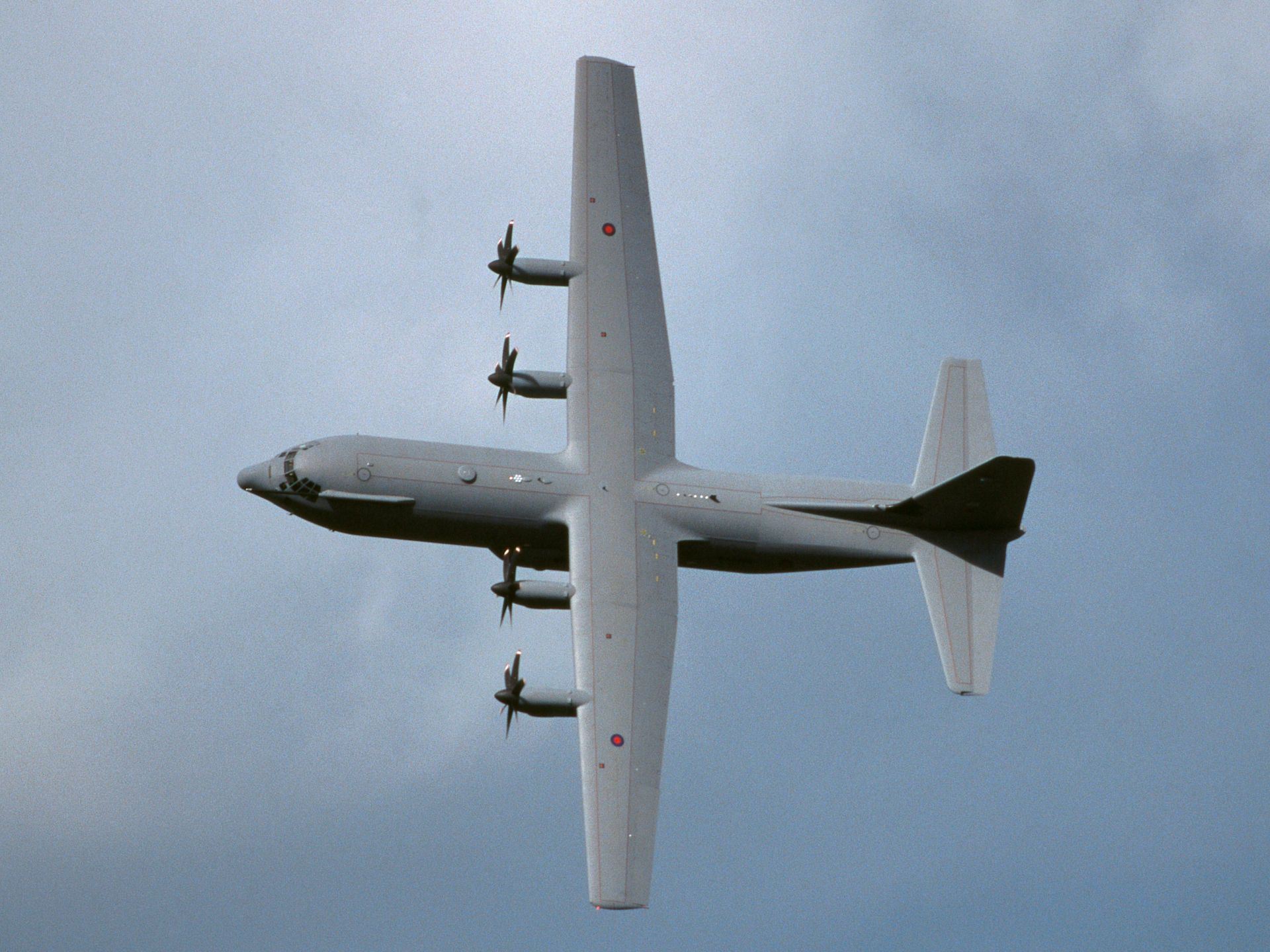
Merlin Labs C-130J Super Hercules military transport airlift aircraft
Merlin Labs aims to integrate its autonomy system on the Super Hercules ahead of targeted flight demonstrations later this year. [Credit: Merlin Labs]
Gemini Sparkle

Key Takeaways:

  • Merlin Labs has completed the Preliminary Design Review (PDR) for its autonomous flight system on the C-130J Super Hercules for USSOCOM, a critical step towards enabling the aircraft to fly with zero human input.
  • The PDR validates the system's integration and design, clearing the path for critical design review, ground testing, and initial flight demonstrations targeted for later this year, supported by a $15.9 million task order from USSOCOM.
  • This C-130J program is foundational to Merlin's broader strategy to achieve certification-grade autonomy and integrate its AI-powered flight system across various aircraft, including military tankers and commercial freighters, for diverse applications.
See a mistake? Contact us.

The U.S. Special Operations Command (USSOCOM) is one step closer to flying the C-130J Super Hercules—one of its workhorse tactical airlift and transport aircraft—with zero human input.

Boston-based Merlin Labs on Thursday announced the completion of preliminary design review (PDR) for its C-130J Super Hercules autonomy program with USSOCOM, under which it is working toward demonstration flights with a modified Hercules. 

Merlin said the PDR validates the integration of its Merlin Pilot autonomous flight system on the C-130J, clearing the way for an “immediate transition” to the critical design stage—an essential step in validating the system’s maturity before full integration, ground testing, and flight demonstrations begin.

Timothy Burns, chief technology officer of Merlin, told Aviation Week that a critical design review (CDR) is expected within the next few months, with first flight targeted for later this year.

USSOCOM paid Merlin for the PDR and upcoming CDR through a $15.9 million task order awarded in August 2024, per government spending records.

What It Means

Per Merlin CEO Matt George, the PDR in defense acquisition “separates a structured, standards-driven aerospace development program from laboratory demonstrations.”

George in a blog post wrote that Merlin’s preliminary design and approach to airworthiness now “meet all system requirements within acceptable risk constraints” proscribed by the military.

“Autonomy without certification is a science project,” he wrote. “With certification, we believe it is a scalable, defensible business.”

Merlin said the PDR moves it closer to “assured, certification-grade autonomy”—the level of reliability required before military operators will trust Merlin Pilot on the C-130J in real-world missions.

The milestone falls under Merlin’s five-year, $105 million contract with USSOCOM, awarded in June 2024. The contract supports development of a production-ready “reduced aircrew capability” for Special Operations Forces (SOF) C-130Js, ultimately requiring operations with no human intervention from takeoff to touchdown. But that does not mean a pilot won’t be onboard.

“It’s not like, hey, get to no pilots, or, hey, go to single pilot,” Timothy Burns, chief technology officer of Merlin, told Aviation Week. “And so the approach is to get the infrastructure into the airplane that allows us to chip away at things.”

For example, Burns said, the system could save a pilot the trouble of flipping endless switches in the cockpit to manage fuel while replenishing Army aircraft.

The system uses an AI-powered autonomy stack fed by sensors and cameras. That external data is fed into Pilot’s flight control computers, telling the aircraft exactly where it is and where it’s going. It can communicate with air traffic control through voice and natural language processing algorithms capable of understanding and speaking in various accents and voice types. A safety pilot can intervene should anything be lost in translation.

The path to flight demonstration faces some technical challenges. Burns, speaking to Aviation Week, said the C-130J requires hardware modifications to its flight control system before Pilot can fully take the reins. He added that the company had planned to initially demonstrate the system on a Special Operations AC-130J Ghostrider—a heavily modified Hercules—that is no longer available.

Additionally, Burns said the process of securing airworthiness will likely take a “couple of months.”

Building the Flywheel

Merlin said each milestone with the C-130J will feed what it calls a “data flywheel.” In other words, its progress will translate across other projects.

The USSOCOM contract, for example, leaves the door open for Merlin to integrate Pilot across the broader SOF fixed-wing fleet.

“Our market is every aircraft that could fly if the old constraints were removed—and new aircraft categories that can only be built once autonomy is the foundation rather than an afterthought,” George wrote.

The C-130J program underpins a broader strategy for Merlin. The same autonomy software flying a Hercules could eventually power tankers, cargo turboprops, and commercial freighters. The U.S. Air Force in late 2024, for example, tapped Merlin to enable extended-crew and fully uncrewed tanker operations with the KC-135 under a 19-month contract, FLYING exclusively reported.

George at the time said he believed Pilot could be integrated across the branch’s entire tanker fleet.

The Air Force in late 2024 accepted Merlin’s airworthiness plan for KC-135 testing, allowing it to begin integrating Pilot ahead of design review and testing.

Simultaneously, Merlin is working with GE Aerospace to develop an “autonomy core”—a certifiable autonomy and pilot-assist platform designed to reduce crews—and plans to install Pilot on Northrop Grumman’s Beacon testbed.

George said the company is further exploring applications such as aerial firefighting, medical evacuation, disaster response, and remote cargo delivery. It is working with the FAA toward Part 25 authorization that would allow customers to fly people or cargo with Pilot-equipped aircraft. A supplemental type certification would allow it to modify Part 23 aircraft.

Jack Daleo

Jack is a staff writer covering advanced air mobility, including everything from drones to unmanned aircraft systems to space travel—and a whole lot more. He spent close to two years reporting on drone delivery for FreightWaves, covering the biggest news and developments in the space and connecting with industry executives and experts. Jack is also a basketball aficionado, a frequent traveler and a lover of all things logistics.

Ready to Sell Your Aircraft?

List your airplane on AircraftForSale.com and reach qualified buyers.

List Your Aircraft
AircraftForSale Logo | FLYING Logo
Pilot in aircraft
Sign-up for newsletters & special offers!

Get the latest stories & special offers delivered directly to your inbox.

SUBSCRIBE

