












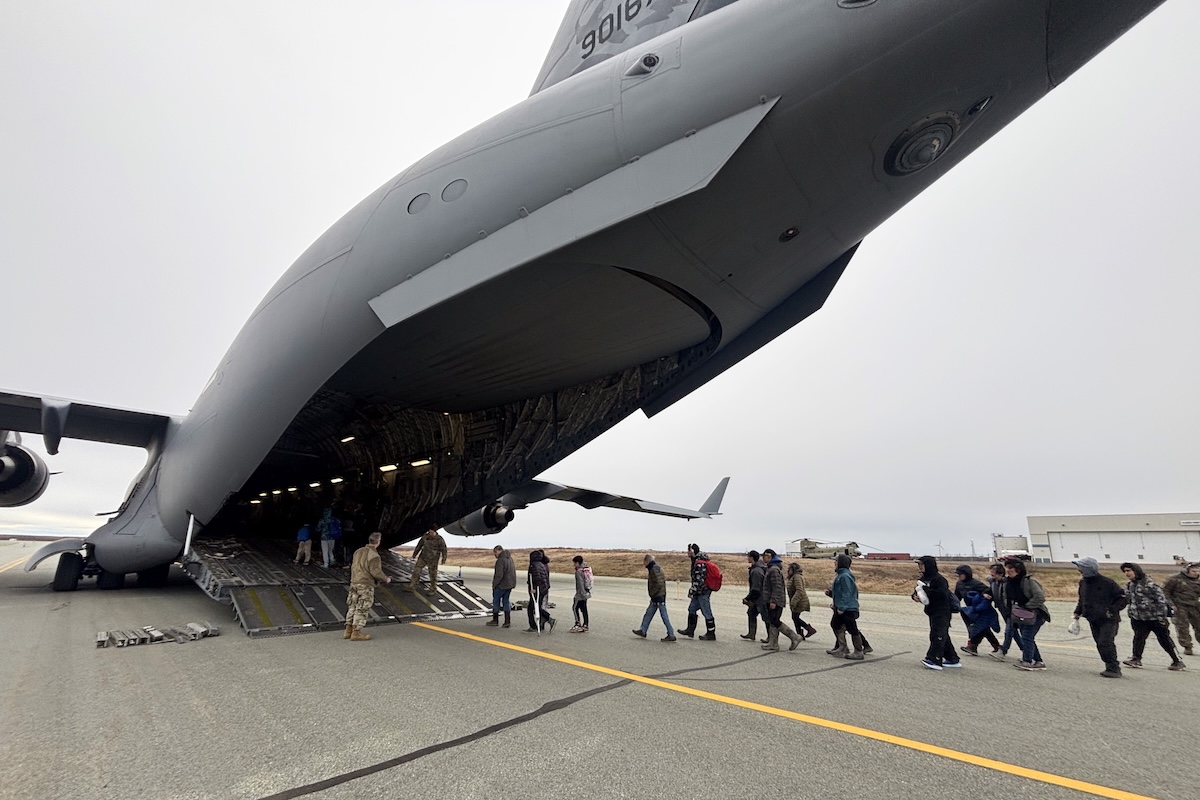


What has been called one of the “most significant airlifts in Alaskan history” is underway as military helicopters and C-17s are transporting hundreds of people from coastal villages left devastated by a powerful storm that swept through the area on October 12.
The storm, fueled by the remnants of Typhoon Halong, washed away homes in low-lying areas, some of them with people still inside. At least one person was killed, and two others are missing.

State officials say entire communities along the Yukon-Kuskokwim Delta have been wiped out as the communities of Kipnuk and Kwigillingok near the Bering Sea experienced a water surge of more than six feet above normal high tide, and hurricane-force winds damaged the buildings that didn’t float away.
The State Emergency Operations Center (SEOC), Alaska Organized Militia (AKOM), and multiple state and volunteer agencies continue coordinated response operations following the severe storm.
Mark Roberts, SEOC incident commander, said the priority has shifted from life safety to life sustainment and shelter operations.
“We’ve confirmed that a number of homes cannot be reoccupied, even with emergency repairs, and that infrastructure has been compromised in several communities,” Roberts said. “Our focus now is making sure people are safe, warm, and cared for while we work with our partners to restore essential services.”
Sheltering operations have expanded beyond the regional hub of Bethel, where capacity is reaching its limit. Hundreds of survivors are being relocated to safe, warm shelters outside the region in coordination with local communities, tribal organizations, the Yukon-Kuskokwim Health Corporation, and the Association of Village Council Presidents.
The combination of the remoteness of the area and the scale of destruction has made it difficult to get resources to the area, despite the best efforts of Alaska State Troopers, the Alaska Air National Guard, the Alaska Army National Guard, and the U.S. Coast Guard, who have been on scene to rescue individuals and restore basic services.

Individuals who were forced to flee their homes have been sleeping in local schools, some without functioning toilets and with limited water and electricity, according to Alaska Public Radio.
The military has been airlifting villagers to shelter hundreds of miles away. According to the state Department of Military and Veterans Affairs, 300 evacuees have been transported to a temporary shelter in the Alaska Airlines Center sports and events complex in Anchorage, some 500 miles away from the coast.
On Thursday, officials noted that shelter space in the armory in Bethel, Alaska, which is closer to the coast, had reached capacity by October 14, with reports of the food supply nearing depletion.
However, Jeremy Zidek, a spokesperson for the state emergency management office, said the shelter at the armory was transitional, and people who arrived there from impacted areas would be processed and stay overnight if needed before going on to Anchorage, according to The Associated Press.
The remoteness of the area, which traditionally can only be reached in the fall and winter by air or boat, and the scale of the destruction are creating logistical challenges for getting resources in place. Damage assessments are also slow going because of the muck and damage left behind by the flooding. According to emergency management officials, basic utilities such as water and sewer are inoperable, and authorities are concerned the villages will not be habitable by winter.


