















MagniX Building Electric Aircraft Engines for GA Airframes

New MagniAIR engine is aimed at models used for recreational flying and training.

MagniX Van's RV-10 electrified
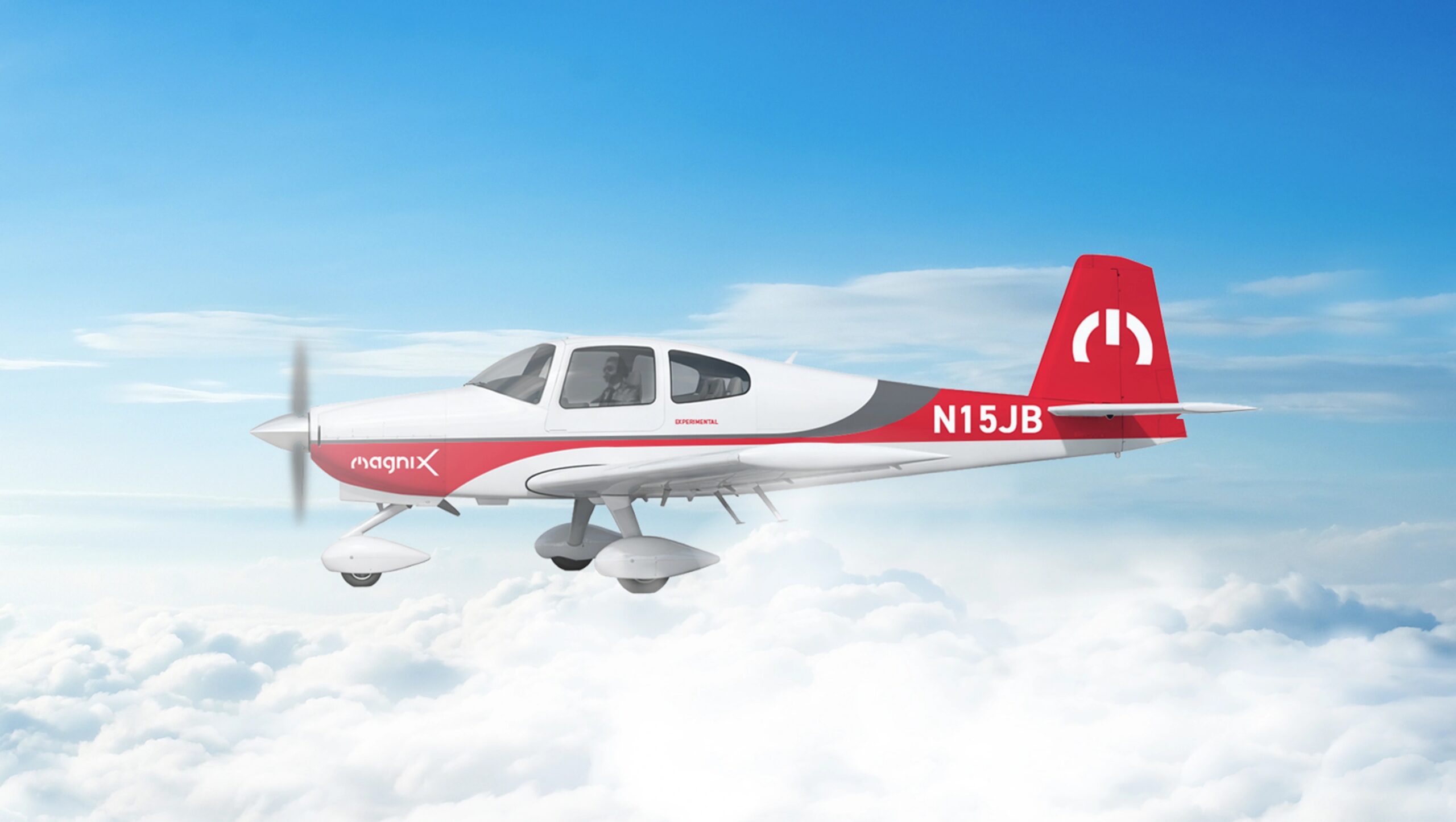
A rendering of a Van’s RV-10 electrified with MagniX’s new MagniAIR engine. [Credit: MagniX]
Gemini Sparkle

Key Takeaways:

  • MagniX has unveiled MagniAIR, its first electric aircraft engine specifically for the general aviation (GA) market, designed to replace 120-to-175-kilowatt piston engines.
  • Available for purchase in 2027, MagniAIR aims to lower operating costs for GA activities like flight training and recreational flying by reducing fuel use and maintenance.
  • The engine boasts a class-leading power-to-weight ratio and is integrated into a Van's RV-10 kit plane for a demonstration flight later this year.
  • MagniX is a leading developer in electric aircraft engines, with active FAA certification projects, contributing to the nascent but growing electric propulsion market.
See a mistake? Contact us.

Washington state-based MagniX has unveiled its latest electric aircraft engine, the company’s first designed specifically for general aviation (GA).

In a statement Tuesday, Reed Macdonald, CEO of MagniX, said the firm’s zero-emission, air-cooled MagniAIR engine “can be used for any application currently powered by a 120-to-175-kilowatt piston engine.” That includes flight training, recreational flying, and other GA activities. It will be available for purchase in 2027, the company said.


MagniX said the electric engine could even be installed on light-sport aircraft (LSA) under the FAA’s updated Modernization of Special Airworthiness Certification (MOSAIC) rule, which permits alternative power sources that were not allowed previously. It will also have “adjacencies” for defense applications and electric vertical takeoff and landing (eVTOL) models.

MagniX said it is integrating MagniAIR as part of a full powertrain on a Van’s RV-10 kit plane. The RV-20 is scheduled to fly later this year and is on display this week at Sun ‘n Fun in Lakeland, Florida.

Per the company, MagniAIR offers a “class-leading power-to-weight” ratio, weighing only 55 kilograms but producing 175 kilowatts of power. The company’s full powertrain comprises electric engines, power electronics, and its proprietary Samson battery packs. It is designed to lower operating costs by decreasing fuel use and maintenance requirements.

“Many training aircraft in use today were manufactured in the 1970s,” said Ben Loxton, vice president of new product development at MagniX. “Fuel prices and maintenance costs are causing the cost of flight training to rise at the same time as the industry faces an acute shortage of pilots.”

Amid geopolitical unrest in the Middle East, the price of a gallon of jet fuel is more volatile than it has been in years. MagniX said its goal in offering electric engines is “breaking down barriers to airplane ownership and popularizing recreational flying.”

In July, the company partnered with Robinson Helicopter to create a battery-electric R66 demonstrator. It also retrofitted a De Havilland Dash 7 as a hybrid-electric demonstrator for NASA’s Electrified Powertrain Flight Demonstration project. In early 2025, MagniX and DeltaHawk Engines were picked to develop a hybrid-electric powerplant solution for the U.S. Air Force.

Electric Aircraft Engines Power On

In addition to MagniAIR, MagniX in May 2025 launched its Helistorm engine for electric helicopters. The FAA in 2021 issued special conditions for the company’s Magni350 and Magni650—designed for fixed-wing models—but has not yet granted them Part 33 certification.

Even without certification, though, MagniX is still a leading developer of electric aircraft engines.

After awarding its first special condition for electric engines to the Magni350 and Magni650, the FAA took five years to do the same for ZeroAvia’s 600-kilowatt electric engine. It received airworthiness criteria earlier this month. MagniX and ZeroAvia are the only electric aircraft engine companies with active FAA certification projects.

Across the Atlantic, things are moving a little faster. The European Union Aviation Safety Agency (EASA) in 2020 issued the world’s first type certification for an electric aircraft engine, Pipistrel’s E-811. The E-811 powers Pipistrel’s Velis Electro, which is already in use at flight schools across the U.S.

EASA in 2025 issued a second type certification for electric aircraft engine technology, authorizing Safran to install its ENGINeUS 100 on Diamond Aircraft’s eDA40 before moving to larger models.

The E-811 and ENGINeUS are the only electric aircraft engines with full certification from an aviation regulator. But with the FAA beginning to lay the groundwork for widespread introduction of electric propulsion and other advanced air mobility (AAM) technologies, they may just be the first.

Jack Daleo

Jack is a staff writer covering advanced air mobility, including everything from drones to unmanned aircraft systems to space travel—and a whole lot more. He spent close to two years reporting on drone delivery for FreightWaves, covering the biggest news and developments in the space and connecting with industry executives and experts. Jack is also a basketball aficionado, a frequent traveler and a lover of all things logistics.

Ready to Sell Your Aircraft?

List your airplane on AircraftForSale.com and reach qualified buyers.

List Your Aircraft
AircraftForSale Logo | FLYING Logo
Pilot in aircraft
Sign-up for newsletters & special offers!

Get the latest stories & special offers delivered directly to your inbox.

SUBSCRIBE
