
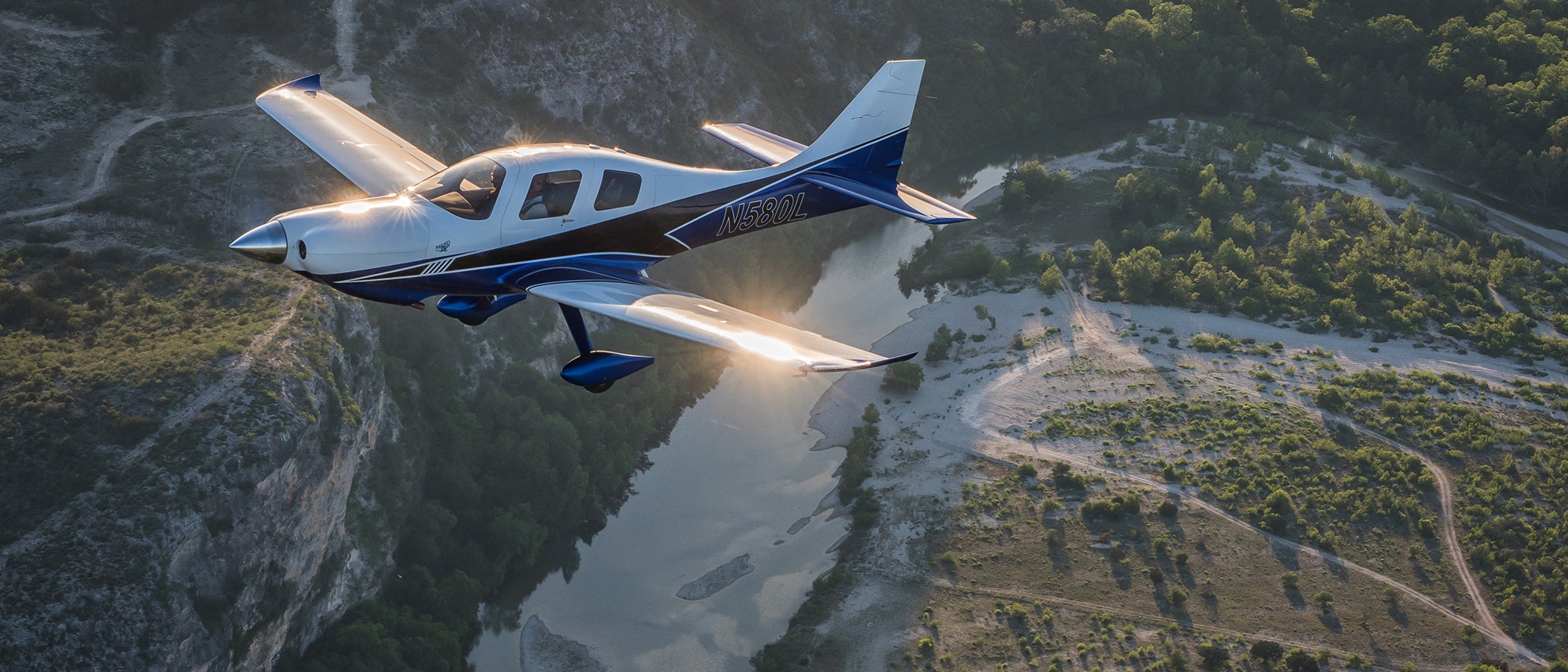
Since Cirrus first certified the SR20 nearly two decades ago, the company has grown to become by far the most productive single-engine piston manufacturer in the world, with its sleek composite airplanes known for good speed, comfort, advanced avionics and the BRS full-airframe parachute. Many manufacturers have tried and failed in the hunt for a piece of Cirrus’ market share. The latest contender, Lancair, with its new Mako, hopes to take not just a little nibble — but a shark bite — at Cirrus. Like the Cirrus and Columbia/Cessna TTx, which was recently taken out of production, the Mako is a four-seat composite low wing with large windows and a stellar glass avionics suite. But, being in the Experimental category, the Mako is a completely different animal. Unlike its certified competitors, the Mako provides nearly limitless options, allowing customers to truly customize their airplanes. And this airplane has some terrific features that I had never experienced before. Lancair’s airplanes have become known as the Ferraris of the Experimental market. The company’s founder, Lance Neibauer, had the philosophy that airplanes weren’t just about performance. They also had to be beautiful. And most pilots agree that Neibauer designed high-performance works of art. It all began with a company called Neico Aviation in the early 1980s in Gardena, California, where Neibauer introduced the Lancair 200. He soon moved the company to Santa Paula, where it remained for nearly a decade and started offering an accelerated kit-manufacturing process through a fast-build option, a program that several companies have adopted to minimize the work for the customer while complying with the 51 percent rule for Experimental aircraft. In 1991, the company began producing parts in Cebu in the Philippines and moved its headquarters to Redmond, Oregon, where Lancair International was founded. Neibauer sold the company in 2003, but Lancair continued to thrive, and so far, more than 2,100 of its airplane kits have been sold. In 2010, Lancair launched the Evolution turboprop. The smaller airplanes took a back seat, and eventually the company split into two entities. Lancair International was put up for sale in 2016. A few months later, a father and son from Uvalde, Texas, Mark and Conrad Huffstutler, bought the company.
We Fly: The Lancair Turbo Mako

Key Takeaways:
- The Lancair Mako is a new, highly customizable Experimental aircraft positioned to challenge the certified single-engine piston market, offering superior speed (up to 330 ktas) and advanced avionics.
- Under new ownership by the Huffstutler family, Lancair International has been revitalized, moving its operations to Uvalde, Texas, and launching the Mako as its flagship offering.
- The Mako features an innovative design, including an automatic retractable nose gear, a customizable glass cockpit with voice control, and extensive personalization options for builders, with a completed cost significantly lower than comparable certified aircraft.
Key takeaways sponsored by Aviator Pro | Start Your Training ->
See a mistake? Contact us.