IFR Magazine

In the Face of the Feds

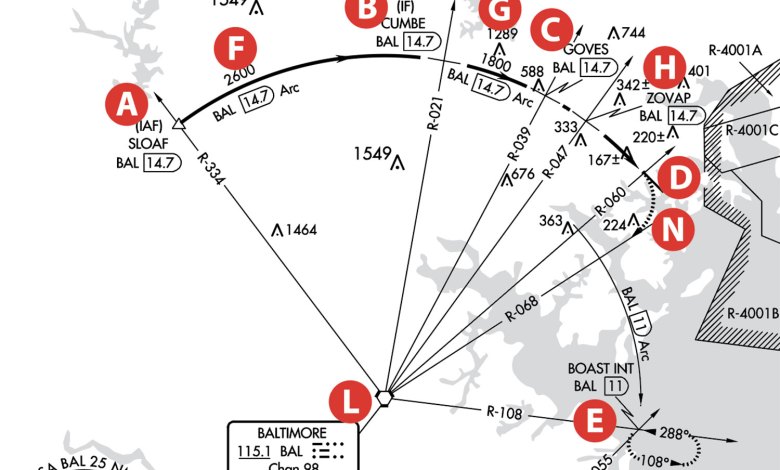
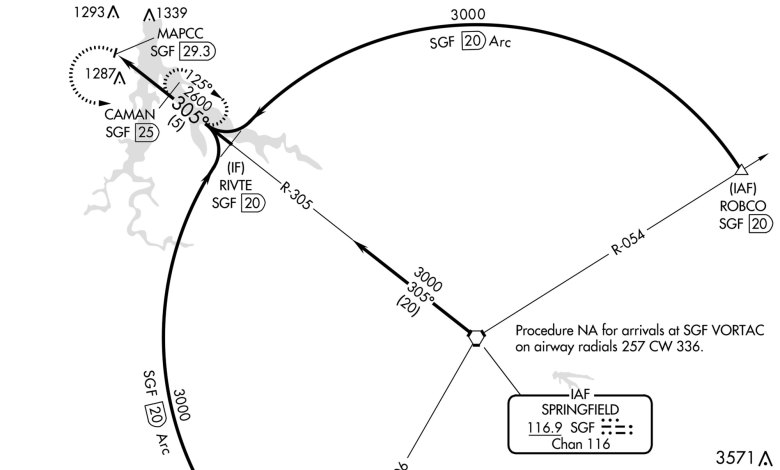
Feedback on our sim challenges has been masochistic appreciation of nasty stepdowns and harsh tailwinds. This time well build on that by doing stepdowns with a twist-literally. One of our approaches is a head-scratching DME arc to the missed approach at Martin State Airport (KMTN). Its a constantly changing final approach course from the days before cool RNP. And its available to anyone with a real VOR and DME … or maybe even GPS.

Read More »

Non-Precision, NA?

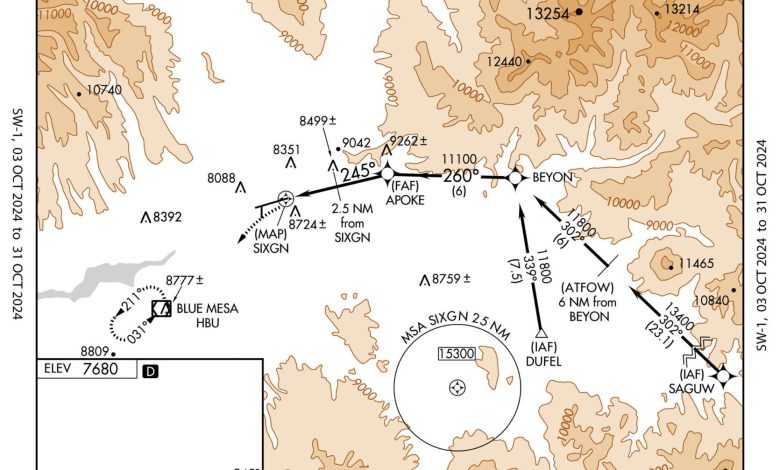
Given a choice, chances are a pilot will pick a vertically guided approach over a non-precision approach. Theyre easier to fly and the minimums are almost always lower. From a design perspective they also afford stricter obstacle clearance assurances. Whats not to love? Thats probably what the thought process was like that nearly led to a significant portion of non-precision approaches being cancelled or severely restricted in late 2017. …

Read More »

Briefing: May 2018

Changes Follow Fatal Helicopter AccidentBoth the FAA and NTSB called for change after five people died in a helicopter accident in New York in March. They were flying in a Eurocopter AS350 with the doors off, a popular option for sightseeing flights, and were wearing special harnesses that were difficult to release. The helicopter lost power, and the pilot made an emergency landing on the East River. The aircraft then rolled over and sank. Only the pilot, who was wearing a different kind of harness, was able to escape. The FAA prohibited doors-off flights unless passengers have quick-release harnesses. The NTSB called on the FAA to prohibit commercial flights of all kinds that secure passengers without quick-release mechanisms.

Read More »

Single-Pilot Airliners

Remember when complex transport-category aircraft had a flight engineer (FE) to manage systems? I imagine there was quite an uproar when automation progressed to the point where the FE became unnecessary and airliners were certified for two-person crews.

Read More »

Readback May 2018

I was able to pull the ODP data but not the SID data, but I can give a fairly good guess as to whats going on. On the ODP, the controlling obstacle is a 2729-foot tower a few miles to the east of the runway. The initial climb is extended a bit more than usual in order to allow for a standard climb gradient when turning right (note that for turns other than to the right, a normal 400-foot turn is allowed). The WENDY and TRUPR are examples of Open SIDs, which have a route off the runway followed by radar vectors to a route. In these cases, the route off the runway is evaluated, but then the radar vector area gets no additional evaluation (other than MVA, etc.). SID evaluation begins again at the defined route. Because theres no SID evaluation required after the initial climb, the controlling obstacle for the ODP isnt considered. The minimum turning altitude for an RNAV SID is 500 feet above the runway, which would give you a turn at 1800 vs. the turn at 1900 on the ODP to keep a standard climb gradient and clear the tower. -LS

Read More »

Download the Full April 2018 Issue PDF

With each new budget impasse, it seems theres a concerted effort to pass a law divesting ATC from the FAA to turn it over to a private Congressionally-chartered nonprofit corporation. Congressman Bill Shuster (D-PA), the powerful chairman of the House Transportation and Infrastructure Committee offered two bills, HR 4441 in 2016 and HR 2997 in 2017. Fortunately, neither bill came to a vote because there was insufficient support.

Read More »

ASR Approaches

Before the advent of GPS approaches, most civilian approach control facilities provided Airport Surveillance Radar (ASR) approaches, usually as a back-up to pilot-nav approaches. Many are now gone but some airports still have them. In Florida, only two civilian airports have ASR approaches: Key West and Tallahassee, at opposite ends of the state. However, there are seven military airports with ASR approaches.

Read More »

Wheres that Runway?

Its the end of a long day filled of uncooperative weather, ground stops, and a diversion tossed in to make it interesting. Youre shooting the non-precision (of course) GPS approach, and upon reaching minimums, you look up and see … nothing. Wait a minute! Isnt that a PAPI glowing out of the left side of your window? Is that your runway? If so, whats it doing all the way over there?

Read More »
Pilot in aircraft
Sign-up for newsletters & special offers!

Get the latest stories & special offers delivered directly to your inbox.

SUBSCRIBE