IFR Magazine

Readback: December 2018

Im known to get my murds wixed up when talking to ATC, but try not to mix up inbound course headings. I know this was just a typo, but some 9th grade English teacher turned pilot will point this out to Fred. By the way, I am not that teacher, as I graduated in the 1/3 of the class that made the upper 2/3 possible! But then again, this could have been a test to see who could spot the error in this months magazine and for finding the error, that person will be awarded a brand new airplane. If thats the case, then my address is…

Read More »

High-End Autopilots

As an airplane owner, I quietly find myself looking at each new device both as an editor and as a potential buyer. Of course, most owners find new gadgets attractive, but when you actually get to try these things out, use them in action, well, I often find it more difficult than others to resist. So, flying these new autopilots in my aircraft type left me wanting one right away even though my autopilot works perfectly. Are you feeling my pain yet? Nah, I didnt think so…

Read More »

It’s In The Presentation

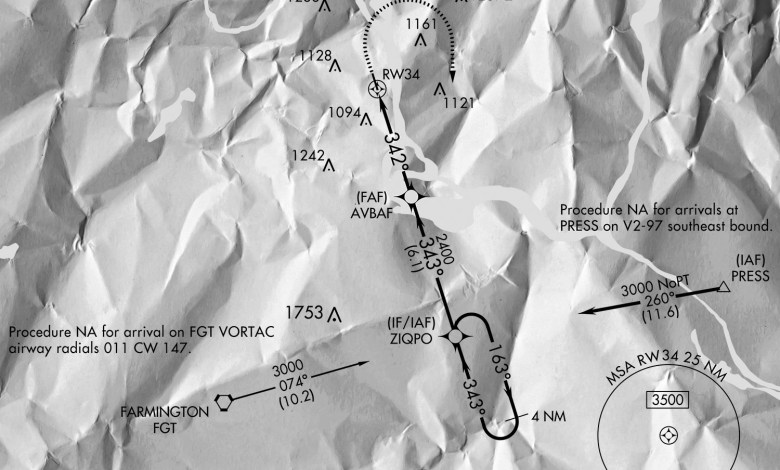
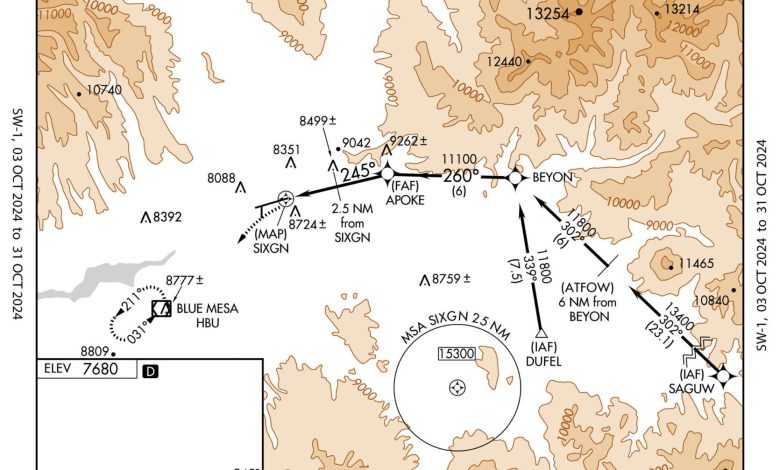
Regard the Jeppesen version of the RNAV (GPS) Rwy 19 approach to Meridian, MS (KMEI). This chart shows the simplest TAA you can have. The limit for a turn based on GPS is 90 degrees, so the maximum allowable turn from a route direct to the IAF to the leg after crossing the IAF is 90 degrees. This means each TAA should contain at least two sectors, divided by courses 90 degrees off the inbound course.

Read More »

FAA Reauthorization

The law provides $3.35 billion for airport planning and development and noise compatibility planning and programs. Appropriations for facilities and equipment from the Airport and Airway Trust Fund will run for the same term, increasing annually from $3.33 to $3.707 billion in 2023. These monies will be used in part to upgrade ASOS/AWOS systems, fund remote (unattended) towers, eliminate the deferred maintenance backlog of air navigation facilities (many of which are over 40 years old) and improve cybersecurity within ATC as well as in the National Airspace System.

Read More »

ATC Radios and Sectors

Another day, same drill, but the controller is talking to another airplane on another frequency, so you might hear say again more than once. ATC is often tasked to use multiple frequencies at once. Its not the easiest thing to do with people talking on both, but we adapt and prioritize. One way we adapt to prioritizing is by the airplanes speed. The faster they are going, the more likely it is that I need to get to them first before they enter another controllers airspace without coordination.

Read More »

November 2018 Killer Quiz: Emergency Procedures

Instrument flying is safest when variables such as ATC, the pilots skill and weather conditions are all managed by the pilot, maintaining positive control and situational awareness. Below are a series of abnormal situations. How would you handle them? Would they be emergencies?

Read More »

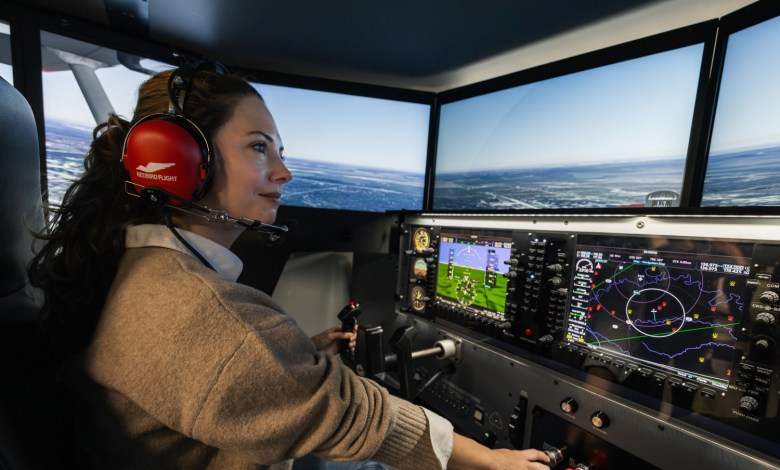
A Fresh Look at SIMCOM

I recently learned of a facility Id not previously known. Aircraft Simulator Training in Santa Rosa, CA, advertises in my type-club magazine and I decided to give them a try. Due to some date confusion on my part, I thought I was beginning this process with a couple months of flexibility. In reality, I had a couple weeks. In e-mail discussions I was impressed with the approach that Aircraft Simulator Training took, but we just couldnt get the schedule to work. So, I looked elsewhere.

Read More »

Procedure Turn Basics

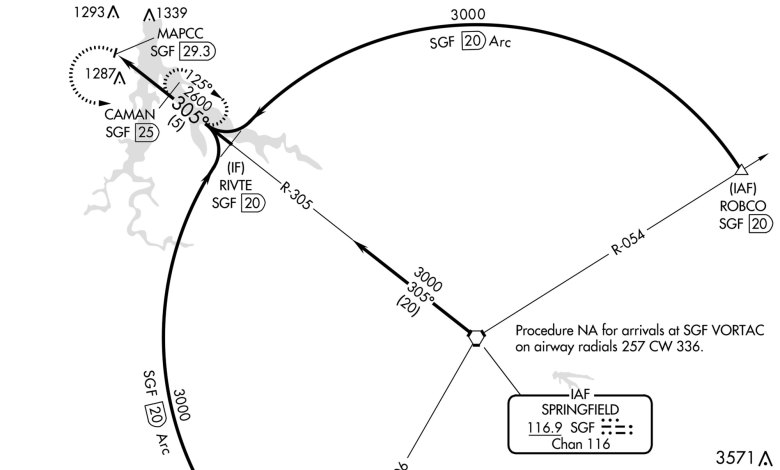
Teardrops are pretty rare (See Driving All Night, October 2017.) and permit aircraft to reverse course and lose a significant amount of altitude within a defined area (these are often found at military or joint-use airports). These are entered at the initial fix, proceeding outbound on the defined radial, and initiating a turn inbound at the defined point or distance. Think of it as a conventional procedure turn, but usually much larger and with explicitly defined segments.

Read More »

Alpha Dog

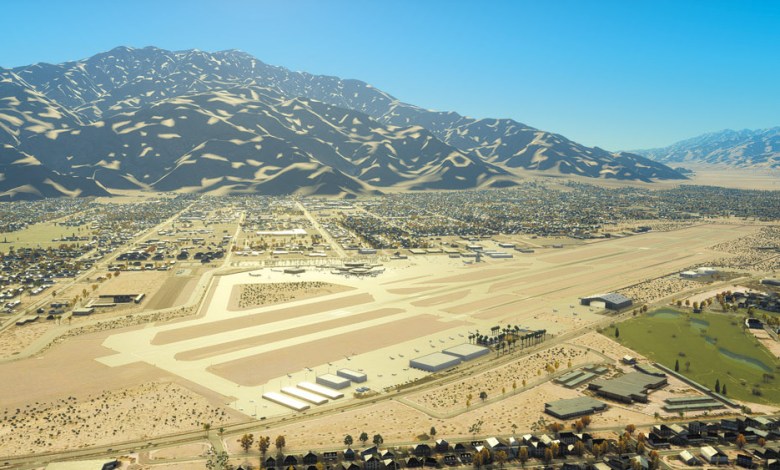
This sim challenge is inspired by our good friends over at PilotEdge. PilotEdge provides live ATC services for flight simulation. You will be on your simulator, but a real human controller vectors you through virtual airspace with the correct phraseology and skill. Theres no pause button and no spawuming your aircraft on 10-mile final. You start cold and dark on the ramp and need to use the radios to get a clearance, permission to taxi, and so on. It adds a significant element of realism and authenticity to your simulated flight.

Read More »
Pilot in aircraft
Sign-up for newsletters & special offers!

Get the latest stories & special offers delivered directly to your inbox.

SUBSCRIBE