IFR Magazine
On the Air: November 2014
We live in an airport community in Florida, 64FA, called Naked Lady Ranch.One of our pilots asked Jacksonville Center (JAX) for direct to Naked Lady Ranch. The controller responded, Affirmative, you are cleared direct to Naked Lady Ranch.This was followed a few seconds later by, JAX, this is American 123, wed like a clearance to Naked Lady Ranch and Cactus 456, requesting direct Naked Lady.
Readback: November 2014
Toward the end of his excellent article, Gaming the System in the August issue, Mr. Kramer talks of cancelling IFR when the frequency is busy and you have gone into VFR conditions. I have always tried to do this to relieve ATC of unnecessary responsibilities.However, this may be a little different in Bravo airspace. On a westbound flight through Washingtons Class B, I cancelled IFR after passing Baltimore and many of the buildups. The controller thanked me, replying, Maintain VFR, report any changes in course or altitude. A few minutes later I had more buildups in front of me. I reported it, and worked my way through. I have always wondered under circumstances like this if I had returned to IFR what the proper communications would have been in the Bravo air space.
Eyes Wide Open
Recently, I witnessed a ground collision between an airliner and a baggage tug. While I tend to be rather stoic in such matters, in retrospect this incident left me surprisingly rattled.As Ive previously mentioned in these pages, by night Im editor of this magazine, but by day I wear the hat of an airline pilot.
Bully for the Kids Up Front
I was having fun despite it being a slog on the airlines. Id spun a cancelation of my flight to La Guardia (due to a tropical storm shutting down the East Coast) into a direct flight home from Toronto to Portland. Circumstance even got me into an airport members-only lounge with cozy couches and free food while I got some work done on the laptop.
Holes You Should Know About in Official WX Products
Few pilots know that FAA imposes a hard character limit on text products such as Convective SIGMETs and the Area Forecasts (FA). The Aviation Weather Center (AWC) has a check program for the Area Forecast that counts the number of characters. On busy weather days when these forecasters have a lot to mention in the forecast, they often bust the character count. This forces them to cut from either the text or the synopsis in order to make the size fit through the National Airspace Data Interchange Network (NADIN) hubs. Often the first casualty is the ellipsis (…). Forecasters can use two periods instead of three. Another casualty is the synopsis. Of course, the last resort is to cut from the text of the FA.
Briefing: December 2010
The Office of Inspector General for the Transportation Department reports that the FAAs ADS-B plan faces significant risks and challenges. The number-one issue: Reluctance to purchase and install the required new avionics. Users have raised justifiable concerns about evolving requirements and uncertain equipage costs and benefits, the report says and brings back up the idea of cost sharing on incentives for upgrading users. The report also points to promised cost savings by using contractors that have evaporated or ended up costing more than doing things in-house. Meanwhile, the Airline Electronics Association says the new FAA guidelines that require ADS-B equipment to be installed under the supplemental type certificate (STC) process will stall early equipage, delay early implementation, and, at the extreme, cause the failure of ADS-B implementation all together.
Approach Clinic: Not a Real Alternate?
Several months back reader Jim Gibertoni in Alaska forwarded me a letter he wrote to the FAA administrator, Randy Babbit. Heres a line from that letter: My question is simple: How does one FAA Part 91 pilot in Fairbanks, Alaska, get the attention of the FAA before the next crash happens in Fairbanks?
Tips for flying the SFRA
I vividly remember my first VFR flight into the Washington, D.C., Special Flight Rules Area (SFRA, previously the D.C. ADIZ). Arriving into Leesburg, Va., I ducked under the Dulles Class B airspace and entered the downwind behind another aircraft. Thats when I heard the voice: Watch your altitude. I figured Potomac Approach somehow smelled fresh blood and would have a SWAT team greeting me on landing.
Botching the Missed
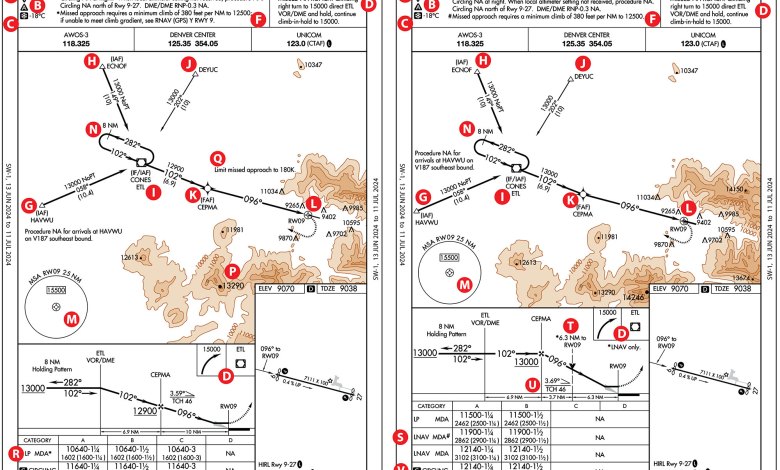
As an instructor for GLASS Simulator Center in Sugar Grove, Ill., I see a lot of pilots execute missed-approaches. Theyre all instrument-rated and flying the sims for type-specific aircraft training. Most have considerable IFR experience.