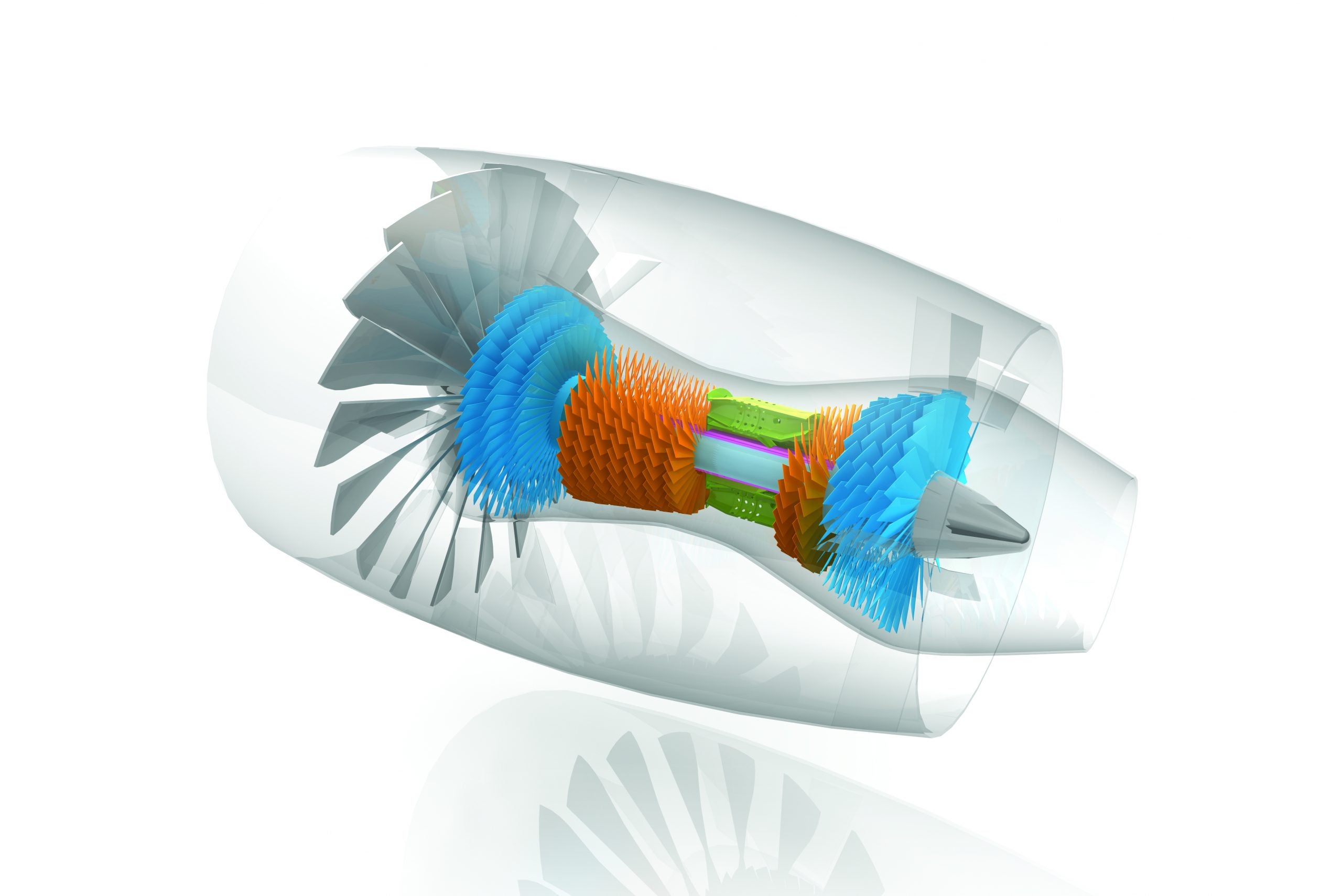
Modern turbofan engines generate thrust through a sophisticated four-step process: sucking in vast amounts of air, squeezing a portion of it, burning fuel with the compressed air, and blowing out the resulting exhaust and accelerated bypass air.
A key to their efficiency is the high bypass ratio, where a large fan accelerates the majority of ingested air through a bypass duct, providing up to 80 percent of the overall thrust.
This design allows modern turbofans to achieve significant advancements in fuel economy, reduced noise, and lower emissions compared to earlier jet engines.
The combustion process in the engine's core powers turbines, which in turn drive the fan and compressors, ensuring a continuous cycle of air intake and expulsion.
Take a close look at the inner workings of a modern turbofan engine and you’ll discover a marvelous network of parts that puts Newton’s second law of motion to work with elegance and surprising simplicity, allowing today’s jets to go farther on less fuel while making less noise and emitting lower emissions. Here’s how a turbofan works:
CREATE A FREE ACCOUNT
Sign up to keep reading
Create a free account to continue. Already a member? Sign in below.