















Hegseth Orders Pentagon Drone Surge

Defense Department wants small and cheap UAVs that can be used as munitions.

MQ-9 Reaper Predator B General Atomics CBP
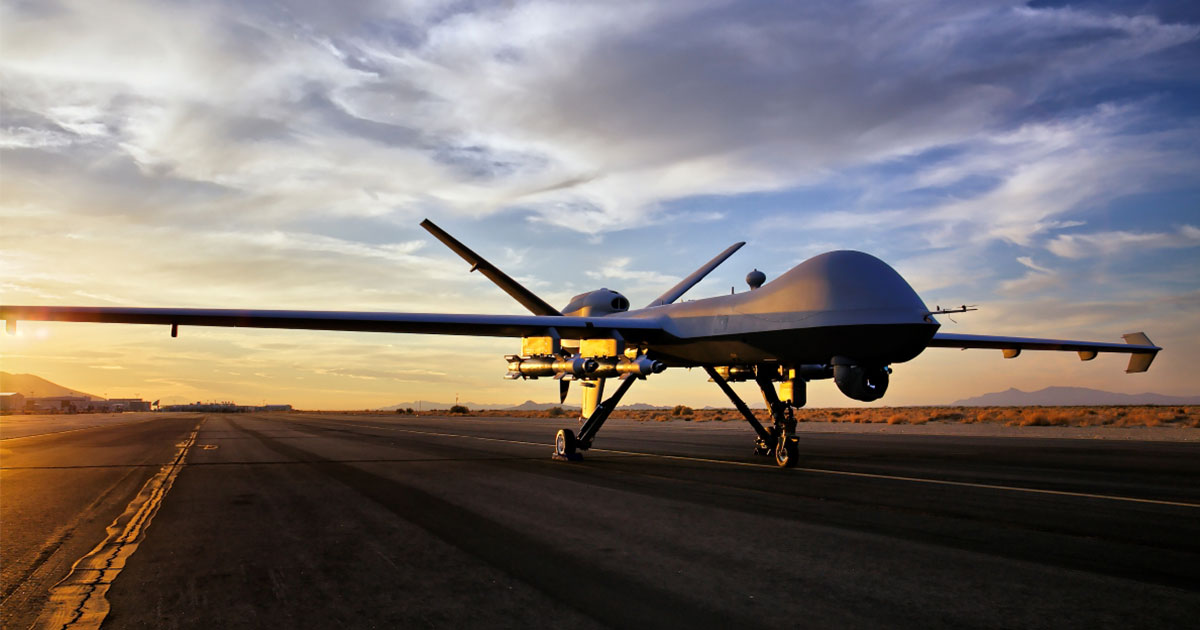
U.S. Customs and Border Protection began flying the MQ-9 Reaper, or Predator B, in 2005 and uses it primarily to survey the southern border. [Courtesy: General Atomics]
Gemini Sparkle

Key Takeaways:

  • The U.S. Defense Department is implementing sweeping changes to rapidly procure, deploy, and integrate low-cost military drones, aiming for a strategic edge over adversaries.
  • Key reforms include decentralizing drone procurement authority to lower-ranking officers and reclassifying small drones as "consumables" to cut bureaucratic hurdles.
  • This initiative is driven by the need to adapt to modern drone warfare, exemplified by adversaries like Russia and Iran, who utilize cheap, expendable drones.
  • The Pentagon plans to collaborate with the FAA to ease operational restrictions and establish a database of U.S. drone suppliers to support this rapid expansion.
See a mistake? Contact us.

The U.S. Defense Department has announced sweeping changes to its military drone procurement and deployment practices as it seeks to gain a strategic edge over adversaries like Russia, Iran, and China.

A memo authored by Defense Secretary Pete Hegseth instructs Pentagon officials to ramp up orders of low-cost unmanned aerial vehicles. For the first time, officers with the rank of colonel or captain will be able to independently procure and test drones, including 3D-printed vehicles and commercial off-the-shelf models. They will also have the freedom to integrate drones into every level of combat training without seeking approval from higherups.


“One June 6th, President Trump issued Executive Order 14307 to support the American drone industry and arm our warfighters,” Hegseth wrote. “The Department of Defense is going above and beyond this order. I am rescinding restrictive policies that hindered production and limited access to these vital technologies, unleashing the combined potential of American manufacturing and warfighter ingenuity. I am delegating authorities to procure and operate drones from the bureaucracy to our warfighters.”

The memo was first obtained and reported on by Fox News on Thursday.

New Rules

Hegseth’s order reclassifies small “Group 1” and “Group 2” drones as consumables, not military assets, which effectively removes them from legacy tracking systems and makes them easier to order and use.

“Small [unmanned aerial systems/UAVs] resemble munitions more than high-end airplanes,” one instruction read. “They should be cheap, rapidly replaceable, and categorized as consumable.”

According to General Atomics Aeronautical Systems, the Mojave unmanned aircraft system is based upon the avionics and flight control systems of GA-ASI’s MQ-9 Reaper and the MQ-1C Grey Eagle-ER. Courtesy: General Atomics Aeronautical Systems

The memo cited the use of exploding drones in the Russia-Ukraine war and said the U.S. must be prepared to deploy UAVs in the same way. Senior officials must become comfortable with treating the technology as expendable, much like a missile, the secretary added.

“Drone technology is advancing so rapidly, our major risk is risk-avoidance,” Hegseth wrote. “The department’s bureaucratic gloves are coming off.”

The Defense Department has been instructed to work with the FAA to “remove inappropriate range restrictions,” fast-track drone approvals, and prepare training venues for live-fire and “swarm”-style attack scenarios.

The Pentagon will also set up a massive searchable database of U.S. drone vendors and parts suppliers to facilitate the ramp-up.

Playing Catch-Up

The U.S. military has deployed unmanned aerial vehicles for decades. Platforms like the MQ-1 Predator and MQ-9 Reaper played critical roles in the wars in Iraq and Afghanistan, allowing operators to spy on and strike at enemy fighters without risking the lives of American soldiers and airmen.

But drone warfare has changed rapidly over the last several years. Nations with much smaller military budgets than the U.S., like Russia, Ukraine, and Iran, have invested in less sophisticated drones that can be produced cheaply and quickly. While these models can surveil and shoot at enemy targets, they are often more useful when packed with explosives and sent on one-way missions toward the frontlines.

Russia and Ukraine have launched thousands of “kamikaze” drones during their three-year-long war, using them to strike military installations, energy facilities, and residential buildings. In 2022, Iran began supplying Russia with Shahed 131s, loitering munitions which use a simple, commercial-grade GPS guidance system.

Iran deployed its kamikaze drones against Israel in 2024, and again in June as the two countries fought a two-week-long air war.

Hegseth’s directive said the U.S. must speed up drone production to close the gap with Russia and Iran, as well as China. Though China has not deployed drones in an armed conflict, a Shenzhen-based manufacturer, DJI, produces about 90 percent of the world’s consumer drones. 

While these vehicles are mainly used for tasks like photography and videography, they have been modified to serve as weapons in the Russia-Ukraine war and in conflicts in the Middle East.

Zach Vasile

Zach Vasile is a writer and editor covering news in all aspects of aviation. He has reported for and contributed to the Manchester Journal Inquirer, the Hartford Business Journal, the Charlotte Observer, and the Washington Examiner, with his area of focus being the intersection of business and government policy.

Ready to Sell Your Aircraft?

List your airplane on AircraftForSale.com and reach qualified buyers.

List Your Aircraft
AircraftForSale Logo | FLYING Logo
Pilot in aircraft
Sign-up for newsletters & special offers!

Get the latest stories & special offers delivered directly to your inbox.

SUBSCRIBE
