












Former Army Aviator Champions Safety Reform After Son’s Fatal Collision

Tim Lilley, father of PSA pilot killed in D.C. midair, says ‘there were failures on multiple levels.’

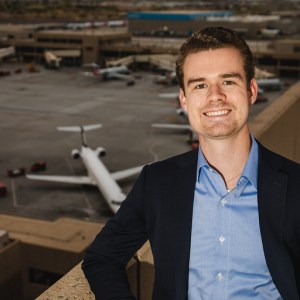
Sam Lilley served as the first officer on the PSA Airlines flight involved in the fatal midair over the Potomac River in January. [Courtesy: Sam Lilley]
Gemini Sparkle

Key Takeaways:

  • A fatal mid-air collision over the Potomac River between an Army Black Hawk helicopter and a PSA Airlines regional jet killed all 67 occupants, ending a decades-long streak of no fatal accidents for U.S.-based scheduled carriers.
  • Tim Lilley, father of the PSA first officer and an Army Black Hawk veteran, attributes the accident to multiple failures including poorly designed helicopter routes, leadership errors, ATC mistakes, and Black Hawk pilot errors compounded by what he considers insufficient experience for the mission.
  • Lilley is advocating for immediate safety reforms, specifically the extension of helicopter route restrictions and mandating that all Department of Defense aircraft operate with ADS-B out always on, while also criticizing the Army's initially unsupportive response compared to the airline's.
See a mistake? Contact us.

On a brisk night over the Potomac River near Washington, D.C., a decades-long streak of no fatal accidents involving a U.S.-based scheduled carrier abruptly ended. Just southeast of Ronald Reagan Washington National Airport (KDCA) on January 29, an Army Black Hawk helicopter collided with a PSA Airlines CRJ-700, killing all 67 on board both aircraft. 

The regional jet was operating flight AA5342— a daily service from Wichita, Kansas, to Washington. PAT25— the Black Hawk’s call sign—was flying a continuity of government training exercise around the capital region. In the wake of the accident, the families of those lost have pushed for swift safety reforms. Perhaps none have been as outspoken as Tim Lilley, whose son Sam was the first officer on the PSA flight.

This Article First Appeared in FLYING Magazine

If you're not already a subscriber, what are you waiting for? Subscribe today to get the issue as soon as it is released in either Print or Digital formats.

Subscribe Now

Lilley is uniquely positioned to understand the tragedy’s complexities. He’s a 20-year Army veteran who spent thousands of hours flying Black Hawks, often on the same routes involved in the crash. He is now channeling his grief and expertise into a mission to overhaul the systems and procedures that he believes failed his son and so many others.

Here are some Q&A responses from Tim Lilley:

FLYING Magazine (FM): Based on your expertise and the information available, what were the primary factors that led to this accident?

Tim Lilley (TL): There were failures on multiple levels, and any one of them could have avoided this accident. There were system errors. The helicopter routes are the same as when I flew them 25 years ago, and they were poorly designed then. There were leadership errors within the 12th Aviation Battalion, which either doesn’t know how to identify risk or purposely downplayed it to avoid mitigation. Then there were ATC human errors. They never should have allowed the helicopter past Haynes Point while an aircraft was on that approach, and they should have called out the traffic to the CRJ. And finally, there was pilot error in the Black Hawk. They were at the wrong altitude, weren’t on the center of the route, and nobody was looking out the window.

(Editor’s note: In August, the FAA closed Route 4 along the Potomac. The NTSB has also not yet issued its final report, though investigators held multiple days of hearings which we report on in Max Impact on page 76.)

FM: In your meetings with lawmakers and the Department of Transportation, what are the immediate, “low-hanging-fruit” changes you’re pushing for?

Sam Lilley poses after earning his private pilot certificate. [Courtesy: Tim Lilley]

TL: We don’t want to be that family that takes 10, 20, or 30 years to get things changed. We want to get stuff done now. First, when Secretary [Sean] Duffy restricted those helicopter routes right after the accident. That was a good start. We want those restrictions extended until the routes can be completely reworked and the risks are mitigated. Second, we want the Army, and all of the DOD, to be required to have their ADS-B out on all the time. There’s no need to have it off on a day-to-day basis for a training mission. 

FM: As an Army veteran yourself, you’ve expressed disappointment with their response. How has it differed from the response of the airline?

TL: I’m frustrated with the Army. Their position is essentially, “We haven’t done anything wrong until the NTSB proves that we did something wrong.” They’ve been stonewalling us. In contrast, this wasn’t American Airlines’ or PSA’s fault, yet they showed up with support. American helped us transport the body, paid for funerals, and gave us hotels while we were in D.C. The Army hasn’t offered a single rose to go on a single civilian’s grave. They have not said they’re sorry in any way, shape, or form.

(Editor’s note: In August, Tim Lilley said the Army has started to engage with the victims’ families more.) 

FM: Could you tell us about Sam’s journey to the cockpit?

TL: He wasn’t an early adopter to the idea, even though he flew with me a few times. He went to college for marketing and worked a job in that field for a few months before he called me and said, “Dad, you know, marketing is not for me. I want to be a pilot like you.” From that point on, he pursued it vigorously. He went to flight school, became a CFI, and then took a job as an aerial survey pilot, which I thought was great because it took him all over the country. He was about 10 hours away from upgrading to captain at PSA when the accident happened. They did give him honorary captain and the President’s Award at PSA, which was very special.

FM:The Army described the Black Hawk crew as “highly experienced.” What is your view of their flight time?

TL: When their spokesman goes on TV and says it was a “highly experienced” crew, I have to question that. The PIC had a thousand hours. In what world is a thousand hours highly experienced? You can’t even get a civilian job flying EMS. You need 2,000 hours for that. He didn’t even meet the minimums for a job flying patients around. To put it in perspective, Sam was the most junior pilot on the CRJ, and he had almost 2,500 hours—more than both pilots in the helicopter combined. So, it might be highly experienced for that unit because they have a retention problem, but it’s not highly experienced in the broader world of aviation.


This column first appeared in the October Issue 963 of the FLYING print edition.

Ryan Ewing

Ryan is Sr. Director of Digital for Firecrown's Aviation Group. In 2013, he founded AirlineGeeks.com, a leading trade publication covering the airline industry. Since then, his work has been featured in several publications and news outlets, including CNN, WJLA, CNET, and Business Insider. During his time in the airline industry, he's worked in roles pertaining to airport/airline operations while holding a B.S. in Air Transportation Management from Arizona State University along with an MBA. Previously, he worked for a Part 135 operator and later a major airline. Ryan is also an Adjunct Instructor at Embry-Riddle Aeronautical University.
Pilot in aircraft
Sign-up for newsletters & special offers!

Get the latest stories & special offers delivered directly to your inbox.

SUBSCRIBE


