











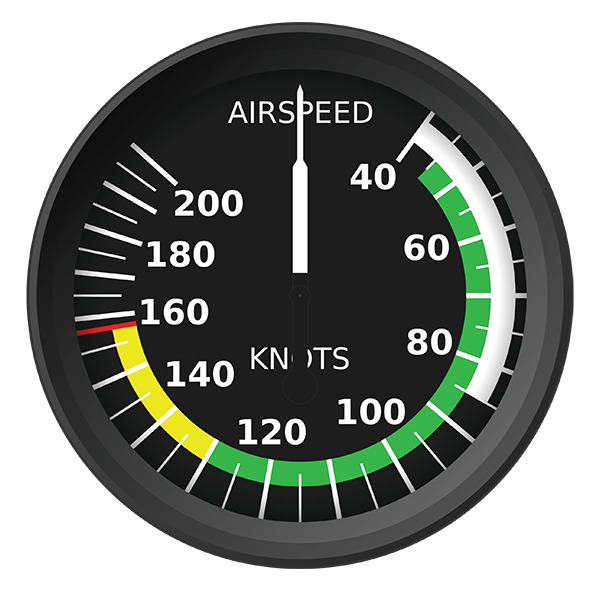


If you studied aviation accident reports as much as we do, one of the many phrases you’d often see is “failure to control airspeed.” It crops up in runway overruns a lot, but primarily appears when discussing in-flight loss of control accidents, of which there are enough the probable cause has earned its own acronym: LOC-I. The classic LOC-I accident might involve a stall/spin event at the low end of the airspeed indicator or airframe failure at the other. But the bottom line is someone wasn’t paying attention to a major thing that’s critical to controlling the airplane.
As the saying might go, “Everyone talks about airspeed control but no one does anything about it.” Let’s try to chip away at that problem for a moment, by highlighting the four basic ways we control airspeed—power, pitch, drag and trim. Also important is how they interact and how managing all of them is the only way to ensure we’re using all of the controls, including the ailerons and rudder, to achieve coordinated flight.

