













COA Loophole: How Law Enforcement Bypasses Federal Drone Licensing

FAA’s waiver program for public agencies has become a shortcut around Part 107 professional standards.

Several law enforcement agencies use drones.
Several law enforcement agencies use drones. [Credit: Joseph Corrigan]
Gemini Sparkle

Key Takeaways:

  • Law enforcement agencies use FAA Certificates of Authorization (COAs) to operate drones for public services, which often allows them to bypass the rigorous Part 107 Remote Pilot Certificate required for private and commercial operators.
  • This practice raises concerns about fairness, professionalism, and public safety, as it enables undertrained officers (some with only 8 hours of internal training) to operate drones without a comprehensive understanding of aviation principles.
  • The article advocates for public agencies to uphold aviation safety and public trust by requiring their drone pilots to obtain Part 107 licenses, implementing strict internal oversight, and ensuring transparency in their COA operations.
See a mistake? Contact us.

Unmanned Aircraft Systems (UAS), or drones, have revolutionized the way law enforcement and public agencies serve their communities. From disaster response and crime scene documentation to search and rescue, drones provide rapid intelligence and cost-effective aerial capabilities once reserved for manned aircraft.

The FAA recognizes this benefit and, to facilitate public operations, issues Certificates of Authorization (COAs) to government entities that need to use drones for official purposes. These COAs allow government agencies, including police and sheriff’s departments, to fly drones without requiring individual officers to hold an FAA Part 107 Remote Pilot Certificate.

While the intent is commendable, the application and oversight of this practice raise serious questions about fairness, professionalism, and public safety.

Understanding the COA Framework

A COA is an FAA-issued waiver that grants a public entity permission to operate UAS in specific airspace for governmental functions.

Unlike a Part 107 license, which is earned by an individual after passing a rigorous knowledge exam, the COA is issued to an agency. The agency assumes responsibility for ensuring its pilots are properly trained and compliant with the conditions of the authorization.

This means that, in practice, an officer with only an internal departmental training certificate—not a federal license—may legally operate a drone under that COA.

That’s where the concern begins.

Professional Pilot’s Perspective

As a licensed remote pilot who has served within a state agency, I recognize the FAA’s efforts to accommodate government missions through the COA process. It’s an act of flexibility and public service on the FAA’s part.

However, I’m troubled that some law enforcement agencies have used the COA as a shortcut around the same licensing process that private citizens, commercial operators, and small business owners must complete to fly legally.

In essence, departments are being permitted to circumvent the civilian process—not for emergency exceptions but to meet ongoing business needs. It’s akin to being granted the fruits of the poisonous tree, except this time the tree is planted with FAA authorization.

The fault lies less with the FAA and more with agencies that exploit the COA’s leniency to fly indefinitely without ever requiring their pilots to earn a Part 107 license.

When Eight Hours of Training Replace a Federal License

Some departments proudly tout “eight-hour drone training” programs as qualification for UAS operation. If those eight hours prepare officers to sit for and pass the Part 107 exam, that’s excellent.

But if not, then it’s a mockery of professional standards and a disservice to public trust.

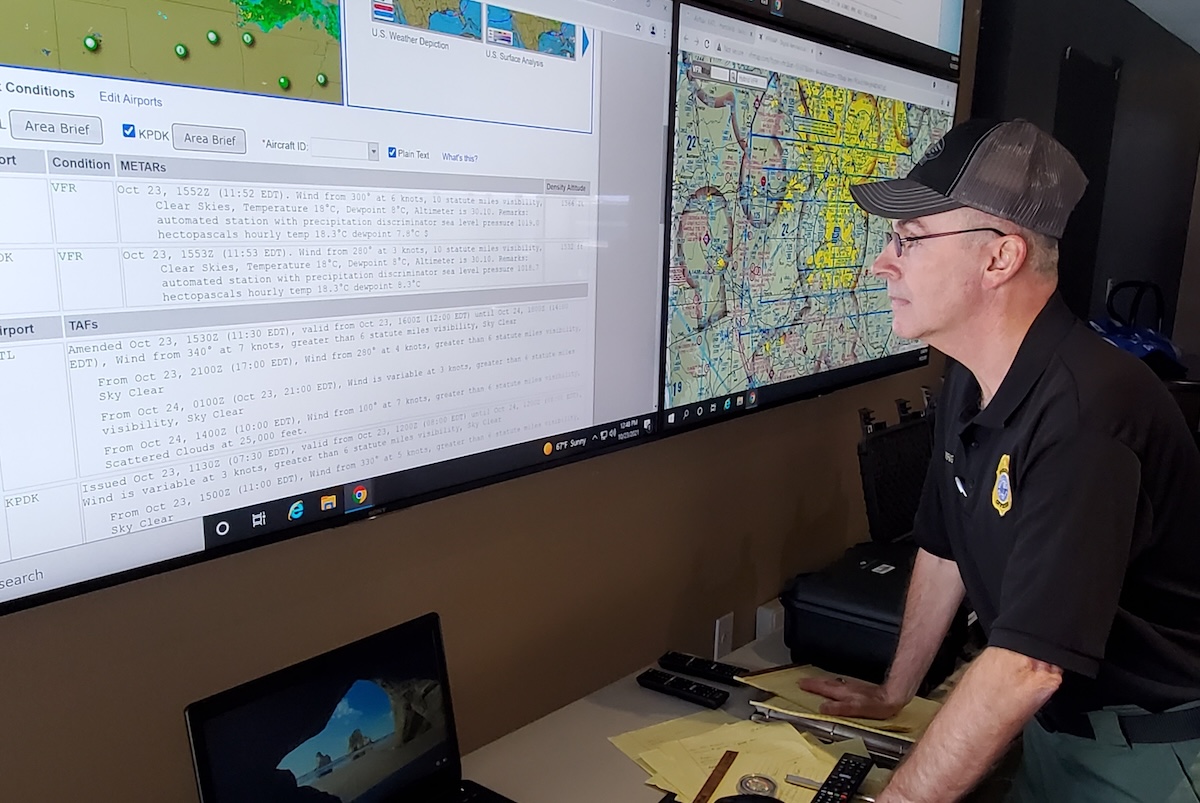
Obtaining the Part 107 license is not trivial. It requires a solid understanding of weather, airspace, aeronautical charts, radio communications, and risk management. I studied for nearly two months before I felt confident enough to take and pass the test.

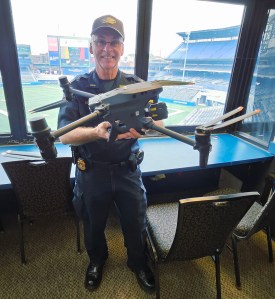
Law enforcement drone in action
Law enforcement drone in action [Credit: Joseph Corrigan)

That effort represents more than compliance. It represents respect for the National Airspace System (NAS) and the safety of others.

Oversight Gap

Today, flight-tracking software can log drone serial numbers, altitude, speed, and frequency of operation over nearly every city.

The volume of unlicensed civilian and government-operated drones visible in these systems is alarming. All can be tracked regardless of registration.

Many operate at altitudes or in environments that create a potential hazard to manned aviation.

Drones are powerful tools when used responsibly. They can safely clear stairwells, inspect churches and schools for active threats, survey collapsed structures, and even assist in prison or stadium security.

But such powerful tools demand qualified hands.

When unlicensed or undertrained operators fly, it introduces liability, risk, and potential civil rights implications—especially when operating near private property or over people. Agencies that otherwise hold themselves to accreditation standards for firearms, use of force, or emergency driving should not settle for less when it comes to aviation safety.

Toward Equal Standards and Accountability

The FAA’s Part 107 Remote Pilot Certificate exists for a reason—to ensure every person who takes to the skies understands their obligations, limitations, and the shared responsibility of safe flight.

There is no substitute for that certification.

Public agencies should be held to equal or higher standards than the private sector, not lower ones. Each law enforcement agency that operates drones under a COA should:

  • Require its pilots to obtain a Part 107 license within a reasonable period.
  • Maintain clear internal oversight and flight documentation.
  • Ensure transparency in its COA operations and compliance with FAA conditions.
  • Coordinate with local air traffic authorities to minimize hazards and public concerns.

Drones are here to stay—and their proper use can save lives. The FAA’s COA program is a valuable tool for public agencies, but it should not become a loophole that undermines professional licensing or aviation safety.

The Part 107 license is a benchmark of competence and accountability, not an obstacle. Law enforcement agencies should embrace it, not bypass it.

It’s time for policy, accreditation bodies, and Congress to review how COAs are being used and to ensure that all who operate in the NAS—civilian or government—are held to the same high professional standards.

In aviation, as in law enforcement, training and accountability save lives.


Editor’s note: The views and opinions expressed in this article are those of the author and do not necessarily reflect the official policy or position of FLYING Magazine.

Joseph Corrigan

Joseph Corrigan is an FAA-licensed remote pilot and former member of a state agency UAS program. He has worked in both public-service and private-sector operations and advocates for professional and ethical standards in the use of unmanned aircraft systems across all sectors.

Ready to Sell Your Aircraft?

List your airplane on AircraftForSale.com and reach qualified buyers.

List Your Aircraft
AircraftForSale Logo | FLYING Logo
Pilot in aircraft
Sign-up for newsletters & special offers!

Get the latest stories & special offers delivered directly to your inbox.

SUBSCRIBE
