














Boeing X-37B Spaceplane Launches on Eighth Mission

Autonomous, reusable craft is designed to launch classified, cutting-edge technology for the U.S. Space Force.

Boeing X-37B spaceplane SpaceX Falcon 9 OTV-8 mission
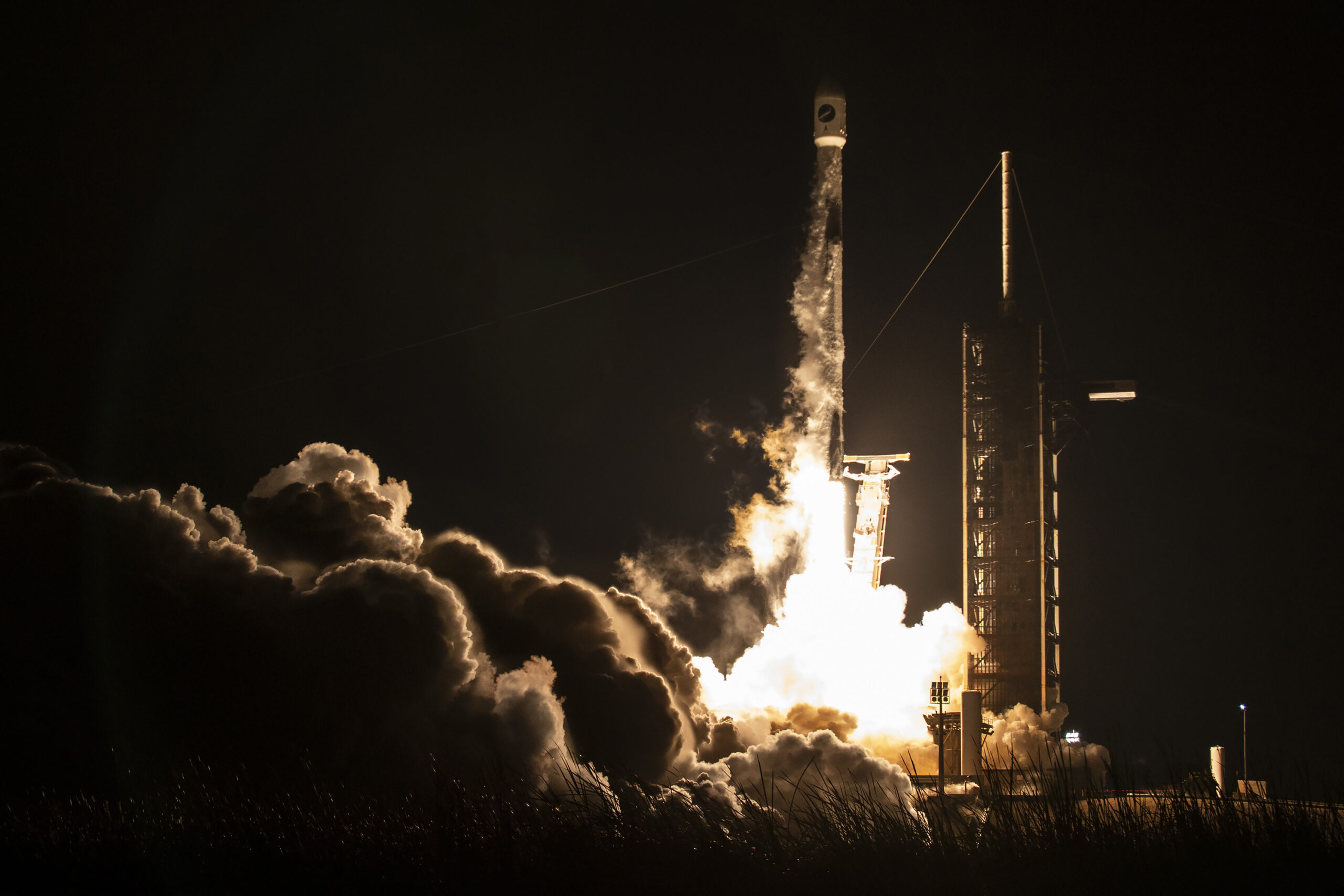
A SpaceX Falcon 9 rocket launches Boeing’s X-37B spaceplane on its eighth mission from Kennedy Space Center in Florida. [Courtesy: SpaceX]
Gemini Sparkle

Key Takeaways:

  • Boeing's autonomous and reusable X-37B spaceplane has launched on its eighth mission (OTV-8) for the U.S. Space Force, just six months after completing its previous record-setting flight.
  • The X-37B's primary role is to test advanced space technologies and conduct classified orbital experiments, with OTV-8 specifically evaluating satellite laser communications and navigation in GPS-denied space.
  • Serving as a crucial platform, it enables the Space Force to gather data, accelerate decisions, and enhance resilience in contested environments, thanks to its returnable design and autonomous capabilities.
  • Despite its long and successful operational history, there are hints that the Space Force may be considering future "next available capability" beyond the X-37B.
See a mistake? Contact us.

Within six months of touching down from a 434-day orbital mission in March, Boeing’s X-37B spaceplane is back in action.

The autonomous, reusable orbital test vehicle (OTV) lifted off just before midnight EDT on Thursday from NASA’s Kennedy Space Center in Florida, strapped to a SpaceX Falcon 9 rocket. The mission, dubbed OTV-8 or USSF-36, is the X-37B’s eighth mission for the U.S. Space Force and its predecessor, Air Force Space Command. It was ordered in 2021 under a National Security Space Launch (NSSL) Phase 2 contract awarded to Boeing.


The X-37B is designed to demonstrate technologies for other reusable spacecraft and conduct orbital experiments that can be returned to Earth for analysis. Though its missions and payloads are highly classified, the spaceplane is known to test “everything from advanced guidance and navigation to state-of-the-art propulsion systems and autonomous orbital flight.” Boeing and the Space Force said OTV-8 will evaluate satellite laser communications and navigation in GPS-denied space.

The aerospace manufacturer on Friday said the vehicle was “healthy on orbit and proceeding with standard checkout.”

“Having a returnable space platform allows us to learn faster,” said Colonel Brian Chatman, commander of Space Launch Delta 45, the Space Force unit that oversees launches. “The data we gather from the X-37B speeds decisions, hardens our architectures, and helps Guardians stay connected and on course even in contested environments.”

X-37B’s Eighth Mission

Boeing has designed, built, and integrated a pair of X-37Bs, which combined have spent more than 4,200 days in space and traveled 1.3 billion orbital miles across seven missions.

The technology demonstrations aboard OTV-8 come from the Defense Innovation Unit (DIU), Air Force Research Laboratory (AFRL), and other government partners. One will test high-bandwidth laser communications between orbiting satellites. Another will evaluate what the Space Force describes as the highest performing quantum inertial sensor to fly in space.

“These experiments, X-37B itself, and Space Launch Delta 45’s ability to perform fast, flexible launches all play crucial roles in bolstering our resilience and enhancing our ability to swiftly adapt to the challenges in space of today and tomorrow,” said Chatman.

The Space Force has not disclosed the duration of the orbital mission. But previous flights have spanned more than one year. The prior mission for this X-37B, OTV-6, set an endurance record at 908 days. Lieutenant Colonel Blaine Stewart, X-37B program director for the Air Force Rapid Capabilities Office, said the ongoing mission “represents yet another leap” for the technology.

“Launch is the starting line for this mission, but the work that follows—the quiet, methodical work on orbit, analysis, and eventual return is where progress is earned,” said Michelle Parker, vice president of Boeing Space Mission Systems.

With a length of about 29 feet and wingspan of 15 feet, the spaceplane is small enough to fit within the payload fairing of SpaceX’s Falcon 9. Thursday’s launch was the third time a Falcon spacecraft has boosted it to orbit.

Though it needs some assistance on the way up, the autonomous vehicle lands on its own. Like NASA’s space shuttle, it glides into a runway landing. Its inaugural mission marked the first autonomous orbital landing onto a runway in U.S. history.

The Space Force has gotten plenty of use out of the innovative design. Last year, for example, it demonstrated a technique called aerobraking, dipping into the atmosphere at the lowest point in its orbit. The maneuver increases drag, allowing the spaceplane to quickly change orbit. Another experiment involved subjecting seeds to radiation to understand the demands of growing food on the moon.

Starting with OTV-6, the vehicle has flown with a service module that enables increased payload.

It is unclear what will come next for the X-37B, which has been in operation since 2010. General B. Chance Saltzman, chief of space operations for the Space Force, previously hinted that the OTV-7 mission could be its last. Air & Space Forces Magazine quotes Saltzman in 2020 as saying the vehicle may be an example of “technology that has served its purpose, and [maybe] it’s time to start looking at the next available capability.”

The X-37B’s capabilities are fairly unique today, but they may not be forever. Last week, President Donald Trump signed an executive order directing federal agencies to relax regulations for commercial spaceflight licensing, which could spur the development of new designs. Beyond the X-37B, the Space Force’s NSSL program has contracts for Blue Origin’s New Glenn, United Launch Alliance’s Vulcan Centaur, and other innovative spacecraft.

Like this story? We think you’ll also like the Future of FLYING newsletter sent every Thursday afternoon. Sign up now.

Jack Daleo

Jack is a staff writer covering advanced air mobility, including everything from drones to unmanned aircraft systems to space travel—and a whole lot more. He spent close to two years reporting on drone delivery for FreightWaves, covering the biggest news and developments in the space and connecting with industry executives and experts. Jack is also a basketball aficionado, a frequent traveler and a lover of all things logistics.

Ready to Sell Your Aircraft?

List your airplane on AircraftForSale.com and reach qualified buyers.

List Your Aircraft
AircraftForSale Logo | FLYING Logo
Pilot in aircraft
Sign-up for newsletters & special offers!

Get the latest stories & special offers delivered directly to your inbox.

SUBSCRIBE
