NASA Selects Boeing to Develop New Fuel-Efficient Aircraft

The Transonic Truss-Braced Wing aircraft aims to slash fuel consumption and emissions by 30 percent.

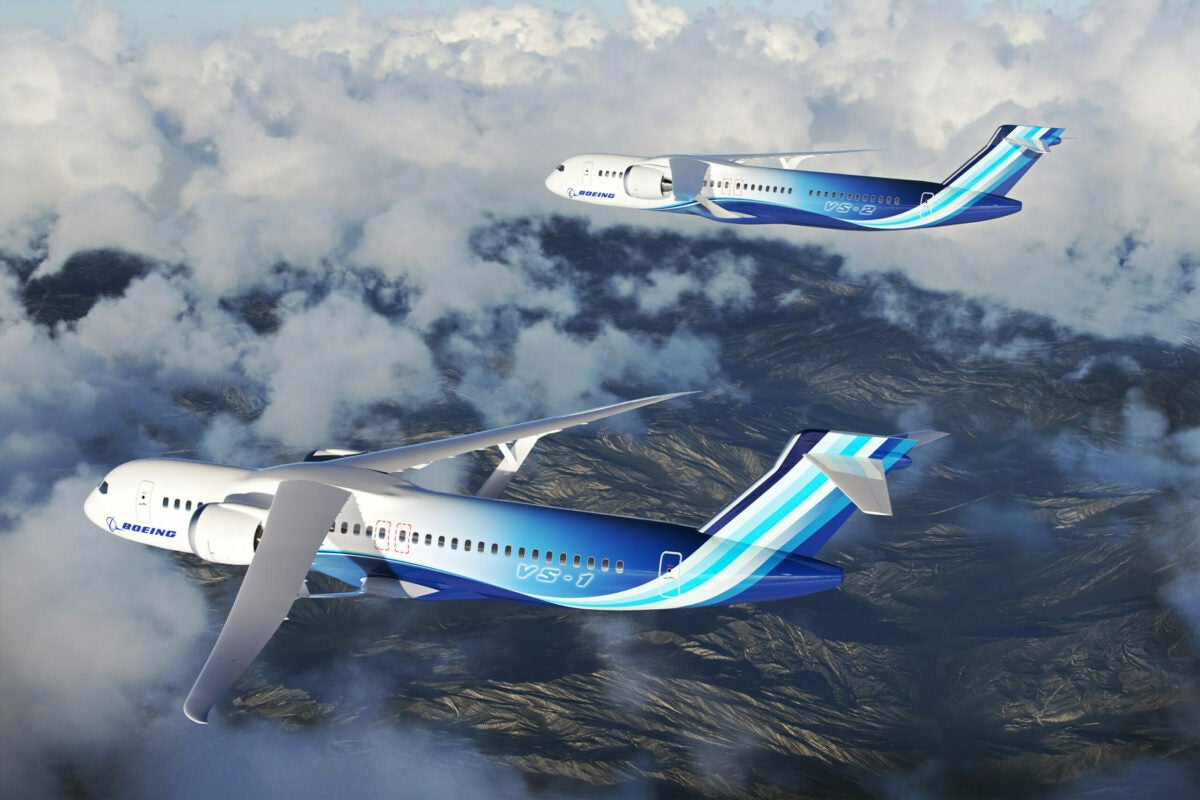
NASA has selected Boeing and its industry team to lead the development and flight testing of a full-scale Transonic Truss-Braced Wing (TTBW) demonstrator airplane. [Courtesy: Boeing]
Gemini Sparkle

Key Takeaways:

  • NASA has partnered with Boeing to develop a Transonic Truss-Braced Wing (TTBW) demonstrator aircraft under the Sustainable Flight Demonstrator (SFD) program.
  • The TTBW design aims to reduce fuel consumption and emissions by 30% compared to today's most efficient single-aisle airplanes, supporting the aviation industry's 2050 net-zero carbon goal.
  • This innovative aircraft, featuring ultra-thin, strut-braced wings, could be flying as early as 2028.
  • The project involves significant investment, with up to $725 million from Boeing and its partners, complemented by $425 million in NASA funding.
See a mistake? Contact us.

NASA has tapped Boeing [NYSE:BA] to design an aircraft that aims to reduce fuel consumption and emissions by 30 percent compared to the most efficient single-aisle airplanes. 

The design, known as the Transonic Truss-Braced Wing (TTBW) demonstrator airplane has been under development for more than a decade as part of the Sustainable Flight Demonstrator (SFD) program.

“The SFD program has the potential to make a major contribution toward a sustainable future,” said Greg Hyslop, Boeing chief engineer and executive vice president of engineering, test and technology. “It represents an opportunity to design, build and fly a full-scale experimental plane, while solving novel technical problems.”

The aviation industry has a goal to meet net zero carbon emissions by 2050. Boeing and NASA note the aircraft of this type could be flying as soon as 2028.

The TTBW Concept

Transonic truss-braced wings consist of ultra-thin wings braced by struts with larger spans and higher-aspect ratios. According to Boeing, when combined with expected advancements in propulsion systems, materials and systems architecture, the single-aisle airplane with a TTBW configuration “could reduce fuel consumption and emissions up to 30 percent relative to today’s most efficient single-aisle airplanes, depending on the mission.”

Early conceptual studies started under NASA’s Environmentally Responsible Aviation program, and Boeing has conducted extensive wind tunnel testing and digital modeling to advance the design under NASA’s Subsonic Ultra Green Aircraft Research program.

The Cost of the Project

The SFD program will leverage up to $725 million in funding by Boeing and its industry partners to shape the demonstrator program and meet the resource needs required. NASA’s funding through the SFD Space Act Agreement totals $425 million.

Separately, Boeing’s previous internal investments for recent phases of sustainable aviation research total $110 million.

Meg Godlewski

Meg Godlewski has been an aviation journalist for more than 24 years and a CFI for more than 20 years. If she is not flying or teaching aviation, she is writing about it. Meg is a founding member of the Pilot Proficiency Center at EAA AirVenture and excels at the application of simulation technology to flatten the learning curve. Follow Meg on Twitter @2Lewski.


Ready to Sell Your Aircraft?

List your airplane on AircraftForSale.com and reach qualified buyers.

List Your Aircraft
AircraftForSale Logo | FLYING Logo
Pilot in aircraft
Sign-up for newsletters & special offers!

Get the latest stories & special offers delivered directly to your inbox.

SUBSCRIBE