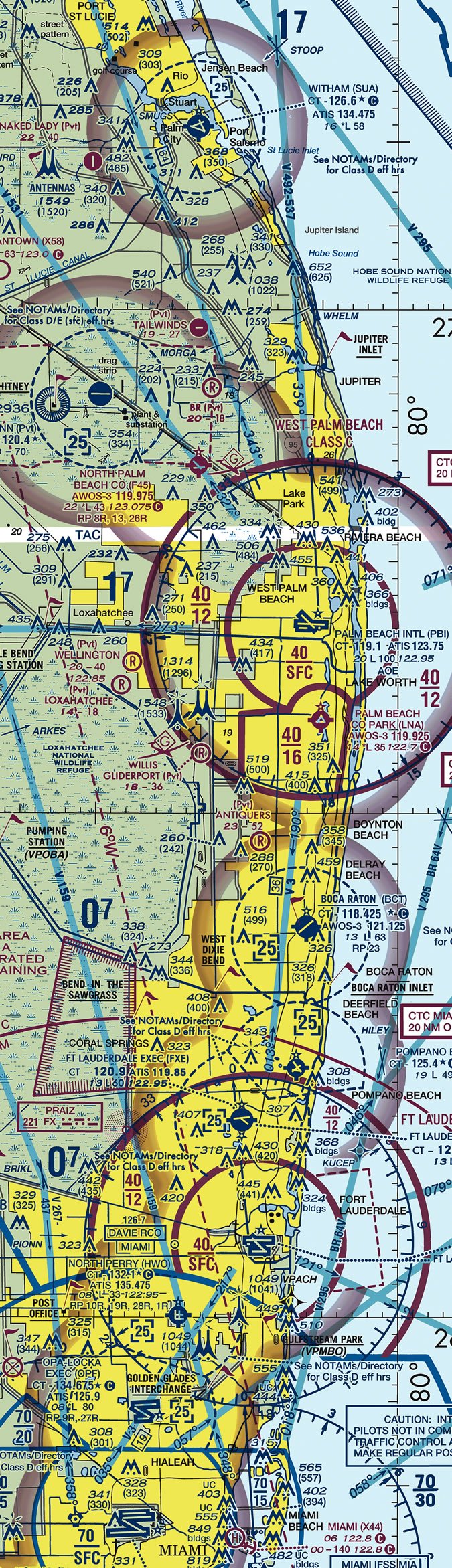
A beautiful VFR day in south Florida was coming to a close. The shadows of beach-front hotels were stretching across the sand 3500 feet below. For my first cross country after getting my private, my wife and I flew VFR from Miamis Opa Locka airport up to Stuart for some Mexican food-a $100 burrito run, so to speak. We were headed home along the coast.
Both pilots and air traffic controllers share the responsibility for preventing collisions between IFR and VFR aircraft, with pilots obligated to "see and avoid" and ATC responsible for overall system safety and traffic flow.
Specific ATC separation standards for IFR and VFR aircraft vary by airspace: Class B and C mandate specific vertical (500 ft), visual, or "target resolution" separation, along with traffic advisories.
Outside of Class B and C airspace (e.g., Class D and E), while specific horizontal or vertical separation minimums may not apply, ATC retains a legal and moral obligation to prevent collisions through safety alerts, traffic advisories, and discretionary use of vectors or altitude restrictions.
Ultimately, the required separation between IFR and VFR traffic is "whatever is necessary to ensure safety," emphasizing continuous vigilance and proactive action from both pilots and controllers, as legal separation may not always feel comfortable.
A beautiful VFR day in south Florida was coming to a close. The shadows of beach-front hotels were stretching across the sand 3500 feet below. For my first cross country after getting my private, my wife and I flew VFR from Miami’s Opa Locka airport up to Stuart for some Mexican food—a $100 burrito run, so to speak. We were headed home along the coast.
CREATE A FREE ACCOUNT
Sign up to keep reading
Create a free account to continue. Already a member? Sign in below.