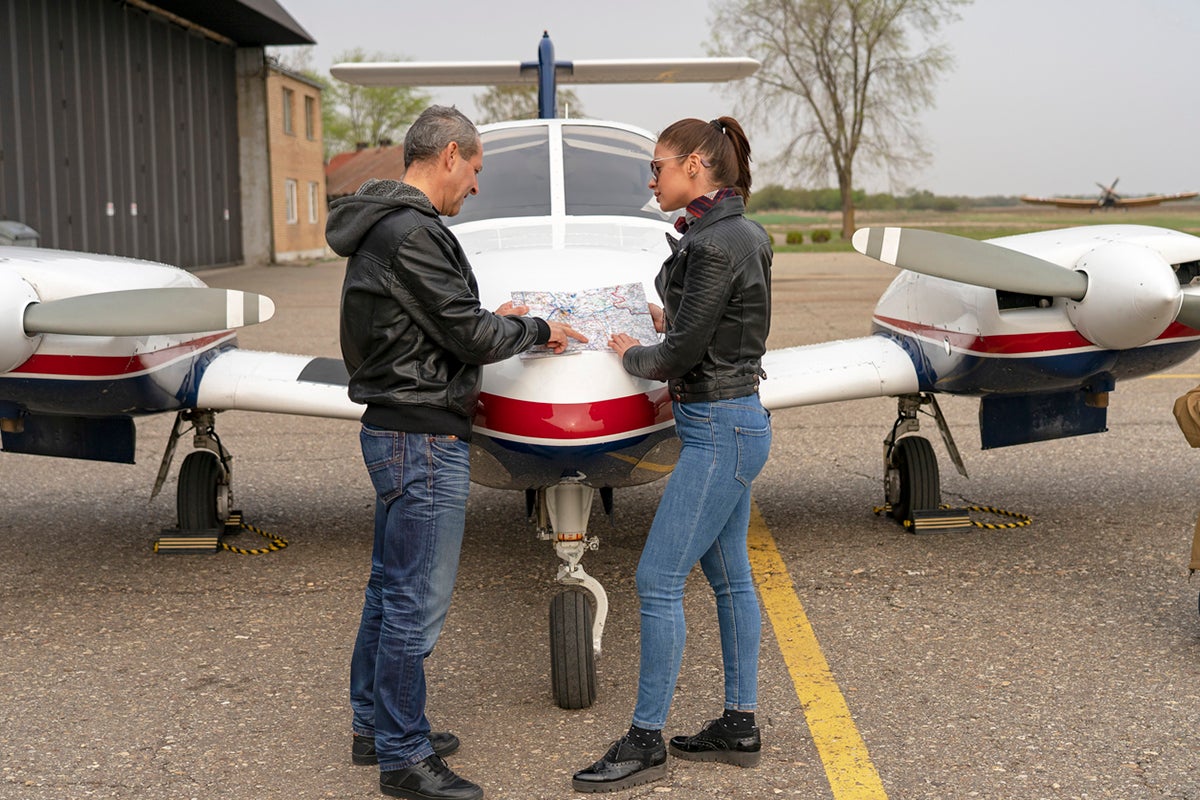
Many new pilots choose to become flight instructors for their first aviation job. [iStock]
Key Takeaways:
New pilots face a common challenge of needing flight hours for professional jobs but struggling to acquire them without initial flying experience.
To overcome this, aspiring pilots can start with non-flying aviation jobs (e.g., FBO, ramp work) to build industry connections and gain foundational knowledge.
Once qualified, pilots have diverse first flying job options, including flight instructing, banner towing, charter/ferry flying, and aerial survey, each offering unique benefits for building flight time and specialized skills relevant to long-term career goals.
New pilots in the United States find themselves in a predicament. They need more flight time to get a good job, but they can’t build that time without a flying job.
Luckily, there are a number of routes a new hopeful pilot can take to progress toward their long-term career goals.
CREATE A FREE ACCOUNT
Sign up to keep reading
Create a free account to continue. Already a member? Sign in below.
John McDermott is a student at Northwestern University. He is also a student pilot with hopes of flying for the airlines. A self-proclaimed ""avgeek,"" John will rave about aviation at length to whoever will listen, and he is keen to call out any airplane he sees, whether or not anyone around him cares about flying at all. John previously worked as a Journalist and Editor-In-Chief at Aeronautics Online Aviation News and Media. In his spare time, John enjoys running, photography, and watching planes approach Chicago O'Hare from over Lake Michigan.