











Reality Check

Crash Like a Pro

If youre like most pilots, you carry a touch of power into the flare, then pull it off as the airplane settles to the ground. Powered approaches are routinely safer than power-off approaches. Pilot judgment is less stressed, and a little power can make up for a lot of mistakes in the pattern.

Think about how long its been since youve done a power-off landing. In a way, its a shame. The skills they help develop are useful in other ways, such as an engine-out landing. Volumes have been written on forced landings, crash landings, flameouts, engine-out landings, off-airport landings and a host of other colorfully termed dead-engine landing scenarios. Every pilot should have his or her ow…

Read More »

A Better Mousetrap

Put a dozen pilots in a room, and odds are youll hear a series of shocking stories of derring do as well as a parade of tales about other peoples mistakes. Put 200 in a room, and you might see something different.

The National Transportation Safety Board hosted a symposium in late September that brought together accident investigators, regulators, flight training experts, mechanics and manufacturers, among others, to discuss ways to make general aviation safer. The NTSB billed it as the first-ever General Aviation Accident Prevention Symposium. For several days, engineers, mechanics, human factors experts and flight training specialists examined a variety of common general aviation acci…

Read More »

Molehill or Mountain?

Telluride, Colo. Missoula, Mont. Kalispell, Mont. Jackson, Wyo. Aspen, Colo. Hayden, Colo. Sun Valley, Idaho. Welcome to the high and clean air of the Rockies.

Even if you havent been to Jackson, youve undoubtedly seen the pictures of the Tetons. Yes, they are very real, very gorgeous – and very high. The valley that houses the airport at Jackson is surrounded by high mountains that quickly reach over 13,000 feet. During a daylight approach in good weather, Jackson is gorgeous.

However, add night or bad weather and a place like Jackson is enough to make your blood chill. Back when I flew air ambulance, a co-captain friend of mine said he would hold his breath on the departures out…

Read More »

Smile, if You Dare

In March 1997, our unit was going through recurrent ground school and reassembling from the lunchtime break when the former chief pilot walked in with a pale face and grimly announced to the room, Hey guys, the factory just had an accident. They were taking pictures and collided. They lost both aircraft and everyone on board.

The news hit us in the stomach. We all looked at each other with dismay. The aircraft collided during a photo shoot. Given the beauty of the DC-3s turboprop conversion, I could hardly blame them for wanting to take some airborne promotional pictures.

Witnesses saw the aircraft at approximately 500 feet to 700 feet agl flying close together headed north. The D…

Read More »

Strike One, Youre Out

Airplanes share the air with birds and the ground with animals. Unfortunately, bird strikes and animal strikes are a serious economic and safety problem.

Researchers estimate that wildlife strikes have cost the civil aviation industry more than $300 million a year every year for the last decade. Add in the cost to military aircraft, and the costs resulting from wildlife strikes likely exceed $500 million a year in North America alone. The cost isnt just financial, either. More than 300 people have been killed worldwide from bird strikes.

Many airports are located close to water and have large expanses of grass – both of which are attractive to birds and other wildlife. Many times the…

Read More »

Ignorant Bliss

Human errors in aviation have potentially tragic results. Pilots tend to be perfectionists, always seeking to make another perfect landing and slightly aggravated at themselves if they bounce one in. Its even more embarrassing when you have a planeload of passengers along when you bounce one in.

In an effort to determine if there are better ways to prevent pilot error, researchers have looked at human learning and decision-making behaviors to see if there are common themes in accidents that lend themselves to effective preventive measures. One of the more interesting studies produced a list of conditions that tend to increase the chance of human error.

Unfamiliar With the Environm…

Read More »

Future Flight

Tucked away in labs around the country, engineers are hard at work designing the next steps in a plan that would revolutionize transportation. The goal is one any aviation buff would admire: Substantially shift personal transportation between cities from being based on personal automobiles on highways to small aircraft.

The Small Aircraft Transportation System ties together the work of other NASA and industry programs that have aimed to improve the powerplants, weather capabilities and navigation complexities of small aircraft. The visionary goal is lofty – to create a way to reduce the cost of a new jet to a point comparable to a high-end luxury vehicle in order to reduce average door-…

Read More »

Fallen Icon

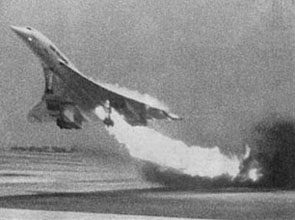
[IMGCAP(1)]When the magnificent Concorde thundered down runway 26R at Paris Charles de Gaulle Airport in July 2000, it became one of the most scrutinized airplane accidents on record. After a spectacular display of flaming fuel, the aircraft climbed to about 200 feet agl, pitched up, rolled inverted and crashed. All 100 passengers, six flight attendants and three cockpit crew members were killed, along with five people on the ground.

Aircraft accident investigators often refer to the chain of errors, preventing any one of which would stop the accident from happening. The Concorde mishap is perhaps an all-time classic in this regard, since there was a clear indication that there were…

Read More »
Pilot in aircraft
Sign-up for newsletters & special offers!

Get the latest stories & special offers delivered directly to your inbox.

SUBSCRIBE