Aviation Safety

NTSB Reports

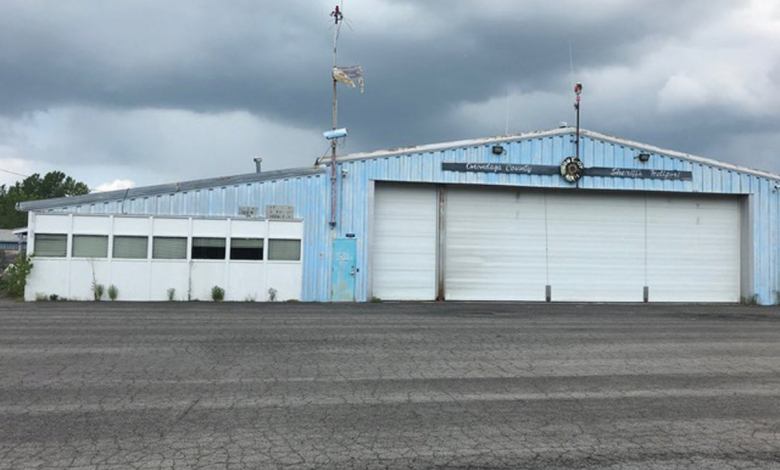
At about 1725 Eastern time, the airplane sustained substantial damage following a landing gear separation during landing. The flight instructor in the right seat and the pilot receiving instruction in the left seat sustained no injuries. Visual conditions were present.

Read More »

Minimizing The Risk Of Engine Failure

Almost from the beginning of our training, pilots are taught how to react to an engine failure. Before that, though, were also taught how to conduct a preflight inspection to ensure the engine (and the rest of the aircraft) is ready for what we are planning. Thats as it should be, since mechanical failures are a major component of overall accident causes, right after the pilot making a mistake. The good news is that the typical piston engine in a personal aircraft is much more reliable than it was a few years ago. The bad news is those reliability improvements often result in pilots giving little thought to piston engine aircraft reliability because failures have become so rare.

Read More »

ICON A5 Feedback

First my condolences and prayers go out to the entire Halladay family; his was a tragic loss.I commend Mr. Wright on his emphasizing risk management awareness, not only regarding the A5 but similar general aviation safety issues. Unlike many light sport aircraft that I am familiar with, the A5s inherent engineering design and safety features are second to none.

Read More »

Just Go Around

Its a moment you probably wont forget. After your instructor handed back your signed logbook and reached for the cockpit door, he or she reminded you, If anything about the landing doesnt look right, just go around.

Read More »

Spinning Your Gyros

Over the last couple of years, Ive spent some time helping students transition to full-fledged private pilots. One of the first questions I do is ask them is to picture a standard six-pack of steam-gauge instruments and explain what they each do and where they get their energy. Most pilots can quickly rattle off the airspeed indicator, the altimeter and the vertical speed indicator. Those systems are relatively simple to understand and describe.

Read More »

Seeing The Invisible

Most pilots venture into windy conditions with enough skills and smarts to know how to either avoid or cope with them. But wind-related accidents are still commonplace, so clearly we dont always get it right. One reason for this may be fairly simple: With the exception of blowing snow, tornadoes, dust devils and some cloud formations, wind is usually invisible. To visualize what is going on, you have to visualize wind currents, which is where my experience whitewater rafting has served me well.

Read More »

A Big Win, For Now

Long-time readers will recall my several scribblings in opposition to proposals to privatize the U.S. air traffic control (ATC) system, and my encouragement to those same readers to communicate their views to their federal elected officials. Im happy to report our opposition to this solution in search of a problem has been successful: On February 27, U.S. Rep. Bill Shuster (R-Penn.), the proposals architect and chairman of the House of Representatives Committee on Transportation and Infrastructure, announced he would remove it from pending FAA legislation.

Read More »

NTSB Reports

The pilot reported attempting to activate the airports pilot-controlled lighting (PCL) system, but was unsuccessful. He continued toward the airport and, while maneuvering for a landing, he lost sight of the airport. The pilot continued to descend, however, and the airplane sustained substantial damage when it impacted a fence adjacent to the runway at around 1650 Central time. The private airports owner reported the PCL does not receive signals from the southeast, due to obstructions. The accident airplane was approaching from the southeast.

Read More »

A Turn Too Late

Its easy to look at controlled flight into terrain (CFIT) accidents as the kind youll never get into. Sure; you may suffer an engine failure from contaminated fuel, or scrape a wingtip while landing in a stiff crosswind or even forget to put down the gear before landing. But flying a perfectly good airplane into the side of a mountain? Never happen. The thing is, Im relatively certain every pilot who was ever involved in a CFIT accident said the same thing at one point or another, perhaps right up until the moment a tree trunk came through the windshield.

Read More »

Tune And Identify

Im a 63-year-old pilot completing my IFR training and obtaining a high-performance endorsement for a 182. Virtually all of my training has been with a large flight school in South Florida (name withheld to protect the guilty).In my regular life Im a senior faculty member for a respected trade association. After about 30 years as an educator, Ive learned that a successful learning outcome happens when the teacher is addressing the unique learning styles of each individual student. All of my students are adults with varying skill and education levels. If I teach in a manner that I think is the right way, but fail to connect with the individual student, Ive failed as an instructor.

Read More »
Pilot in aircraft
Sign-up for newsletters & special offers!

Get the latest stories & special offers delivered directly to your inbox.

SUBSCRIBE