











Aviation Safety

Open to Trouble

The following information is derived from the FAAs Service Difficulty Reports and Aviation Maintenance Alerts.


The FAA Aircraft Certification Office has called again for inspecting the door handles of Beech Debonairs, Bonanzas, Barons and Travel Airs. The checks are required by AD 97-14-15, but pilots should also familiarize themselves with the POH section on actions required in the case of the door coming unlatched in flight.

Pilots should be aware that an open door creates a lot of noise and loose objects in the cabin can blow around vigorously.

When inspecting the door handles, ensure the door handles are installed correctly and that the door handle does not have a worn…
Read More »

Strut Protection

The following information is derived from the FAAs Service Difficulty Reports and Aviation Maintenance Alerts.

———-

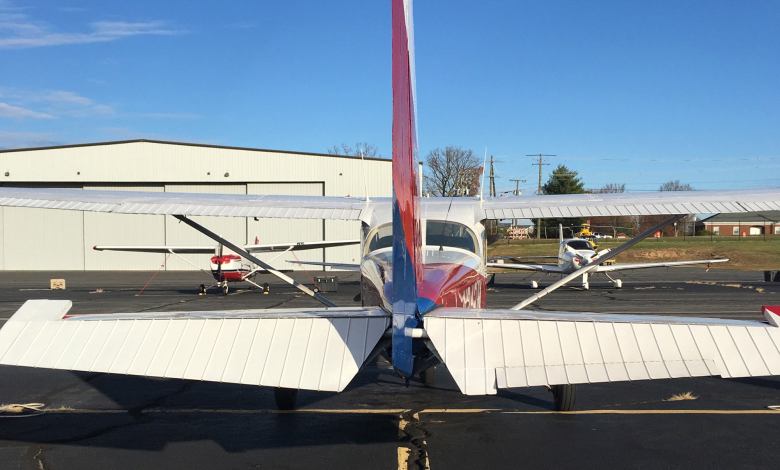
The NTSB has recommended that initial and repetitive non-destructive inspections be accomplished on main landing gear spring struts of Cessna tailwheel airplanes.

These recommendations stem from an investigation of an accident in which the main gear spring failed at the upper axle attachment to the spring strut. This particular spring strut underwent major repair for previous damage prior to this accident.

FAA Service Difficulty Reports indicate that failures can occur in the gear spring struts at the axle attachment. Generally, such failures occur from corr…

Read More »

Rude Awakening

There has been an attempt to increase pilot awareness of the dangers of runway incursions, and I have been trying to follow some of the published suggestions put forward by AOPA, namely: Do not taxi onto or across a runway unless you are certain the ground controller has given you clearance to do so. If there is the slightest doubt, ask.

Unfortunately these have backfired on two occasions.

Recently I was departing Islip, N.Y., and was told by Clearance to expect to depart from runway 24. The taxi instructions given to me by Ground included instructions to taxi onto runway 6 because there was a lot of work being done on the taxiways. As I was about to turn onto runway 6 I felt a littl…

Read More »

Defeating a Trap

Your cover story, Tech Trap, [Airmanship, August] definitely underscores a very acute problem today for both pilots and CFIs. The NTSB report of the JFK Jr. accident concludes that Kennedy did not have the autopilot engaged at the time of the crash.

Neither Flight Safety Academy in Vero Beach, Fla., where both John and I received much of our flight training, nor any other flight school in the United States is mandated to train on the use of autopilot, GPS, weather, terrain or traffic warning equipment in order for a pilot to earn private, instrument or commercial rating.

Last fall I had my new Garmin 530/430-equipped Piper Saratoga upgraded to include Honeywells new Enhanced Ground P…

Read More »

Why Cant We Land?

[IMGCAP(1)]Day in day out, week after week, in good weather and in poor, pilots are beating the snot out of airplanes, using the runway, edge lights, signs, ditches or anything else that gets in the way of their landings.

Landing accidents account for more than a third of all general aviation accidents. While landing accidents are not as likely to be fatal as other kinds of crashes – only 3 to 4 percent of fatal accidents are caused by poor landings – they are responsible for nearly 500 bent airplanes per year.

General aviation accidents tend to be caused more often by pilot error than by mechanical problems, and those pilot errors can be separated into two categories: judgment error…

Read More »

A Whole New World

The worst thing anyone could do with an airplane has now been done. Several times.

As this issue goes to press, just how the suicide hijackers will change aviation remains in a state of flux. Odds are that, when the dust settles, flying will be more like before rather than less so – that many of the flight restrictions will be lifted and pilots will again be essentially free to carry on.

However, in light of the fact that much of the general public now sees light aircraft as potential threats, all pilots can do a few things to minimize the chance that the kinds of episodes that happened with an airliner will happen with a general aviation airplane.

• Secure your airplane. Make…

Read More »

NTSB Preliminary Reports

The following briefs were selected from the 119 preliminary reports filed with the NTSB in September 2001. Statements in quotes were taken directly from the NTSB documents. The information is subject to change as the investigations are completed.


Sept. 01, Carson City, Nev.
Piper Dakota

At 19:53 Pacific time, a Piper PA-28-235 lost power while on approach to Carson Airport and crashed into the back yard of a residence. The pilot, the passenger and a resident of the property who was standing in the yard were seriously injured. The pilot told an FAA inspector he switched fuel tanks as he approached the airport and the engine lost power as he turned on base leg. Attem…

Read More »

NTSB Reports

The following briefs were selected from the 136 preliminary reports filed with the NTSB in March 2002. Statements in quotes were taken directly from the NTSB documents. The information is subject to change as the investigations are completed.


March 01, Austin, Texas
Beech Bonanza

At 1641 central time, a Beech A36 crashed during a missed approach at Austin Bergstrom International Airport, killing the pilot and passenger. The pilot was cleared for the ILS Runway 17L approach and maintained the localizer and glidepath until near the approach end of the runway. At that point, the pilot declared a missed approach and the tower issued missed approach instructions. The ai…

Read More »

Light Retract Safety

For owners not blessed with heroic stick-and-rudder skills and cash to burn, the usual sequence of ownership starts with a fixed-gear single and progresses to a high-performance retractable. For many owners, the retract is the end game.

The attraction of a folding-gear single is undeniable. These models are plentiful in both variety and price, most offer good performance at reasonable operating costs and they usually do represent a step-up in performance and capability.

Ignoring price and performance for this analysis, were comparing these aircraft strictly on one narrow parameter: the models accident record. What kinds of accidents do they suffer and how do they compare with each ot…

Read More »

Nowhere to Hide

[IMGCAP(1)]If the lure of exploration is strong, those magazine pictures of the backcountry airstrips, such as those in the Northern Rockies, are an irresistible lure. Vast areas in the United States are designated as wilderness area and are accessible only by horseback, hiking, drift boat – or airplanes.

Most wilderness areas contain a system of airstrips ranging from nice grass airstrips with plenty of width and length to strips that are barely wide enough for the landing gear of a STOL aircraft. This is a very challenging aviation environment that must be flown by the right pilot, with the right equipment, training, experience and weather.

The safety margins are very thin in thes…

Read More »
Pilot in aircraft
Sign-up for newsletters & special offers!

Get the latest stories & special offers delivered directly to your inbox.

SUBSCRIBE
