Aviation Safety

Legal Vs. Safe

I was struck by the number of seemingly active pilots Ive talked to in the days leading up to press time in early April who profess to be out of currency for instrument flying.

In some ways, this can be expected, since low freezing levels keep many pilots out of the clouds during the winter. Recently Ive had the same kind of problem. Through a combination of circumstances and an unusual winter, I didnt do much flying in IMC simply because there wasnt much around on those times when Ive used an airplane for travel.

I try to get an instrument proficiency check every six months, regardless of how much instrument flying Ive been doing. Its a strategy I adopted years ago for a rather…
Read More »

Shoot, No Chute

The following information is derived from the FAAs Service Difficulty Reports and Aviation Maintenance Alerts.


Three days after the FAA issued an airworthiness directive on the Cirrus Design emergency parachute, the first parachute deployed in actual emergency conditions failed to fire and the SR-20 crashed. The pilot and passenger were not injured.

The FAA published AD 2002-05-05 on March 13, with an effective date of March 19. The AD requires the owners of some SR-20s and SR-26s to avoid flying at night or in IMC until installing a clamp on the cable that activates the parachutes rocket – with the installation due within 10 flight hours.

The accident airplane belonged…

Read More »

Improving Stats

The article Why Twins Crash [Safety Analysis, March] calls attention to our industrys continued insistence on attempting to analyze the hazards of flight with one eye blind. Im referring to the inexplicable failure to institute a simple method of determining the number of hours we actually fly each year.

For some time I have been attempting, without success, to advance an idea (someone else had) whose time is long overdue. Were mechanics required to send in a post card after each annual inspection detailing the make and model of the airplane and its hours flown, anyone else with an interest would have accurate data on the number of hours flown by each type of aircraft in the fleet.

Read More »

NTSB Reports

The following briefs were selected from the 130 preliminary reports filed with the NTSB in October 2001. Statements in quotes were taken directly from the NTSB documents. The information is subject to change as the investigations are completed.


Oct. 01, Lindsay, Mont.
Cessna Skyhawk

At about 17:00 mountain time, a Cessna 172 crashed into terrain while in cruise flight near Lindsay. The pilot, who was seriously injured, had opened a VFR flight plan about 35 minutes earlier. The aircraft was in cruise flight at 300 feet agl when the pilot was distracted by tuning a radio.

Oct. 02, Hudson, N.H.
Beech C-45H (Military Twin Beech)

At about 13:10 easter…

Read More »

NTSB Preliminary Reports

The following briefs were selected from the 121 preliminary reports filed with the NTSB in December 2001. Statements in quotes were taken directly from the NTSB documents. The information is subject to change as the investigations are completed.


Nov. 02, Argyle, N.Y.
Cessna Skyhawk

At about 14:10 eastern time, a Cessna 172D crashed while returning to land at Argyle Airport. The pilot was not injured. The pilot said the oil access door popped open shortly after takeoff when he was at about 150 feet agl. He decided to return for a landing and made a left turn toward the airport. He said the airplane then lost lift because of strong wind and the airplane struck the…

Read More »

A Handle on Repairs

[IMGCAP(1)]Advice: $50. Good Advice: $100. Questions Answered: $50. Dumb Questions Answered: $100. Service: $50/hr. Service if you participate: $100/hr.

For most owners, airplane maintenance is a pit of quicksand. If you plunge in, its easy to get in over your head. But if you stay out, mechanical problems can accumulate until dispatch reliability and safety are severely compromised.

The question each owner has to ask is how involved in maintenance they want to be. The question has many answers, and the road to answering it depends upon first determining your objectives. Is the goal to save money? Improve reliability? Log hours toward the A&P requirement?

Next, you have to ask yo…

Read More »

Spotting Trouble

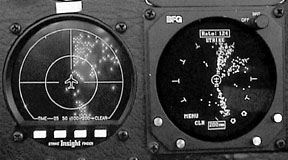
[IMGCAP(1)]Thunderstorm. That word causes more angst among aviators than just about any other atmospheric phenomenon. The thought of getting tangled up in the violent bowels of a mature thunderstorm – heavy rain, severe turbulence, hail and lightning – weighs heavily on the mind of any pilot flying or planning to fly when thunderstorms are active.

And that angst is well founded. Every year a number of aircraft, their pilots and passengers are lost to thunderstorms.

A vast array of ground-based and airborne technology, probably worth billions of dollars, is dedicated to helping pilots identify and avoid thunderstorms. The past 20 years has brought a wide acceptance of cockpit-based lig…

Read More »

Unwanted Push

[IMGCAP(1)]One of the most basic tenets in aviation is that an airplane ought to take off and land into the wind. Yet each year the accident statistics show that some pilots refuse to follow this basic rule. And each year the tailwind factor results in bent aluminum, injured passengers, or worse.

Right off well acknowledge that there are occasions when a downwind departure is necessary. For example it is quite common due to ATC traffic flow and airport congestion at large terminals such as JFK, LaGuardia, Teterboro or Washingtons Reagan National. Then there are airports such as Aspen, Colo., with a mandatory downhill departure on runway 33 – often with tailwinds – due to surrounding t…

Read More »
Pilot in aircraft
Sign-up for newsletters & special offers!

Get the latest stories & special offers delivered directly to your inbox.

SUBSCRIBE