










Recovery Room
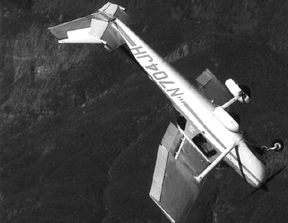
Understanding spins takes far more training than a one-shot exposure to a one-turn spin.

Understanding spins takes far more training than a one-shot exposure to a one-turn spin.
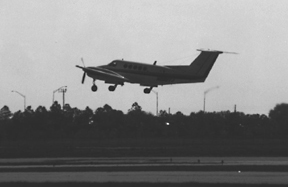
An engine failure on takeoff will take you by surprise, so be spring-loaded for action.

Class B airspace can be complex and unforgiving, even to experienced pilots who think they know the ropes.
Mooney proves up to the challenge of a huge cabin and fuel load, but the ice in the clouds was the icing on the cake.
The following briefs were selected from the 138 preliminary reports filed with the NTSB in March 2001. Statements in quotes were taken directly from the NTSB documents. The information is subject to change as the investigations are completed. Click here to view “Accident Totals, March.”
———-
March 01, Newark, Ohio
Cessna Centurion
At 12:55 eastern time, a Cessna 210 was damaged during landing at Newark-Heath Airport following an apparent loss of elevator control. The pilot and passenger were not injured. The pilot was descending at the end of a cross-country trip when he noticed he had to use both hands on the yoke to…
How about a tip of the hat for the long-suffering flight instructor, a hardworking professional who gets neither the respect nor the pay he deserves. And considering the risks involved in teaching a ham-fisted neophyte to fly, we wonder how it is that many survive for long.
Is that a credit to raw skill or the clever design of the average primary trainer? A little of both, we suppose, but from time to time, were asked to rate training aircraft solely on safety records, good or bad.
In a joint research project with our sister publication, The Aviation Consumer, we launched an effort to assess the safety of different models of airplanes. In our first – and we hope not last – analysis, w…
Pilots love control. From the first flying lesson on, instructors preach the need to be in control of the flight and the airplane.
And despite the fact that those FAA people on the radio are called controllers, most pilots secretly believe those folks are really coordinators. Theres no question whos really in control. After all, FAR 91.3 says the PIC is the final authority and you can do what you gotta do.
However, situations routinely develop where competent and qualified pilots who know what they have to do fall into the trap of letting outsiders dictate a course of events that run counter to the pilots safety. This goes beyond ATC, of course. Pilots find themselves pushed by…
Pilots who fly IFR – especially single-pilot IFR – love to debate the merits of George. Not as in Bush, but as in that electronic servant who will fly your airplane any time you want.
Some advocate handing over the manipulation duties as soon as the gear is up on all flights, and letting George have it all the way to short final. Others consider the autopilot a necessary evil, to be used only when absolutely necessary – and turned off as soon as possible. To some its a savior, to others a crutch for the weak. Whats the truth?
To my eye, a crutch that can fail for those who lack skill, a snake waiting to bite those who misuse it, and a tool that can help the pilot who uses it effect…
The February article Moment of Truth on takeoff techniques brought a flood of mail. The comments generally pertained to two parts of the article: the dynamic effect of crosswinds and the effect of headwinds on takeoff runs.
Regarding the effect of crosswinds on controllability, the most common misperception is that the sole purpose of applying aileron control into the wind is to increase ground friction on the upwind wheel and stop the airplane from drifting downwind. It is true aileron into the crosswind does indeed increase friction on the upwind tire and aids in offsetting wind drift, but the primary purpose is to prevent the windward wing from rising.
The greater the surface area…
Without a doubt, human brains are the fastest and most versatile computers in the world. Thats especially true when the humans in question are pilots, but when it comes to repetitive tasks such as monitoring the progress of a flight on instruments, pilots can learn a thing or two watching silicon-based computers operate.
Once a digital computer has been programmed to perform certain operations, it just keeps on cranking through it until told to do something else. It repeats what it does, over and over and over. The same way. Every time. Because of this, computers are ideally suited for repetitive tasks that need to be done consistently, uniformly and flawlessly.
In an effort to lear…

Get the latest stories & special offers delivered directly to your inbox.
SUBSCRIBE