Aviation Safety

Windy City

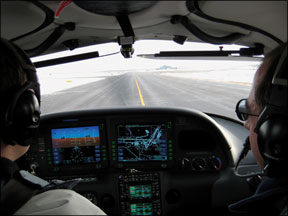
Id had enough of Chicago for one weekend. It was spring of 2002, and the U.S. was still reacting to 9/11. Id flown into now-defunct Meigs Field a few days earlier for business and pleasure. Now, I was ready to go, having overdosed on both. First, of course, I had to get through Mayor Daleys gauntlet of airline-style security: After presenting my pilot certificate, drivers license, a picture of my first-born male child and assorted other documentation, three of Chicagos Finest watched me walk through a metal detector. I preflighted, loaded my bags, strapped in and listened to the ATIS. A Notam prohibited single-engine operations in a 20-knot-or-greater direct crosswind. The runway at Meigs, of course, was oriented 18/36. The observed wind was from 090 at 20 knots; the tower would not clear me to takeoff.
Read More »

Separations

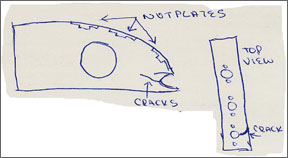
A technician submitted discrepancy reports for the same problem in six different aircraft undergoing annual inspection. Aircraft included an F33A Bonanza, V35B Bonanza, A36 Bonanza, a Model 55 Baron and two B95 Travel Airs. Of these six aircraft, total times ranged from 3144.9 to 5255.1 hours. The FAA noted, “This is awfully good anecdotal evidence arguing for close attention to these actuation attach points after a couple thousand hours.”

Read More »

The Problem With Flight Training

For a long time now, loss-of-control accidents in general aviation have been driven by relatively few but recurring causes pointing to fundamental problems in pilot training. These problems seem national in scope. The NTSBs findings in two recent crashes illustrate the point. One was the fatal stall/spin of an American Champion Decathlon in Oroville, Calif., in October 2005; the other the much-reported crash of a Cirrus SR20 into a Manhattan apartment building in October 2006. In both accidents-the Decathlon involving a high-time ATP, the Cirrus an 88-hour major league baseball player new to aviation-there were common threads. Both reveal systemic errors and omissions in our standard flight training. Methodology, in my estimation. These two accidents vividly show that our training is deficient in teaching stall/spin awareness, cockpit resource management and risk analysis. Why cant we figure this out?

Read More »

Osmosis

In putting together this issue, which includes major articles on flight training and gaining experience, I got to thinking about how I obtained what experience I have. I also got to thinking about all the experience I have yet to obtain. My primary training included at least four different airplanes, five or six instructors and several months. For the next five or so years, I seldom flew enough to stay legally current; forget proficient. As my “career” got going, I had more free time and flying was one way to occupy it; aviating had the added benefit of setting me apart from the masses. It also made for some quick and easy beach and holiday trips. Very soon, an instrument rating was necessary, which I eked out over a year or so, thanks to a veteran ATP/CFII/ABC/XYZ. Then came weather flying, longer trips and the ongoing quest for IFR currency.

Read More »

More Hypoxic Stupidity

A few years ago, as a relatively low-time private pilot with a brand-new instrument rating, flying a normally aspirated piston single in northern New Mexico, I decided that before I venture into the mountains on my own, I should take a mountain flying course offered by a local CFII. The three-day program was extraordinarily valuable, particularly to a low-time lowlander like myself. One thing we did made a huge impression on me; Id like to pass it along under the general heading of hypoxic stupidity. After taking off from Telluride, we headed back to Taos “over the ridge,” taking us to approximately 14,000 feet. About the time we actually got that high, the instructor told me to shed the oxygen, start the panel timer and give him reciprocals to headings hed give me. Normally, I can do that in my sleep, and for the first 1 minutes, I complied.

Read More »

December 8, 2007, Bloomfield, Ken., Cessna T210N

At 1515 Eastern time, the airplane collided with the ground and was destroyed. Instrument conditions prevailed. The private instrument-rated pilot and passenger received fatal injuries. According to ATC, the pilot had read back his clearance to descend from 8000 feet to 6000 feet when radar and radio contact with the flight was lost. Witnesses in the local area reported hearing an airplane and then a crash. The witnesses stated that the airplanes engine sounded very loud until the impact. The wreckage path was 3000 feet long by 500 feet wide, on a 145-degree heading from the first fragment (a fiberglass segment of the right wing tip) to the main wreckage.

Read More »

December 8, 2007, Parkland, Fla., Piper PA-30/Cessna 152

The two airplanes were destroyed at 1454 Eastern time during a mid-air collision over the Everglades. The private pilot in the Piper and the student pilot in the Cessna were fatally injured. Visual conditions prevailed. The Piper was operating on an IFR flight plan. Preliminary review of ATC data reveal both airplanes had operating transponders and altitude encoders, with the Piper operating on a discreet transponder code, and the Cessna operating on the standard VFR 1200 code. Prior to the collision, the Piper was headed eastbound at 2000 feet msl and the Cessna was headed southbound. At 1453:35, the controller advised the Piper pilot of “traffic eleven oclock, two miles, southbound, altitude indicates two thousand two hundred.”

Read More »

December 10, 2007, Salmon, Idaho, Beech 200

At 0752 Mountain time, the airplane collided with a hangar and was destroyed while attempting to return to its departure airport immediately after takeoff. The commercial pilot and one passenger received fatal injuries; two other passengers were uninjured. The flight was departing in a snowstorm of varying intensity and had been instructed to maintain VFR until it was able to contact ATC to open an IFR flight plan. There was no report of an ELT activation. According to the two surviving passengers, the aircraft entered a series of steep banks immediately after liftoff, and seemed to be unable to climb. Although the aircraft was shaking and shuddering, the pilot was eventually able to make a left turn and maneuver the aircraft to a downwind leg on the west side of the airport.

Read More »

December 13, 2007, Marathon, Fla., Piper PA-32-260

The airplane experienced a total loss of engine power and ditched at about 0830 Eastern time. The pilot and pilot-rated passenger received minor injuries and the airplane sustained substantial damage. Visual conditions prevailed. According to the pilot, while returning to the airport following practice maneuvers, the engine lost power. The pilot announced the loss of engine power over the Unicom radio frequency and prepared the airplane for ditching. After ditching, the pilot and passenger egressed through the cabin door, and were picked up shortly afterwards by the Coast Guard. The pilot stated that the airplane floated for about three minutes and then began to sink.

Read More »

December 16, 2007, Providence, R.I., Bombardier CL600-2B19 Regional Jet

At 1648 Eastern time, the airplane departed the runway after a hard landing. The flight was a regularly scheduled passenger flight operated by Air Wisconsin. The three crew members and 31 passengers were not injured, and exited the airplane via the normal airstair door. Initial information indicates the airplane touched down hard approximately 1000-1200 feet from the runway threshold. The airplane porpoised after touchdown and exited the left side of the runway. At approximately 3000 feet from the threshold the left main gear entered the snow and grass area, and by 3200 feet, both main gear had exited the runway

Read More »
Pilot in aircraft
Sign-up for newsletters & special offers!

Get the latest stories & special offers delivered directly to your inbox.

SUBSCRIBE