Aviation Safety

April 1, 2011, Greenwood, Miss., Piper PA 46-350P

The airplane sustained substantial damage to both wings during a precautionary landing at 1820 Central time following a partial loss of engine power during climb to cruise. The airline transport pilot and passenger were not injured. Visual conditions prevailed; an instrument flight plan was filed to New Orleans, La. The flight originated from Memphis, Tenn., at 1720.
Read More »

The Red Knob II: Where To Put The Mixture

Pilots are famous for arguing the finer points of various procedures they employ when flying. In recent years, few topics have generated more “discussion” and disagreement than when and how to lean a gasoline-fueled piston-engines fuel mixture. A previous article (“The Red Knob,” April 2011) explored the benefits of modern multi-cylinder engine monitors, closely balanced fuel flow between all cylinders of an engine and the effects leaning from full rich have on parameters like exhaust gas temperature (EGT), internal cylinder pressure (ICP) and cylinder head temperature (CHT).

Read More »

Flying AOA

Aerodynamics 101 teaches us about angle of attack and that all wings have a critical one at which they will stall. Afterward, were treated to a discussion about accelerated stalls and how the airplane will enthusiastically stop flying at an airspeed sometimes well above its straight-ahead stalling speed. Were also taught about stall-warning systems and how they are designed to alert us when were approaching that critical angle of attack.

Read More »

Your Altimeter Lies

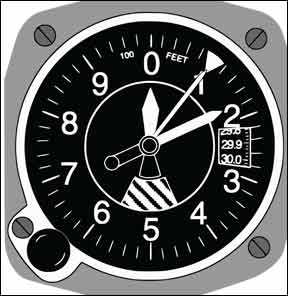
The instruments in our so-called “steam-gauge” panels are marvels of ingenuity. A collection of springs, tubing, gears, bellows, shafts and dials, their basic design predates most of the pilots staring at them. While they have, for the most part, been rendered obsolete by the latest microelectronics and air-data computers, they still work as advertised. Well, pretty much. The fact is our faithful mechanical instruments are regularly susceptible to certain errors. Too, they can fall victim to not-so-regular problems, mostly brought about through neglect or damage. The good news is many of these errors are predictable, if we take the time to understand how the instruments work and how the errors may manifest themselves.

Read More »

Do You Need To Set Personal Minimums?

Those who successfully earn the private certificate or an instrument rating are told many things along the way. Among them is their hard-fought goal is a license to learn; they should carefully consider the first few hours they spend aloft without someone in the right seat; they should consider setting something called “personal minimums” for themselves. All of these suggestions can be helpful to someone who hasnt fully considered all the responsibilities and freedoms their new certificate or rating affords. Meanwhile, some would suggest the best advice a new pilot could receive is “just go fly.” Personal minimums, of course, generally are a set of conditions-not unlike the basic VFR weather minimums or the ceiling and visibility requirements for an instrument approach, but also involving other operational considerations-beyond which a pilot vows not to fly.

Read More »

Impossible Takeoff

Ive done my share of flying to and from soft fields, in a variety of airplanes, including 150s, 172s and my current flivver, a Beech Debonair. The landing portion doesnt require a great deal of planning-presuming the runway isnt too short-and my primary training taught me well enough I never have a problem with the arrival. The departure, however, is another thing entirely. The built-in deceleration a soft field provides on landing works against us on takeoff. Soft terrain, high grass and (my) imperfect technique all combine to lengthen the takeoff roll. I know this, again thanks to my training, and always pull out the AFM/POH or a soft-field takeoff checklist to review the procedures. Ideally, I do that-plus run a basic soft-field takeoff performance calculation-before even committing to go into such a landing area.

Read More »

Yanking And Banking

I watched a demonstration by the pilot of a U.S. Air Force F-22 Raptor on one of the nicer weather-days at this years Sun n Fun International Fly-In and Expo (the day before the tornado hit). The Raptors most unique characteristic-from an observers standpoint and in addition to its efficient conversation of fuel into noise-is its ability to maneuver at extremely high angles of attack-maintaining a constant AoA of over 60 deg. in sustained flight. Watch an F-22-or any other high-performance aircraft-maneuver, however, and you may notice an interesting pattern. Any time the fighter changes attitude under a G-load, the pilot does so incrementally. He or she changes pitch, then changes bank, or the pilot changes bank and then changes pitch. You never see a radical pitch and bank change simultaneously.

Read More »

Quality

A few items of interest crossed my desk in recent weeks, leading to a variety of reactions and thoughts, plus a few rants and smiles. Bear with me for a moment, because all this stuff is linked together.First out of the chute: The NTSB in April released its aviation accident statistics for 2010. As has been the case in recent years, the news for general aviation is mixed.

Read More »

Mea Culpa

I was very pleased to read the “mea culpa” and clarification in your May issue to the effect that pilots of certified aircraft do not have to make their own independent calculation of the appropriate indicated VNE speed for each altitude within its operating altitude range. As you noted, FAR 23.1545(c) requires the manufacturer to make that information available to the pilot in the language you put in bold in the sidebar. You have a great magazine which is studied carefully by pilots interested in safety. So it is very important that misleading articles be corrected or clarified as you did in this instance. Congratulations to your readers who caught the error and to Aviation Safety for the correction.

Read More »

March 2, 2011, Birmingham, Ala., Bell 206-L4

At 1756 Central time, the helicopter was force-landed during a post-maintenance test flight. Day visual conditions prevailed. The solo airline transport pilot was not injured. The helicopter sustained substantial damage to the tailboom section just aft of the cabin.According to the pilot, the engine governor was replaced earlier in the day and the test flight was to confirm proper inflight settings.

Read More »
Pilot in aircraft
Sign-up for newsletters & special offers!

Get the latest stories & special offers delivered directly to your inbox.

SUBSCRIBE