














‘Pressure Is Real’: ATCs Prepare for $0 Paycheck

Per Transportation Secretary Sean Duffy, staffing has accounted for more than the typical 5 percent of air travel delays in October.

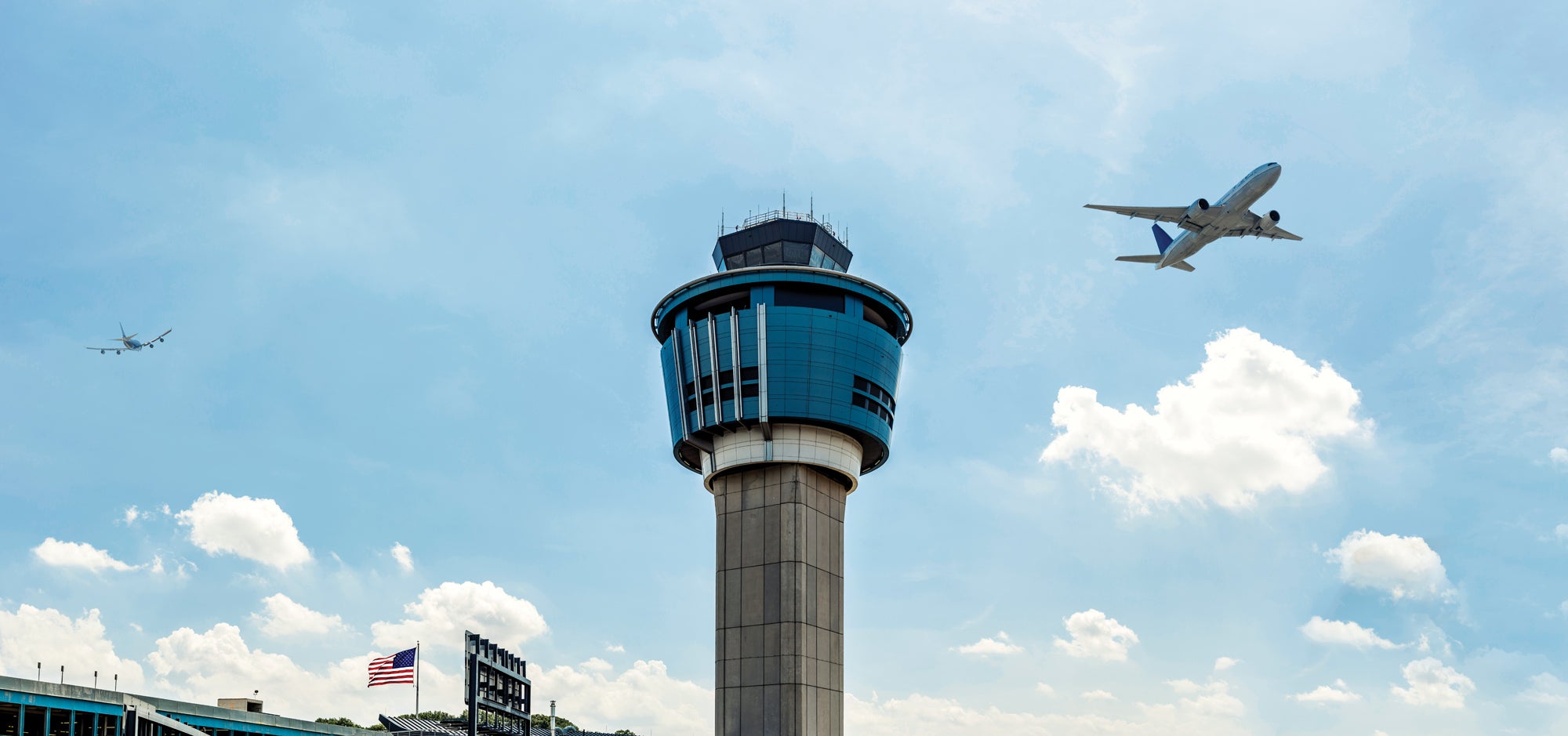
air traffic control tower
The Transportation Department warned that it may have to close sections of U.S. airspace due to a shortage of air traffic controllers. [Courtesy: iStock/JasonDoiy]
Gemini Sparkle

Key Takeaways:

  • U.S. air traffic controllers (ATCs) are working without pay for 28 days due to a government shutdown, causing severe financial hardship for an already overburdened and short-staffed workforce.
  • The lack of pay is dramatically increasing flight delays (44% attributed to staffing issues) and pushing current ATCs to their limits, with some considering leaving their critical jobs.
  • The shutdown also threatens the future pipeline of ATCs, as trainees are discontinuing their studies due to financial stress, exacerbating the existing staffing shortage and long-term air travel reliability.
See a mistake? Contact us.

The country’s already overburdened workforce of about 13,000 air traffic controllers (ATCs) is preparing for its first $0 paychecks since the federal government shut down 28 days ago.

Speaking at LaGuardia Airport (KLGA) on Tuesday, U.S. Transportation Secretary Sean Duffy reissued his call for ATCs to show up for work after earlier this month threatening to fire those who call out sick.


But he acknowledged the growing difficulties of working an already stressful job without pay. Per the National Air Traffic Controllers Association (NATCA), the U.S. has a shortfall of about 3,800 fully certified ATCs. Many work 10-hour days and six-day weeks to bridge the gap.

“I’ll tell you this: Almost every controller can’t make it two paychecks,” Duffy said, adding that FAA protocols ensure that flying remains safe.

But that doesn’t mean it will be reliable. On Sunday, Duffy said, 44 percent of U.S. flight delays were due to staffing issues at towers and other ATC facilities. That figure—which is normally around 5 percent—spiked at 53 percent earlier this month.

Mounting Pressure

Duffy earlier this month acknowledged a “slight pickup” in ATC sick leave. Though controllers are forbidden by law from organizing sick-outs or other work actions, a small group was widely credited with bringing the previous shutdown in 2019 to an end. Widespread flight disruptions created by sick calls reportedly pressured the White House to negotiate. A deal to reopen the government was struck hours later.

“There’ll be no concerted effort for air traffic controllers to in any way have a job action,” NATCA president Nick Daniels said Tuesday at LaGuardia.

However, he added that “problems are mounting daily.” Daniels last week said many ATCs have taken on second jobs, such as driving for Uber or DoorDash. Duffy said some airlines have chipped in to buy them lunch.

“The pressure is real,” said Joe Segretto, facility representative for the New York terminal radar approach control (TRACON) facility (N90), which manages the airspace of LaGuardia and John F. Kennedy International Airport (KJFK). “We have trainees that are trying to learn a new job that is very fast paced, very stressful, very complex, now having to worry about how they’re going to pay bills.”

Segretto on Tuesday said a colleague came to him for advice, asking if he should spend his money on gas, food, or day care.

“I didn’t have the answers,” he said.

Daniels said another controller told him she may not be able to afford lifesaving medicine, forcing her to find a different job.

“If she doesn’t get the medicine she needs, she dies,” he said.

How ATCs Could Get Paid

Reopening the government would restore ATC paychecks and take some stress off controllers’ plates. But with no end to the shutdown in sight, lawmakers are exploring alternatives.

Last week, two bills that proposed to pay ATCs—one Republican-led, one Democrat-led—failed to receive the necessary votes in the Senate. Senate Republicans have introduced another bill, the “Keep America Flying Act of 2026,” that would make “continuing appropriations” for FAA and Transportation Security Administration (TSA) personnel.

However, finding that money would be no small task.

“I’ve looked at the FAA budget to see if we could find resources to pay our controllers, and it becomes really challenging in a shutdown to make that happen,” Duffy said.

The White House may have found a way to circumvent $0 paychecks for military members, directing the Pentagon earlier this month to draw from $8 billion in previously appropriated—but unused—funding. The Pentagon also accepted an anonymous donation of $130 million to pay servicemembers. But efforts to do the same for ATCs have thus far been fruitless.

Also of concern is funding for ATC training. Though the FAA Academy in Oklahoma City remains open, instructors are working without pay. According to Duffy, there is only “about a week left” of funding to cover academy student stipends for food, housing, and other costs. Some trainees are “bailing” or “walking away,” he said last week.

“I’m very concerned about what this does for our pipeline,” Duffy said. “It drives people out of a profession where we’re trying to build more numbers as opposed to the shutdown taking numbers away from us.”

The FAA aims to hire at least 8,900 ATCs through 2028 and in September met its 2025 hiring target of 2,000. But the longer the shutdown persists, the deeper the impact could be. Before manning the control tower, trainees spend months at the FAA Academy and years learning the ropes of their airspace. The prospect of not being paid after all that trouble could discourage future candidates.

“Today, an air traffic controller showed up at their facility to see $0 in their paycheck,” said Daniels. “That air traffic controller just moved hundreds of miles from Oklahoma City after passing a grueling four months at the Oklahoma City academy, is at the lowest end of our pay scale, and has shown up to a job that pays them $0.”

Thousands of controllers continue to oversee the safety of nearly 35,000 flights and millions of passengers every day. But they are being pushed to their limits, and the effects are being felt. On Saturday, for example, the FAA issued staffing triggers for 22 facilities.

“That’s one of the highest that we’ve seen in the system since the shutdown began,” Duffy said on Fox News’ Sunday Morning Futures. “And that’s a sign that the controllers are wearing thin.”

Jack Daleo

Jack is a staff writer covering advanced air mobility, including everything from drones to unmanned aircraft systems to space travel—and a whole lot more. He spent close to two years reporting on drone delivery for FreightWaves, covering the biggest news and developments in the space and connecting with industry executives and experts. Jack is also a basketball aficionado, a frequent traveler and a lover of all things logistics.

Ready to Sell Your Aircraft?

List your airplane on AircraftForSale.com and reach qualified buyers.

List Your Aircraft
AircraftForSale Logo | FLYING Logo
Pilot in aircraft
Sign-up for newsletters & special offers!

Get the latest stories & special offers delivered directly to your inbox.

SUBSCRIBE
