














At Eleventh Hour, Defense Department Raises Concerns About ROTOR Act

House of Representatives will discuss the air safety legislation this week.

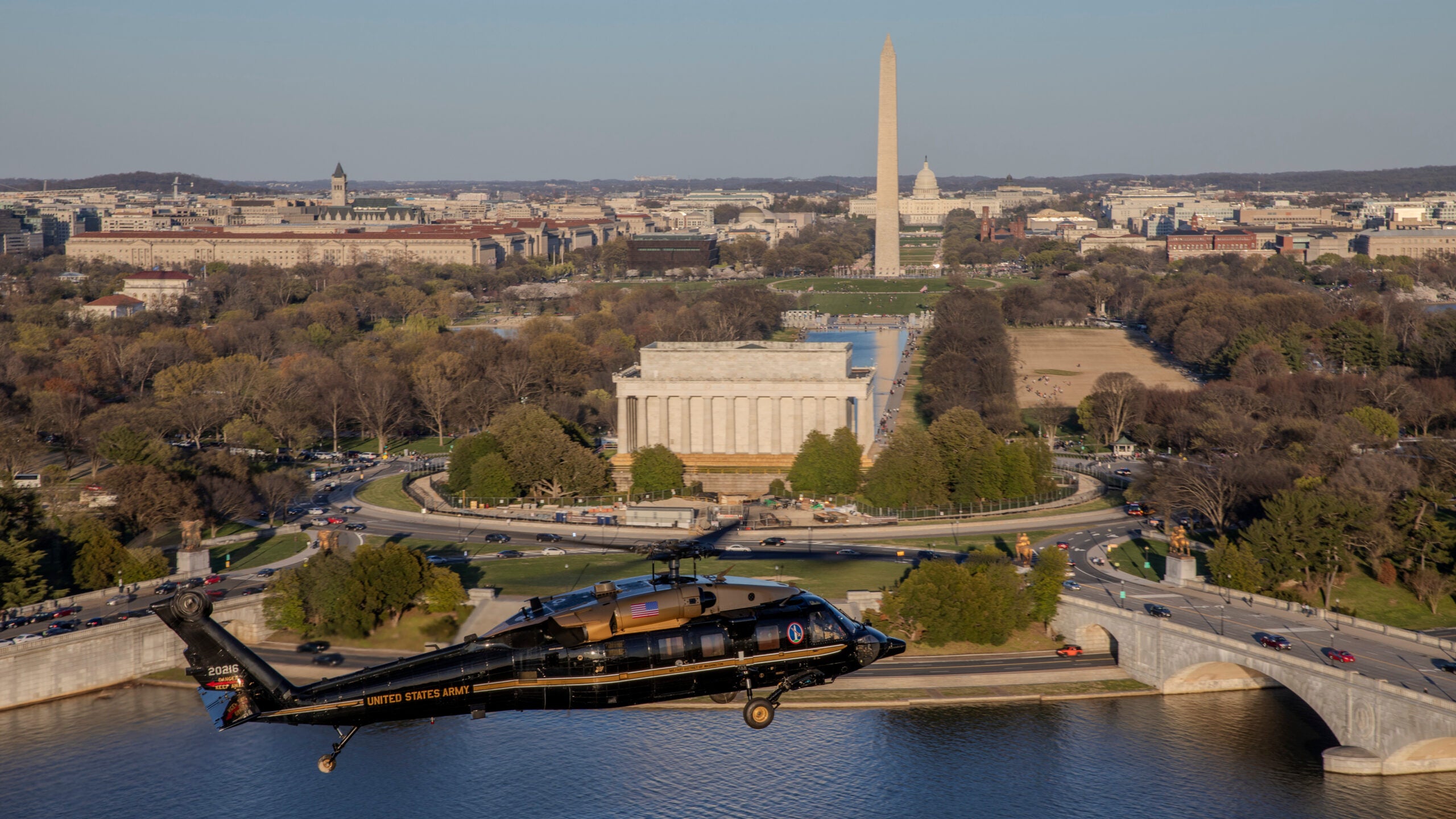
U.S. Army Black Hawk helicopter flies near Washington D.C.
A U.S. Army Black Hawk flies over Washington, D.C. [Credit: Nicholas Priest/U.S. Air Force]
Gemini Sparkle

Key Takeaways:

  • The U.S. Defense Department has announced its opposition to the ROTOR Act, citing "significant unresolved budgetary burdens and operational security risks" for military helicopter operations, despite supporting the bill's safety objectives.
  • The ROTOR Act was drafted following a deadly collision involving a U.S. Army Black Hawk and aims to enhance air safety by mandating ADS-B navigation technology for all aircraft and narrowing exceptions for military helicopters broadcasting their position.
  • The Pentagon's opposition stems from the current draft not incorporating previously discussed updates, while the bill has strong support from the NTSB, airline industry, and victims' families.
  • An alternative bill, the ALERT Act, is being considered by some House Republicans, but it notably omits the ADS-B In mandate for pilots that the ROTOR Act includes, drawing criticism from pilot associations.
See a mistake? Contact us.

The U.S. Defense Department on Monday came out against the ROTOR Act, just hours before it was to be taken up by the House of Representatives.

In a statement, defense officials expressed appreciation for the work of the bill’s backers, most notably Senate Commerce Committee Chair Ted Cruz and Ranking Member Maria Cantwell, but voiced misgivings about the potential impact on military helicopter operations.


“Over the past months, the department worked closely with the Senate Commerce, Science, and Transportation Committee to incorporate provisions addressing critical safety, budgetary, and national security considerations associated with sensitive rotorcraft operations,” the statement read. “While we continue to support the intent and objectives of the legislation, the version passed by the Senate does not reflect several of the mutually discussed updates.”

The ROTOR Act was drafted last year in response to the collision of an American Airlines passenger jet and a U.S. Army Black Hawk helicopter over Washington, D.C., which killed a total of 67 people. It would require civilian and military aircraft operators to install and use ADS-B navigation technology, while also ordering studies of the Army’s compliance with FAA flight planning and the airspace around Ronald Reagan Washington National Airport (KDCA).

The American jet was preparing to land at Reagan National at the time of crash.

Additionally, the Rotorcraft Operations Transparency and Oversight Reform Act would narrow the definition of a “sensitive government mission,” where military helicopters are allowed to fly without broadcasting their position.

The bill passed the U.S. Senate late last year. It is set to be discussed in the House this week, with a vote expected as early as Tuesday.

Near Earth and Honeywell are partnering to retrofit U.S. Army Black Hawk helicopters with autonomy systems.
A U.S. Army Black Hawk helicopter [Courtesy: U.S. Army]

The Defense Department’s relatively brief message did not detail specific points of disagreement with the ROTOR Act.

“As currently drafted, enactment would create significant unresolved budgetary burdens and operational security risks affecting national defense activities,” the Pentagon said. “The department remains ready to continue productive dialogue with Congress to ensure the legislation achieves its safety goals while protecting essential operational capabilities and resources.”

The ROTOR Act has received support from National Transportation Safety Board (NTSB) Chair Jennifer Homendy, important segments of the airline industry, and families of the victims of the crash.

ALERT Act Alternative

According to Politico, Speaker Mike Johnson’s decision to fast-track the ROTOR Act has rankled some House Republican committee leaders, who are pushing their own air safety legislation, known as the ALERT Act. That bill was unveiled last week, after the NTSB published its final report and recommendations on the D.C. collision.

Notably, the ALERT Act does not mandate the use of ADS-B In, a point which drew criticism from the Air Line Pilots Association (ALPA) last week.

“We have the data and the verdict is clear: no more exceptions,” the union said in a statement on Friday. “The ROTOR Act got it right on ADS-B In. Every aircraft required to broadcast ADS-B Out should have ADS-B In integrated into the flight deck for pilot use.”

It is not clear if the House Republicans behind the Airspace Location and Enhanced Risk Transparency Act will attempt to block the ROTOR Act.

Zach Vasile

Zach Vasile is a writer and editor covering news in all aspects of aviation. He has reported for and contributed to the Manchester Journal Inquirer, the Hartford Business Journal, the Charlotte Observer, and the Washington Examiner, with his area of focus being the intersection of business and government policy.

Ready to Sell Your Aircraft?

List your airplane on AircraftForSale.com and reach qualified buyers.

List Your Aircraft
AircraftForSale Logo | FLYING Logo
Pilot in aircraft
Sign-up for newsletters & special offers!

Get the latest stories & special offers delivered directly to your inbox.

SUBSCRIBE
