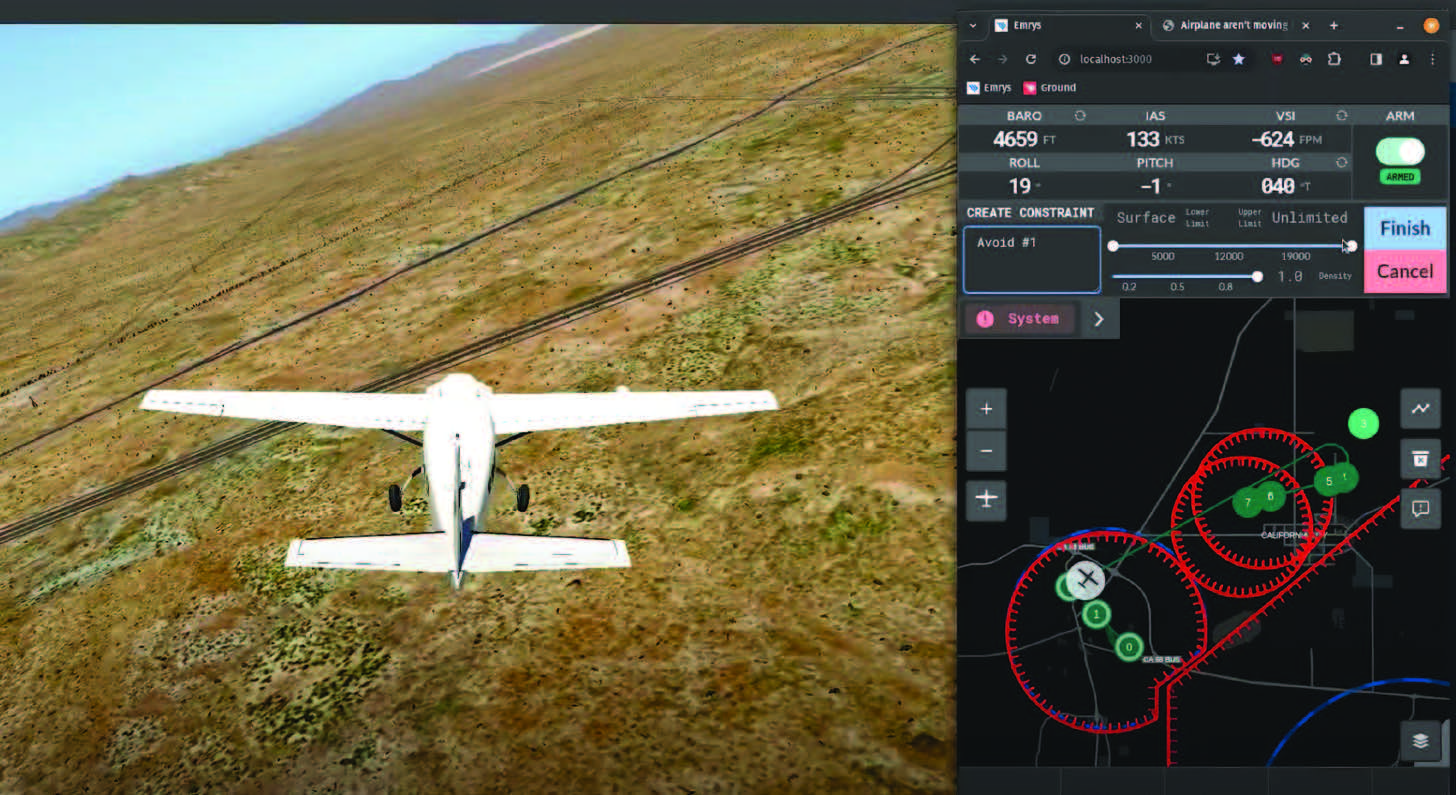
Last September, Merlin began a test campaign using a Cessna Caravan. [Courtesy: Merlin Labs]
Key Takeaways:
Despite current FAA mandates, technology firms are actively developing systems for reduced or single-pilot commercial flight operations, with some airlines foreseeing a path to full autonomy.
Pilot unions, particularly the Air Line Pilots Association (ALPA), strongly oppose these initiatives, citing extensive research, public opinion, and the critical, irreplaceable role of two human pilots in ensuring flight safety and handling contingencies.
Developers like Merlin Labs and Reliable Robotics are working with the FAA to certify their advanced automation for initial use in cargo aircraft, aiming to incrementally expand capabilities towards reduced or crewless flight while adhering to stringent safety standards.
Former FAA Administrator Mike Whitaker in September reiterated a long-standing agency commitment: Two pilots must always be on the flight deck during routine commercial flight operations.
But that hasn’t stopped companies from developing technology designed to reduce or even eliminate crews—and airlines and pilots are divided on whether that will compromise safety.
CREATE A FREE ACCOUNT
Sign up to keep reading
Create a free account to continue. Already a member? Sign in below.
Jack is a staff writer covering advanced air mobility, including everything from drones to unmanned aircraft systems to space travel—and a whole lot more. He spent close to two years reporting on drone delivery for FreightWaves, covering the biggest news and developments in the space and connecting with industry executives and experts. Jack is also a basketball aficionado, a frequent traveler and a lover of all things logistics.