













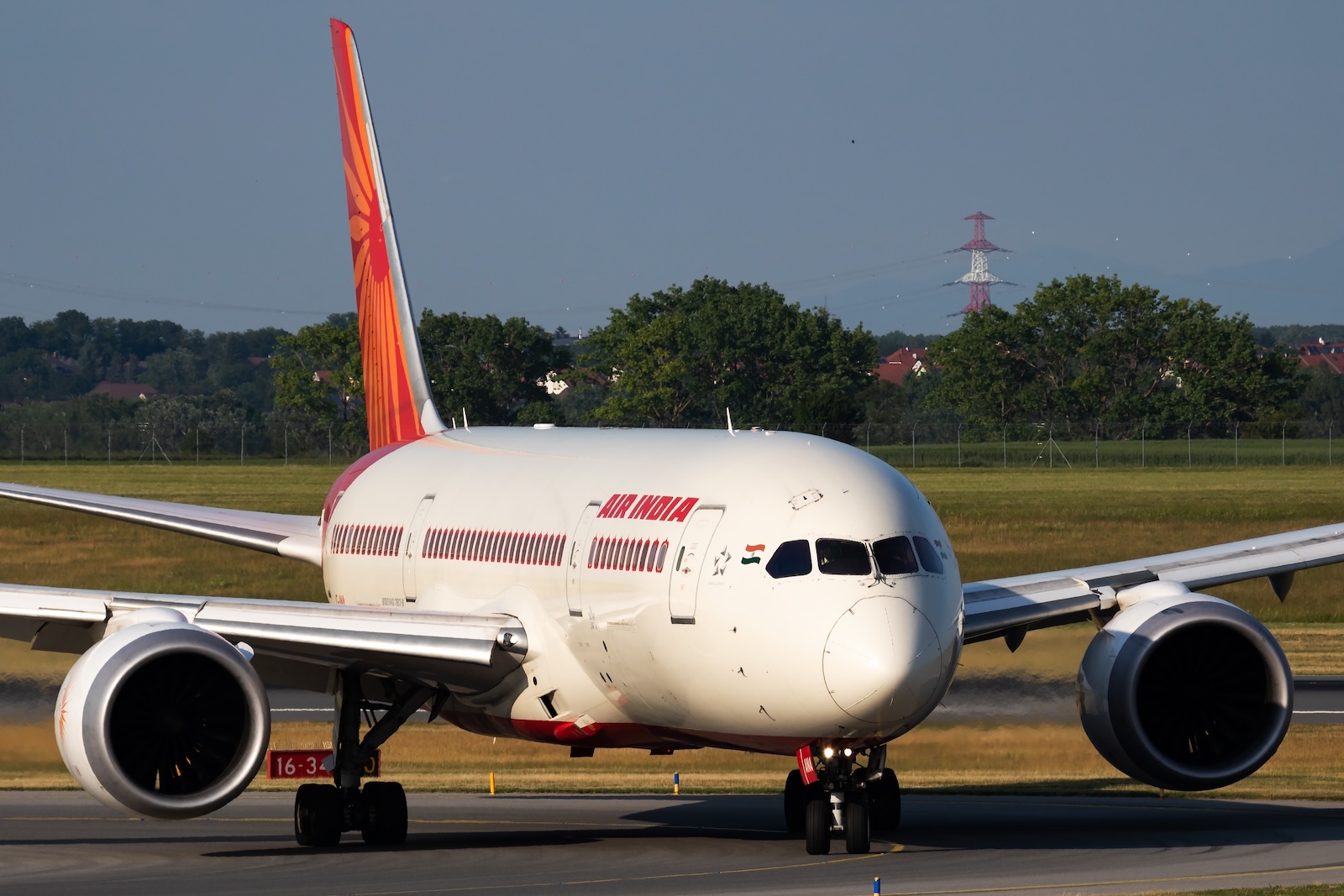


The preliminary investigation into the crash of an Air India flight in June suggests the fuel supply to the engines was shut off shortly after takeoff—an act that surprised both pilots, according to the cockpit voice recorder (CVR).
The Boeing 787-8 Dreamliner had just lifted off from Ahmedabad airport (VAAH) bound for London when video shows the airline barely climbing, then it began a slow descent into a building off the end of the runway. The crash and subsequent fire killed 260 people, of whom 18 were on the ground. One passenger survived.
Investigators recovered the aircraft’s CVR and data recorders within days of the crash. Technicians and investigators have spent the past few weeks going through more than 49 hours of flight data and two hours of cockpit audio to try to determine the events that led to the accident. The information was used to create the preliminary investigation report.
FLYING obtained a copy of the preliminary investigation report compiled by India’s Aircraft Accident Investigation Bureau (AAIB).
According to the AAIB report, the aircraft was cleared for takeoff from Runway 24 at 08:07:33 local time. The jet reached an airspeed of 180 knots when the fuel cutoff switches were “transitioned from ‘RUN’ to ‘CUTOFF’ position one after another with a time gap of [one second].”
On the cockpit voice recording, one of the pilots is heard asking the other why he shut off the fuel. The other pilot responds he did not shut off the fuel.
The switches were restored to the “FUEL ON” position, and one of the pilots called “Mayday” at 08:09:05.
The report indicates the switches were in the “OFF” position but does not state if the switches were repositioned by one of the pilots or another means.
The switches are located in the cockpit just below the throttles. The switches are protected on either side by a small guardrail. The switches are designed to be resistant to accidental movement, as they need to be pulled up to be released and then repositioned.
Video captured by an airport camera shows the ram air turbine (RAT), which activates in an emergency to provide the aircraft with electrical power, deployed during the aircraft’s attempted climbout. Photos in the report indicate that at the time of impact, the landing gear was in the “DOWN” position, and the flaps were set at 5 degrees, which is normal for takeoff.
In addition, both fuel thrust levers were full forward, and the fuel control switches were found in the “RUN” position.
According to the report, the engines were in the process of powering back up, but it was too little too late, and the airliner, out of runway, descended into the campus of a medical college outside the airport and off the extended centerline of the runway. The jet collided with trees and a chimney and began to fragment as it continued into several buildings. Five structures were heavily damaged by fire.
The investigation includes representatives from the National Transportation Safety Board (NTSB), FAA, Boeing, GE, the United Kingdom, Portugal, and Canada, as some of the passengers were from these nations.
The report ends with a reminder that the investigation is still in the preliminary stages, and no recommendations of action have been made to either Boeing or GE.


