














A-10, Other Legacy Aircraft Provided New Lifeline

Latest defense bill provisions would extend inventory requirements and restrict divestments across multiple fleets.

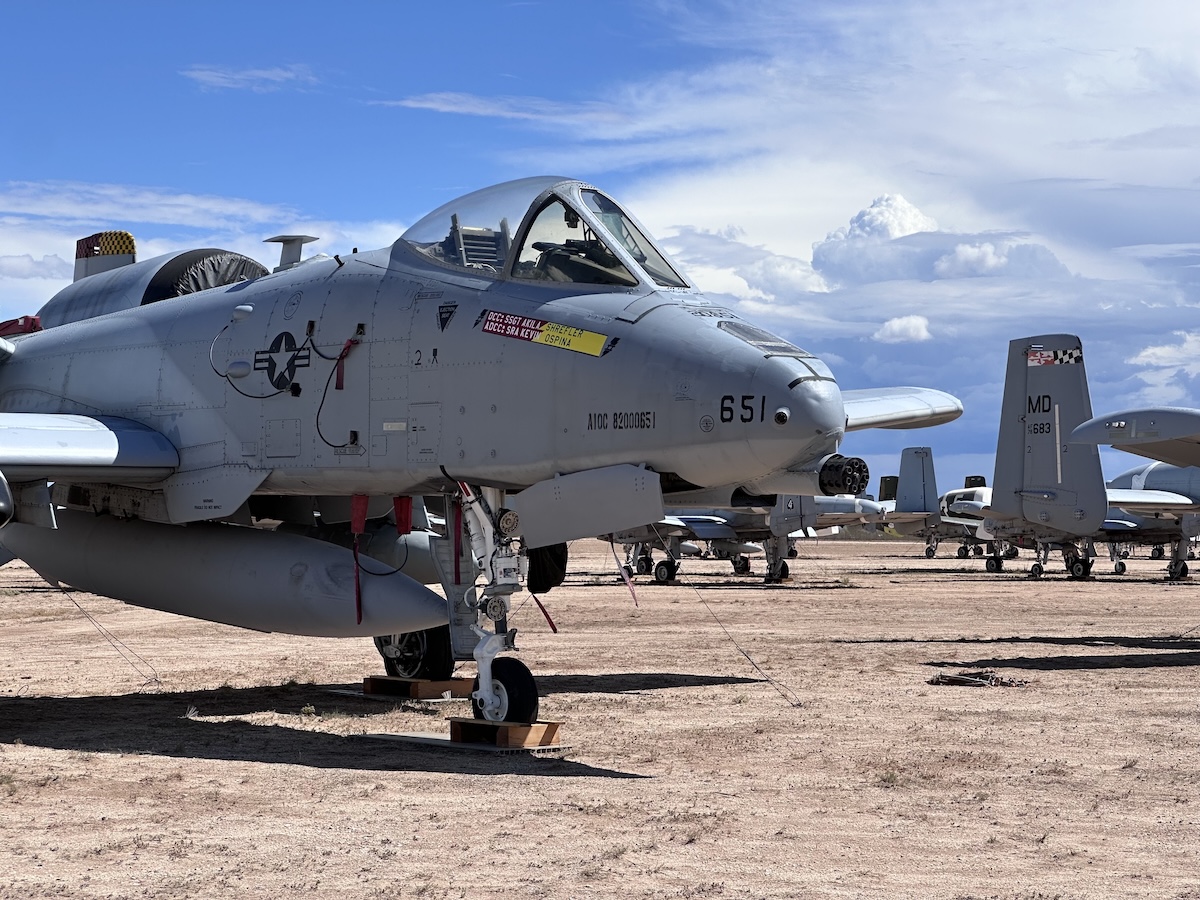
A-10 aircraft in storage at Davis–Monthan Air Force Base
A-10 aircraft in storage at Davis–Monthan Air Force Base [Credit: Ryan Ewing]
Gemini Sparkle

Key Takeaways:

  • Congress is imposing new restrictions on Air Force aircraft retirements through the fiscal year 2026 National Defense Authorization Act (NDAA).
  • The legislation mandates minimum inventory levels, delays planned divestitures, and adds new reporting requirements for various legacy fleets.
  • Key aircraft affected include the A-10 Warthog, F-15E Strike Eagle, and E-3 Sentry, with specific prohibitions or limits on their retirement and sustainment funding.
  • Further restrictions extend to the storage of retired KC-10 Extenders and continued prohibitions on reductions for RQ-4 Global Hawk, C-130 Hercules, and B-1B Lancer fleets.
See a mistake? Contact us.

Congress is moving to impose new restrictions on several planned Air Force aircraft retirements as part of the fiscal year 2026 National Defense Authorization Act (NDAA). 

The legislation, which includes House- and Senate-negotiated text, would adjust minimum inventory levels, delay approved divestitures, and add new reporting requirements across a range of legacy fleets. The NDAA is a yearly defense policy measure that must pass both chambers before being signed into law. The current draft reflects the version heading toward final consideration.


A-10 Provisions

The bill modifies a previous statutory requirement for A-10 Warthog inventory levels by adjusting the Primary Mission Aircraft Inventory (PMAI) minimum to 93 aircraft through October 1, 2026, replacing the earlier mandate of 96. It also blocks the Air Force from taking retirement steps between October 1, 2025, and September 30, 2026, that would reduce the total number of A-10s below 103 aircraft.

During that period, the service may not “reduce funding for unit personnel or weapon system sustainment activities…in a manner that presumes future congressional authority to divest such aircraft,” nor place aircraft into “XJ” status—an Air Force designation for aircraft considered excess to a unit’s requirements and awaiting formal disposition instructions. 

Aircraft in XJ status are not flyable for missions and are typically prepared for retirement, transfer, or long-term storage.

Individual A-10s may still be removed from service if deemed uneconomical to repair due to accidents, mishaps, or material degradation.

The legislation also requires a detailed briefing to Congress by March 31, 2026, outlining every A-10 aircraft by tail number and fleet category, planned divestment dates, and the Air Force’s full retirement and transition plan ahead of its goal to divest the fleet before 2029.

Around 200 A-10s remain in service, down from the 700 built. 

F-15E Restrictions

The bill also proposes new limits on F-15E Strike Eagle retirement authority. From enactment through the end of fiscal 2026, the Air Force would be prohibited from retiring any F-15Es. The service could retire up to 21 aircraft in fiscal 2027 and 30 in fiscal 2028, with a cumulative limit of 51 through September 30, 2030.

The measure similarly bars reductions to personnel or sustainment funding in ways that anticipate future approval to divest the aircraft.

KC-10 Storage Requirements

Retired KC-10 Extenders would be required to remain preserved in the “same storage condition” they held on September 30, 2025. They may be disposed of under existing federal property rules, but the Air Force cannot alter their preservation status beforehand.

The last KC-10 was retired in September 2024.

KC-10s in storage at Davis–Monthan Air Force Base
KC-10s in storage at Davis–Monthan Air Force Base [Credit: FLYING/Connor O’Shea]

E-3 AWACS Limits and E-7 Transition

The legislation would prohibit reductions that take the E-3 Sentry fleet below 16 aircraft in fiscal 2026, including any step toward retirement, storage, or backup inventory placement. The restriction may be lifted if the Air Force submits a plan to Congress showing how mission readiness would be maintained. 

The limitations would also not apply once sufficient E-7 Wedgetail aircraft are procured and delivered to assume the E-3 mission load.

Other fleet-specific measures include:

  • RQ-4 Global Hawk: Extension of the existing prohibition on reducing the fleet through September 30, 2030
  • C-130 Hercules: One-year extension of the minimum fleet requirement and continued prohibition on reducing Air National Guard C-130 units
  • B-1B Lancer: Extension of the ban on reducing B-1 bomber squadrons through September 30, 2030
C-130 aircraft in storage
C-130 aircraft in storage [Credit: Ryan Ewing]

The bill also updates the statutory requirement for the Air Force’s annual tactical fighter force-structure report, extending it through 2030.

The NDAA authorizes programs and sets force-structure requirements across the Department of Defense. While it does not appropriate funds, it establishes limits and reporting mandates that guide service planning. 

Ryan Ewing

Ryan is Sr. Director of Digital for Firecrown's Aviation Group. In 2013, he founded AirlineGeeks.com, a leading trade publication covering the airline industry. Since then, his work has been featured in several publications and news outlets, including CNN, WJLA, CNET, and Business Insider. During his time in the airline industry, he's worked in roles pertaining to airport/airline operations while holding a B.S. in Air Transportation Management from Arizona State University along with an MBA. Previously, he worked for a Part 135 operator and later a major airline. Ryan is also an Adjunct Instructor at Embry-Riddle Aeronautical University.

Ready to Sell Your Aircraft?

List your airplane on AircraftForSale.com and reach qualified buyers.

List Your Aircraft
AircraftForSale Logo | FLYING Logo
Pilot in aircraft
Sign-up for newsletters & special offers!

Get the latest stories & special offers delivered directly to your inbox.

SUBSCRIBE
