













Register

Losing It

Spatial orientation is the bodys natural ability to maintain orientation and/or posture in relation to the surrounding physical environment, both at rest and in motion. Its a highly evolved ability, which uses visual and vestibular (inner ear) sensory inputs, as well as our sometimes unconscious ability to understand positioning of our body and its various parts. Together, these senses tell our brain what our body is doing and what is happening to it.

Gemini Sparkle

Key Takeaways:

  • Spatial disorientation is a critical threat to pilots, stemming from humans' evolutionary lack of natural 3D orientation, making accurate interpretation of flight instruments essential.
  • Even experienced pilots are highly susceptible to spatial disorientation, especially when faced with instrument failures, distractions, or over-reliance on automation, emphasizing the need for robust manual instrument flying skills.
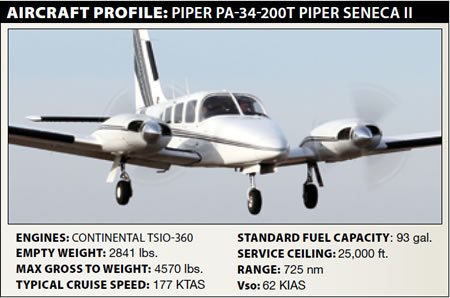
  • A Piper Seneca II accident exemplifies this danger: the pilot lost control in Instrument Meteorological Conditions (IMC) due to spatial disorientation, leading to an uncontrolled descent, exceedance of the aircraft's never-exceed speed (VNE), and a fatal in-flight breakup.
  • The NTSB determined the probable cause was the pilot's loss of control due to spatial disorientation, likely triggered by an attempt to correct a misprogrammed approach while in challenging instrument flight conditions.
See a mistake? Contact us.

Spatial orientation is the body’s natural ability to maintain orientation and/or posture in relation to the surrounding physical environment, both at rest and in motion. It’s a highly evolved ability, which uses visual and vestibular (inner ear) sensory inputs, as well as our sometimes unconscious ability to understand positioning of our body and its various parts. Together, these senses tell our brain what our body is doing and what is happening to it.

Unfortunately, evolution has let down pilots, at least so far, because most of the time humans have spent orienting ourselves in space has been in a two-dimensional environment. Flying is a three-dimensional activity, and we simply haven’t been doing it long enough as a species for evolution to provide the tools we need to determine our orientation when we’re not on terra firma. To compensate, humans developed gyros, which retain their position in space, and are used to determine just how far displaced we are from straight and level. When we don’t have some reference by which to determine our body position and relative motion, spatial disorientation results, and it can be lethal.


Ready to Sell Your Aircraft?

List your airplane on AircraftForSale.com and reach qualified buyers.

List Your Aircraft
AircraftForSale Logo | FLYING Logo
Pilot in aircraft
Sign-up for newsletters & special offers!

Get the latest stories & special offers delivered directly to your inbox.

SUBSCRIBE