











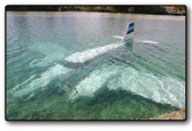


I thoroughly enjoyed Bryan Websters recent ditching article (“Top Five Ditching Myths,” September 2006). I flew single-engine planes from Aruba in the 50s and 60s. When leaving on any overwater flight, I would take the time to climb to 10,000 feet or so while circling, before heading out over the water. Of course, this minimized the likelihood of having to ditch after an engine failure.
In preparing for an island-hopping trip to Florida and back in a Piper Tri-Pacer, I designed and fabricated a series of polystyrene blocks coated with fiberglass cloth and plastic resin. These fit into the back seats, the hat shelf and in the luggage compartment. I calculated this would float the plane if we had to ditch; I didnt have the “opportunity” to test my theory. The U.S. Customs officials at West Palm Beach International accepted my explanation of our strange-looking cargo and walked away scratching their heads. One minor nit with your article: Id recommend adding a good, buoyant signal mirror to the on-board survival equipment. This is a compact, light and very effective signaling device, one which will never suffer from needing new batteries. Malcolm Murray Any time we fly over water-in a single or a twin-we want as much altitude as we can reasonably get. And your recommendation for carrying a signaling mirror is an excellent one-dont know how that recommendation was omitted from the article. Meanwhile, got any pictures of that loaded Tri-Pacer? KUDOS
Baytown, Texas
I also read Aviation Safety with much interest. It has helped open my eyes to the realities of flying and instilled a very healthy respect for the risks involved in flight. Although there are articles written for pilots with advanced ratings, there is still much for primary students. I feel your magazine should be required reading for every student pilot (but arent we always students, regardless of the number of hours in the log book?).
Thank you for a great publication and keep up the great work! I just wanted you to know another instance where your magazine is adding great value to the pilot community.
Scott B. Malizia
Via e-mail
Thanks, Scott. Well keep doing our part.
No Paper Chase

