
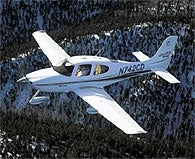


The results are in on a study looking at the safety of so-called “technically advanced airplanes” (TAAs). Conducted by a panel of industry experts assembled as part of the FAA’s Safer Skies Initiative, the study examined airplanes that have technologically advanced features that are intended to make flying safer. The rather startling conclusion was that, without proper training for the pilots who fly them, technically advanced airplanes don’t advance safety at all. Indeed, they can present challenges that under-prepared pilots might not be equipped to handle.
Because there’s no clear dividing line between “technically advanced” airplanes and their more primitive counterparts, the panel came up with a definition that errs, if at all, on the side of simplicity. It classified as a TAA any airplane with, at a minimum, an IFR-certified GPS with a moving map display and an integrated autopilot. TAAs are not, by definition, factory new airplanes. They can be older airplanes that have been retrofitted with high-end avionics.