















Register

AA587: The Perils of Flying by the Book

Gemini Sparkle

Key Takeaways:

  • The crash of American Airlines Flight 587 was caused by the first officer's overly vigorous rudder inputs in response to wake turbulence, leading to the structural failure of the vertical stabilizer.
  • Contributing factors included the Airbus A300-600's highly sensitive rudder system with minimal force feedback and a simulator training routine that potentially encouraged excessive rudder use.
  • The accident revealed a critical misunderstanding among pilots and even the FAA regarding maneuvering speed (VA), with a widespread but incorrect belief that operating below VA provided absolute structural protection against any control inputs.
See a mistake? Contact us.

The November 2001 crash, shortly after takeoff from JFK, of American Airlines Flight 587 sent a tremor through the aviation community. It involved an extremely rare event: the structural failure, and complete separation, of one of the major flying surfaces-namely, the vertical stabilizer-of the airplane, an Airbus A300-600. In the ensuing loss of control, the engines also broke away from the airplane, which crashed on Long Island killing all 265 persons aboard.

According to the National Transportation Safety Board’s recently published report on the accident, only one other commercial airliner, a Boeing 707 that broke apart in severe turbulence near Mt. Fuji in 1966, has ever lost a fin in flight from external causes. That 707 encountered mountain wave turbulence so violent that the airplane broke into a number of pieces before reaching the ground, and a U.S. Navy aircraft sent to investigate encountered gust accelerations far outside the flight envelope of any airliner. In the case of the Airbus, however, extreme turbulence was not a factor. The closest thing to it was the wake of a 747 five miles distant. Such a wake can give even a large airliner a pretty good thump, but cannot tear it apart.
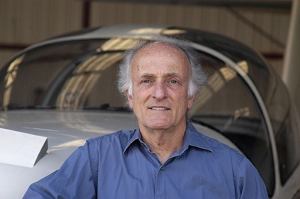

Peter Garrison

Peter Garrison taught himself to use a slide rule and tin snips, built an airplane in his backyard, and flew it to Japan. He began contributing to FLYING in 1968, and he continues to share his columns, ""Technicalities"" and ""Aftermath,"" with FLYING readers.

Ready to Sell Your Aircraft?

List your airplane on AircraftForSale.com and reach qualified buyers.

List Your Aircraft
AircraftForSale Logo | FLYING Logo
Pilot in aircraft
Sign-up for newsletters & special offers!

Get the latest stories & special offers delivered directly to your inbox.

SUBSCRIBE
