
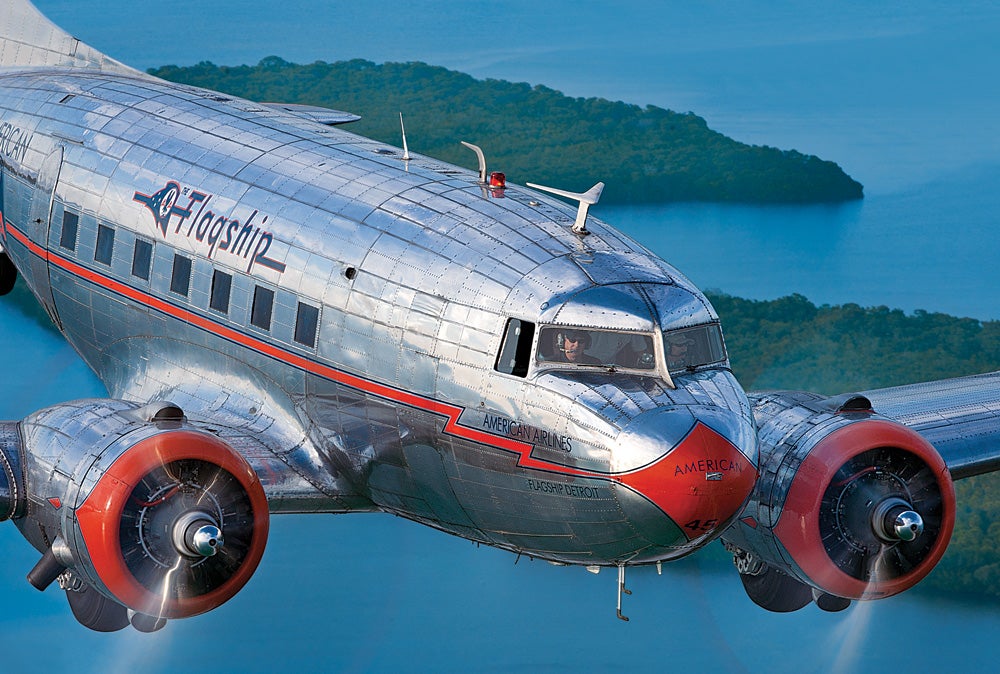


In the early ’60s, when I went wrong and started hanging out at the aerodrome, common wisdom was that the DC-3, while a grand old airplane, had outlived its usefulness to the military, the airlines and even corporate operators. Its death knell was tolling to signal the time had come to relegate these antiques to the boneyard. Fortunately, before last rites were administered, a slew of “Gooney Birds” escaped from old-airplane homes and, in some configuration or another, are alive and well today.
So what can I possibly add to the millions of print words, websites, fan clubs and semireligious cults dedicated to every detail of the airplane’s design, iconic history and idiosyncrasies? When he gets a type rating, every DC-3 driver assumes he’s now an expert and, given the slightest chance, will pontificate on incredibly obscure details of its plumbing, wiring, engine operation and reproductive system. He will, of course, also tell you how to fly one. But I kind of respect that; a hopeful who doesn’t know the “right stuff,” the stories — like how to start one with an inoperable fuel pump (straddle the cowling and pour a can of avgas in the intake as the engine’s cranking), how to eyeball the tailwheel strut to see if someone has loaded 8,000 pounds instead of 6,000, or what the F-bolt is — probably won’t pass the check ride.