











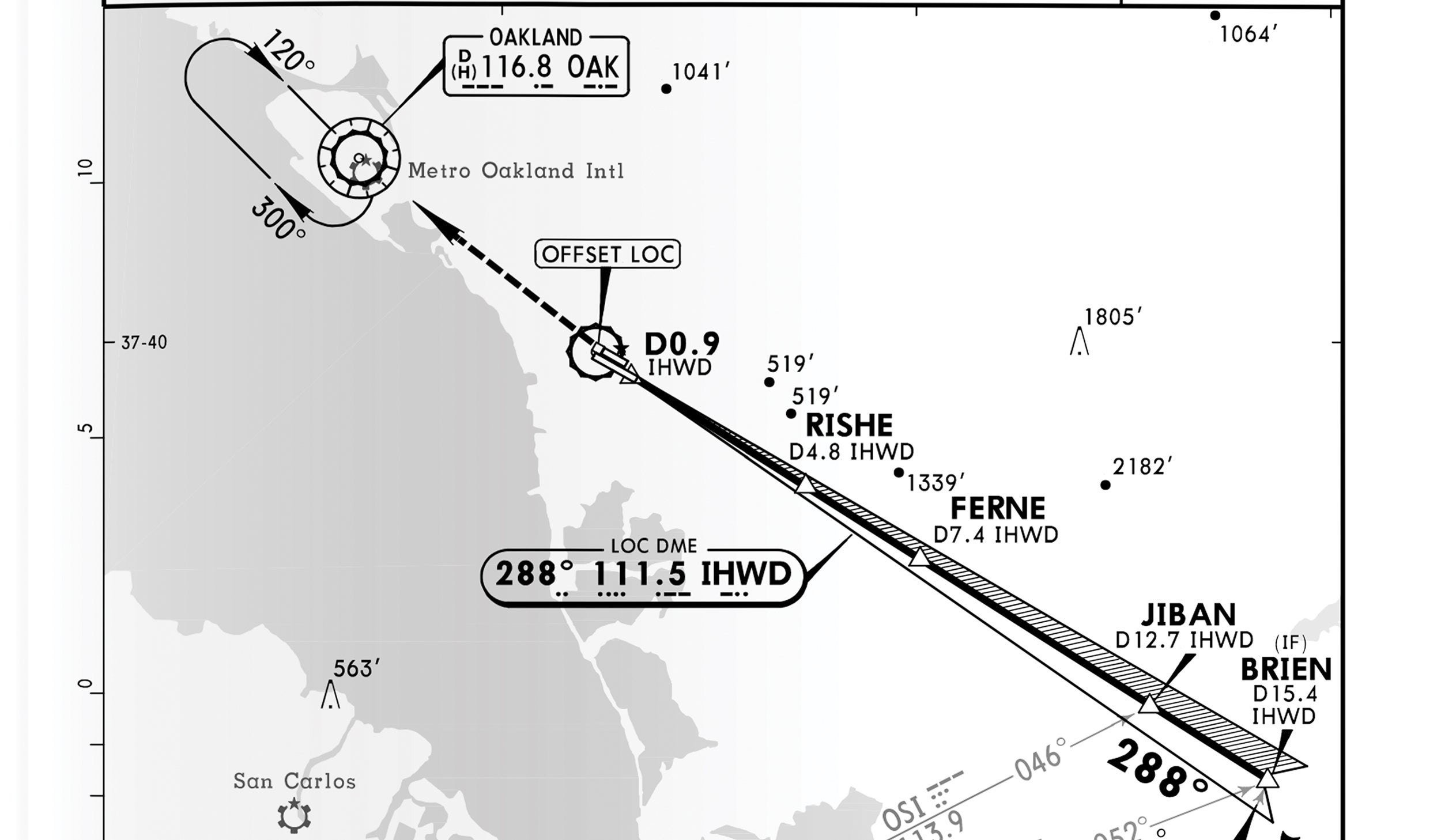



Localizer-only approaches have been around for decades, providing better-than-VOR lateral guidance while demanding no special cockpit avionics except the standard VOR-ILS indicator common to most airplanes. When it comes to accuracy, full-scale deflection of the course-deviation indicator from the center on a VOR signal represents 12 degrees off course, while a similar deflection on the narrower localizer signal represents between 3 and 6 degrees from the center position. The limitation of a localizer approach, however, is that it does not provide vertical guidance to the runway like a full ILS and is hence considered a non-precision approach.

