













Register

Thunderstorms and ATC

Thunderstorm avoidance is important to pilots, sure, but did you know that it’s also a critical activity for air traffic controllers?

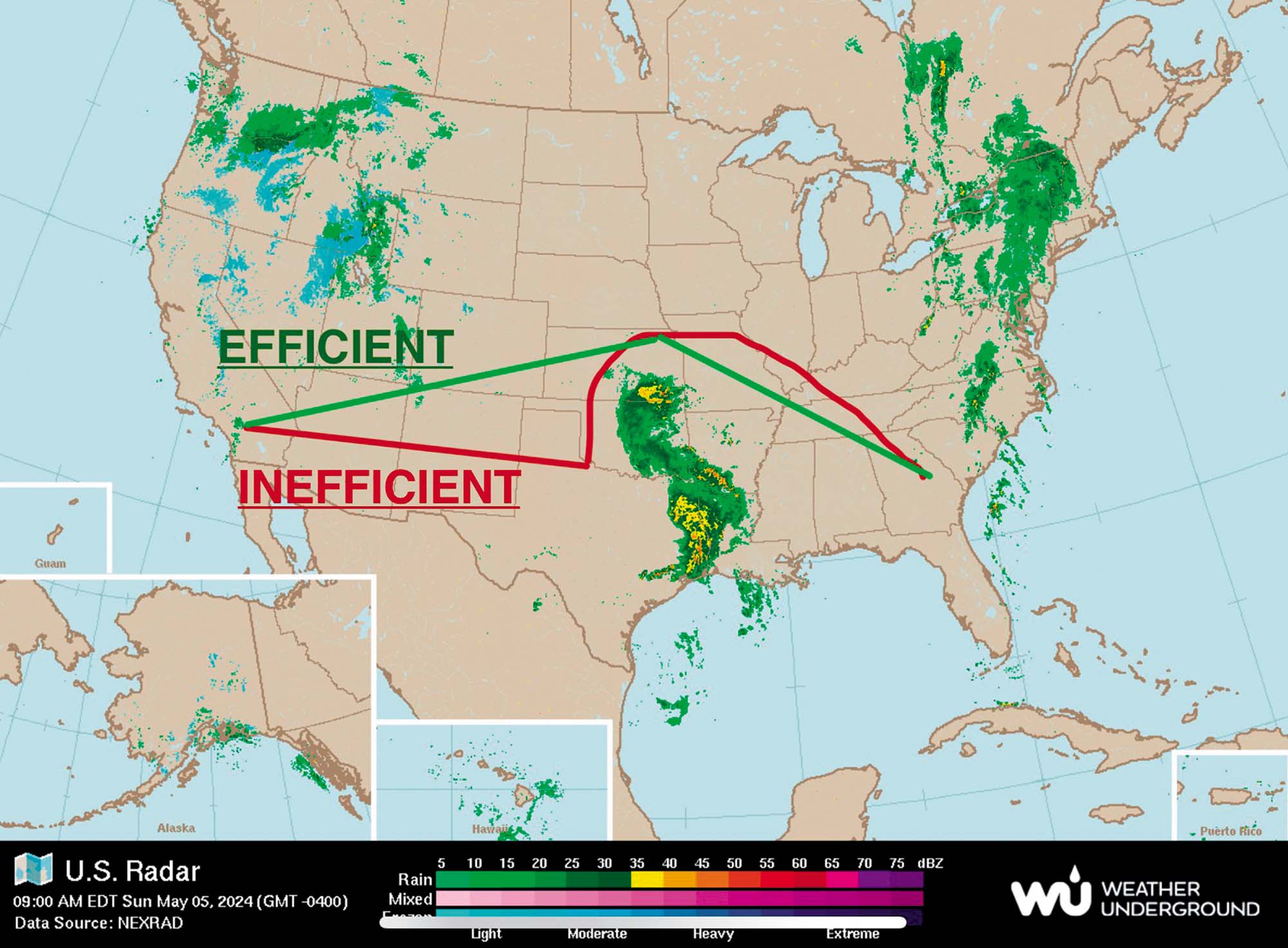
Early reroutes from TMU can offer more efficient weather avoidance.
Gemini Sparkle

Key Takeaways:

  • Thunderstorms significantly disrupt the National Airspace System, rendering standard flight planning and ATC's predictive tools ineffective, leading to chaotic conditions and necessitating dynamic traffic management.
  • Air Traffic Control (ATC) employs a multi-layered system, including Traffic Management Units (TMU) for strategic rerouting, Center Weather Service Units (CWSU) for real-time specialized weather intelligence, and ATC weather radar for tactical visualization.
  • Effective communication and specific deviation clearances between pilots and controllers are crucial for safely navigating thunderstorms, with pilots requesting lateral deviations and explicit altitude changes, and ATC providing guidance based on real-time data.
See a mistake? Contact us.

One of the most impactful elements of the NAS (national airspace system), arguably one of the most dangerous, is thunderstorms. They terrorize our skies and our airports every summer. They’re an unavoidable fact of life in aviation. So let’s look at how pilots and ATC work together to deal with them.

‘Tis the season my aviation enthusiasts. Thunderstorms are in full swing. The time has come for the madness of deviations, re-routes, and closing airports. There isn’t a more chaotic time in aviation, particularly going into complex and congested airports. Has Denver International ever had less than 100 microbursts in a single day between June and August? Unlikely.


Ready to Sell Your Aircraft?

List your airplane on AircraftForSale.com and reach qualified buyers.

List Your Aircraft
AircraftForSale Logo | FLYING Logo
Pilot in aircraft
Sign-up for newsletters & special offers!

Get the latest stories & special offers delivered directly to your inbox.

SUBSCRIBE