











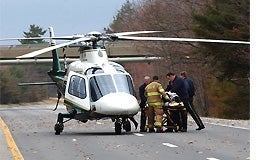
Safety was a huge issue at the Heli Expo this year. With the NTSB set to issue recommendations based largely on a terrible 2008 accident record in the rotary-wing world (helicopter emergency medical services [HEMS] in particular), the industry is struggling to find ways to make its operations a lot safer. There were many suppliers at the show with ideas, mostly in the form of electronics. Sandel had a couple of helicopter-ready displays with advanced hazard utilities, including TAWS and traffic, and Cobham was showing off its retrofit flat panel solutions. Honeywell had a variety of hazard avoidance gear aimed directly at the helo market, as did such mainstream fixed-wing suppliers as Avidyne, Garmin and Sagem. Recognizing the dire need for improvement, the industry also announced an ambitious plan to cut the accident rate by 80 percent by 2016, and HAI head Matt Zuccaro made it clear that improving safety in the helicopter world is Job One for the industry. Can that kind of improvement be accomplished? Good question. To read our editor’s take on the subject, check out this week’s web exclusive on flyingmag.com.
Rotary-Wing Safety Issues Loom Large

Key Takeaways:
- Helicopter safety was a major concern at Heli Expo, spurred by a poor 2008 accident record, particularly in HEMS, and impending NTSB recommendations.
- Numerous suppliers at the show presented advanced electronic hazard avoidance technologies to improve rotary-wing operations.
- The industry announced an ambitious goal to cut the helicopter accident rate by 80% by 2016, prioritizing safety as "Job One."
Key takeaways sponsored by Aviator Pro | Start Your Training ->
See a mistake? Contact us.

