













Register

Bigger Class B?

I used to fly out of an airport on the coast just south of the San Francisco Class B. While controllers tried to permit transit, there was no guarantee. If they also have a 91.131(a)(2) problem, that Miami solution would seem attractive to San Francisco. The result for VFR traffic on a trip headed north might be to add up to 100 miles or more to bypass the Class B to the east, or a deviation far out over the Pacific Ocean, neither of which is an attractive alternative.

Gemini Sparkle

Key Takeaways:

  • Miami's Class B airspace has a problem with large turbine aircraft violating regulations by descending below its floor, posing a collision risk with legally operating VFR aircraft.
  • Instead of education or enforcement, the FAA proposes expanding Miami's Class B (and Fort Lauderdale's Class C), which could force VFR pilots into less safe or much longer routes.
  • The author views this expansion as a potential precedent for other Class B airspaces, advocating for education, enforcement, adjusting existing floor boundaries, or establishing VFR corridors instead.
See a mistake? Contact us.

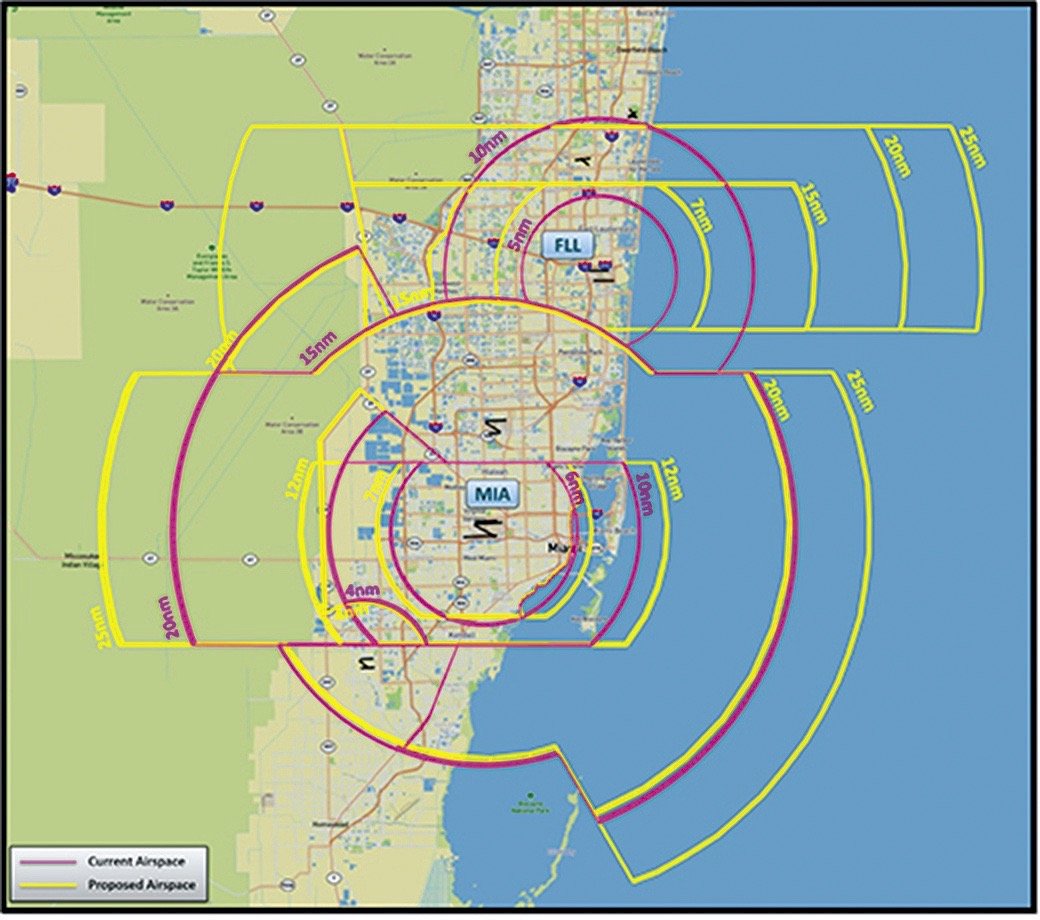
The Miami Class B has a problem. There’s a seldom-followed regulation, 91.131(a)(2), saying large turbine-powered aircraft—essentially a King Air 350 and larger—operating from a primary Class B airport, must remain in the Class B airspace. The problem in Miami is that many aircraft descend below the floor of the Class B.

The FAA’s solution isn’t education or even enforcement; it’s expansion of the Class B plus an unrelated expansion of nearby Fort Lauderdale’s Class C.


Ready to Sell Your Aircraft?

List your airplane on AircraftForSale.com and reach qualified buyers.

List Your Aircraft
AircraftForSale Logo | FLYING Logo
Pilot in aircraft
Sign-up for newsletters & special offers!

Get the latest stories & special offers delivered directly to your inbox.

SUBSCRIBE