













Register

Using The Red Knob To Manage Piston Engines

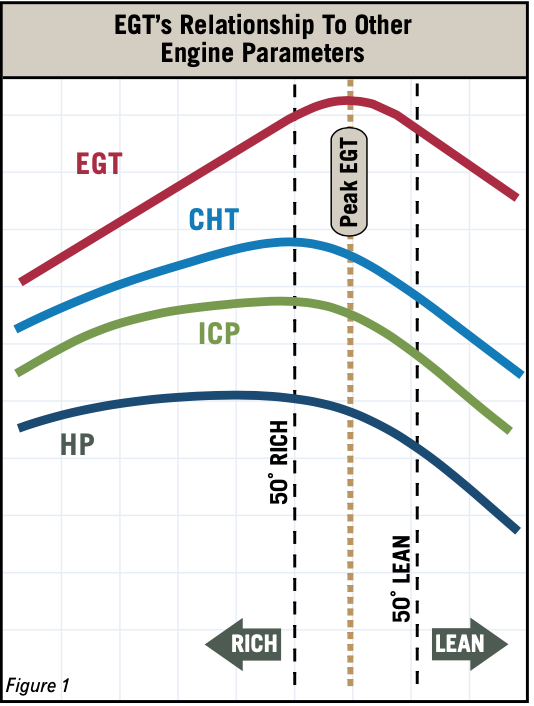
< The chart at left can best be described as a graphical representation of what happens to engine-condition variables as we manipulate the mixture control. Changing the mixture by increasing or decreasing the amount of fuel flowing to the engine typically is referenced by how far rich of peak (ROP) or lean of peak (LOP) EGT the setting is, in Fahrenheit degrees. The idea is to place the mixture control so that the mixture is ROP or LOP enough that no damage occurs, that CHTs remain relatively cool and the engine produces the power we require. It’s important to remember that this chart ignores other variables, like rpm or manifold pressure, and focuses only on fuel flow as it relates to peak EGT. Figure 1
Gemini Sparkle

Key Takeaways:

  • Proper air/fuel mixture management, enabled by modern multi-cylinder engine monitors (EGT/CHT/Fuel Flow), is crucial for piston engine longevity, fuel economy, and preventing engine failures.
  • The "Red Box" identifies dangerous operating zones where high power (over 65%) combined with specific mixture settings (around 50° rich of peak EGT) cause maximum engine stress due to high cylinder head temperatures (CHTs) and internal cylinder pressure (ICPs).
  • To protect the engine and optimize efficiency, pilots should avoid the "Red Box" by operating either well rich of peak EGT (for high power needs like takeoff) or, preferably for cruise, lean of peak EGT, while actively monitoring CHTs to keep them ideally below 360°F.
See a mistake? Contact us.

While conducting flight reviews for two decades, I’ve noted a subset of informed pilots employing up-to-date concepts to properly manage the air/fuel mixture entering their piston engine. Other pilots—probably because they were initially trained that way—leaned to peak exhaust gas temperature (EGT), no matter the engine power setting, and then enrichened it by 50 degrees F. Others merely set cruise power and pulled back the mixture about an inch and left it there. And, of course, another subset refused to lean the mixture at all, sometimes stating it was “too complicated.”

Except for the first group of pilots, the rest ignore that properly managing the engine’s mixture can limit cylinder head temperatures (CHTs), has vital implications for fuel economy and engine longevity. The trick is understanding that a full-rich mixture may be most appropriate in some operations and lean of peak (LOP) EGT may be best in others.


Ready to Sell Your Aircraft?

List your airplane on AircraftForSale.com and reach qualified buyers.

List Your Aircraft
AircraftForSale Logo | FLYING Logo
Pilot in aircraft
Sign-up for newsletters & special offers!

Get the latest stories & special offers delivered directly to your inbox.

SUBSCRIBE