











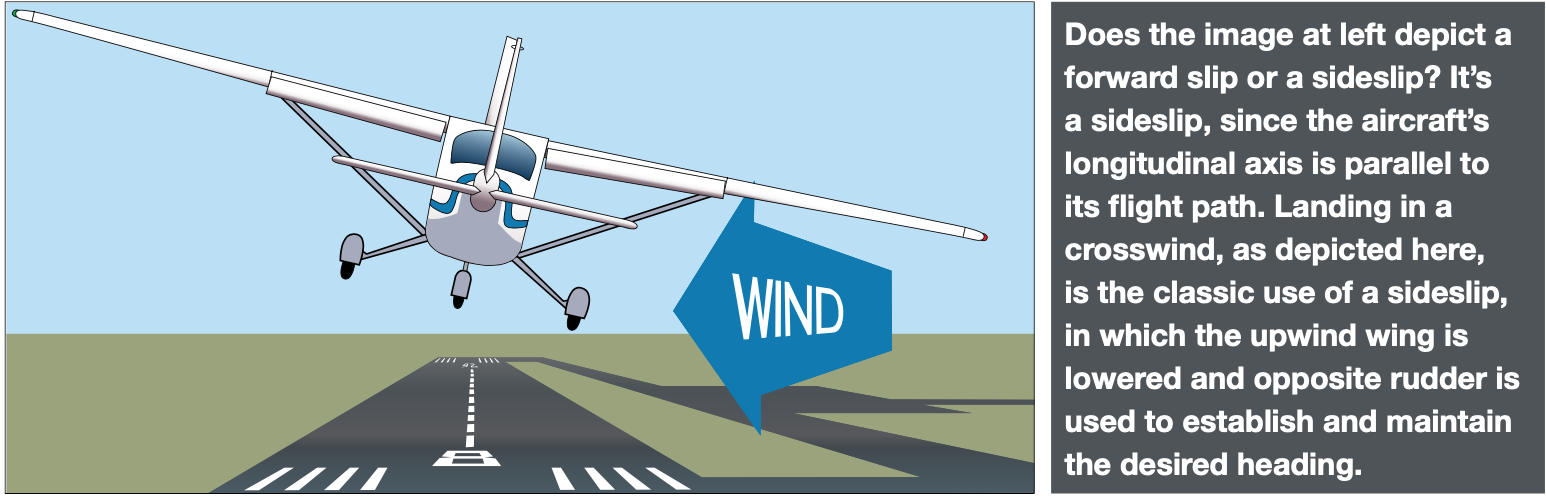


The FAA defines a slip as a condition in which the airplane’s bank angle is “too steep for the existing rate of turn.” In other words, the airplane is not in coordinated flight, which in fact could be the pilot’s desire. For example, slipping is a time-honored way to lose altitude quickly in an airplane lacking wing flaps or one that’s simply too high for one reason or another. And unless we touch down crabbed at an angle to the landing surface when dealing with a crosswind, we are in a slip, with the upwind wing lowered into the breeze.
Getting into a slip requires either intent or sloppy flying, and most modern airplanes are designed with one feature or another that resists slipping from sloppy flying. In both the crosswind and altitude-loss examples, some rudder is required to prevent the turn rate from catching up to the bank angle, which we’ll get to in a moment. For now, however, understand that the two kinds of slips have different names in addition to different purposes. And their naming convention is backward.

