













In late December 2021, I was giving upset recovery training to a student. We were done with our work in the practice area and were returning to base at Montgomery-Gibbs Executive Airport in San Diego. Weather included unlimited visibility and scattered clouds. We picked up the ATIS and were heading toward the airport. A few minutes later, seated in the rear seat, I heard my student come over the intercom to confess that he didn’t really know where we were or how to get back home. This student has hundreds of hours of flying experience in the San Diego area, and I regard him as a serious and highly competent pilot. Still, the scattered clouds were obscuring some of the landmarks we subconsciously use to orient ourselves, and this made pilotage difficult.
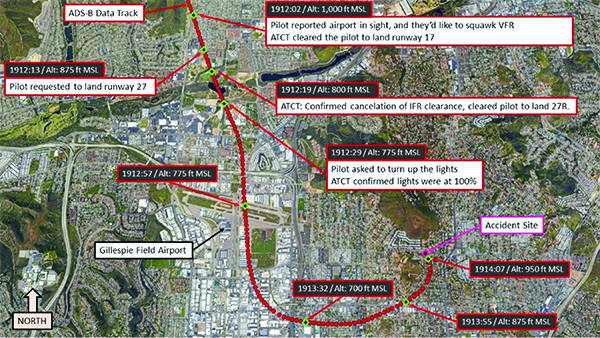
A few days later, at the nearby Gillespie Field Airport (KSEE), a Learjet 35 crashed as it attempted to land. The Lear’s crew cancelled IFR on short final, and was flying a VFR pattern to a landing on another runway when the airplane collided with terrain. All four occupants aboard this aeromedical flight—two flightcrew members and two flight nurses—died in the accident. Of course, NTSB and FAA investigations have just begun, and we still do not know the specific cause of this crash. Still, the facts we know reveal several factors that may have contributed to the accident. Considering them can help us avoid similar accidents in the future.

