













Register

Overcoming Bad Habits

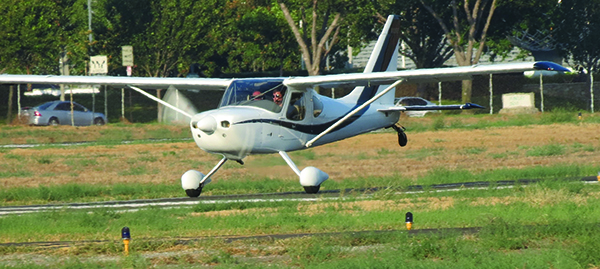
This image shows an airplane about to lift off but still primarily governed by the rules relating to the two-dimensional world. A miscue at this point would likely result in some sort of ground loop or similar event.
Gemini Sparkle

Key Takeaways:

  • Current flight training often ingrains "two-dimensional" habits from ground-based activities like driving, which are fundamentally misaligned and dangerous in the "three-dimensional" aerodynamic environment of an aircraft.
  • These transferred habits, such as relying on airspeed instead of angle of attack for stall awareness or "driving" the airplane during landings, lead to critical errors and are a significant contributor to Loss-of-Control Inflight (LOC-I) accidents.
  • For safer flight, pilots must adopt "pitch-and-power" habits appropriate for the three-dimensional world, understanding that an airplane's speed is controlled by angle of attack and power primarily affects climb/descent rate.
See a mistake? Contact us.

In the March 2021 issue, I discussed the need to restructure the way we teach flying, to focus ab initio training on developing habits that don’t have to be unlearned as one progresses through flight training and into advanced ratings and operations. The classic example is developing in students the habit of using airspeed as a measure of how close the airplane is to stalling. As I discussed in that article, the problem with developing this habit is that angle of attack (AOA) is what determines how close we are to stalling, and that airspeed is only one (imperfect) way to measure it.

This image shows the same airplane after it attains its own center of gravity, i.e., while it’s airborne. Even though it’s still close to the ground, a miscue at this point would be aerodynamic and in three dimensions. At this point, aerodynamic habits are necessary for proper control.

Habits are learned things that we do when certain cues or trigger events are recognized by our senses and sent to the brain. Almost everything we do routinely eventually becomes habit. The problem is our brain can’t quickly tell us the difference between a good habit and a bad one. Flying an airplane is no different. If you are landing on Runway 36 and winds are from 090 at 10 knots, your brain tells you that you have a crosswind from the right. The way you compensate for the crosswind, smoothly touch down and maintain directional control as you roll out is learned behavior, a habit formed after training and practice. 

Ready to Sell Your Aircraft?

List your airplane on AircraftForSale.com and reach qualified buyers.

List Your Aircraft
AircraftForSale Logo | FLYING Logo
Pilot in aircraft
Sign-up for newsletters & special offers!

Get the latest stories & special offers delivered directly to your inbox.

SUBSCRIBE
