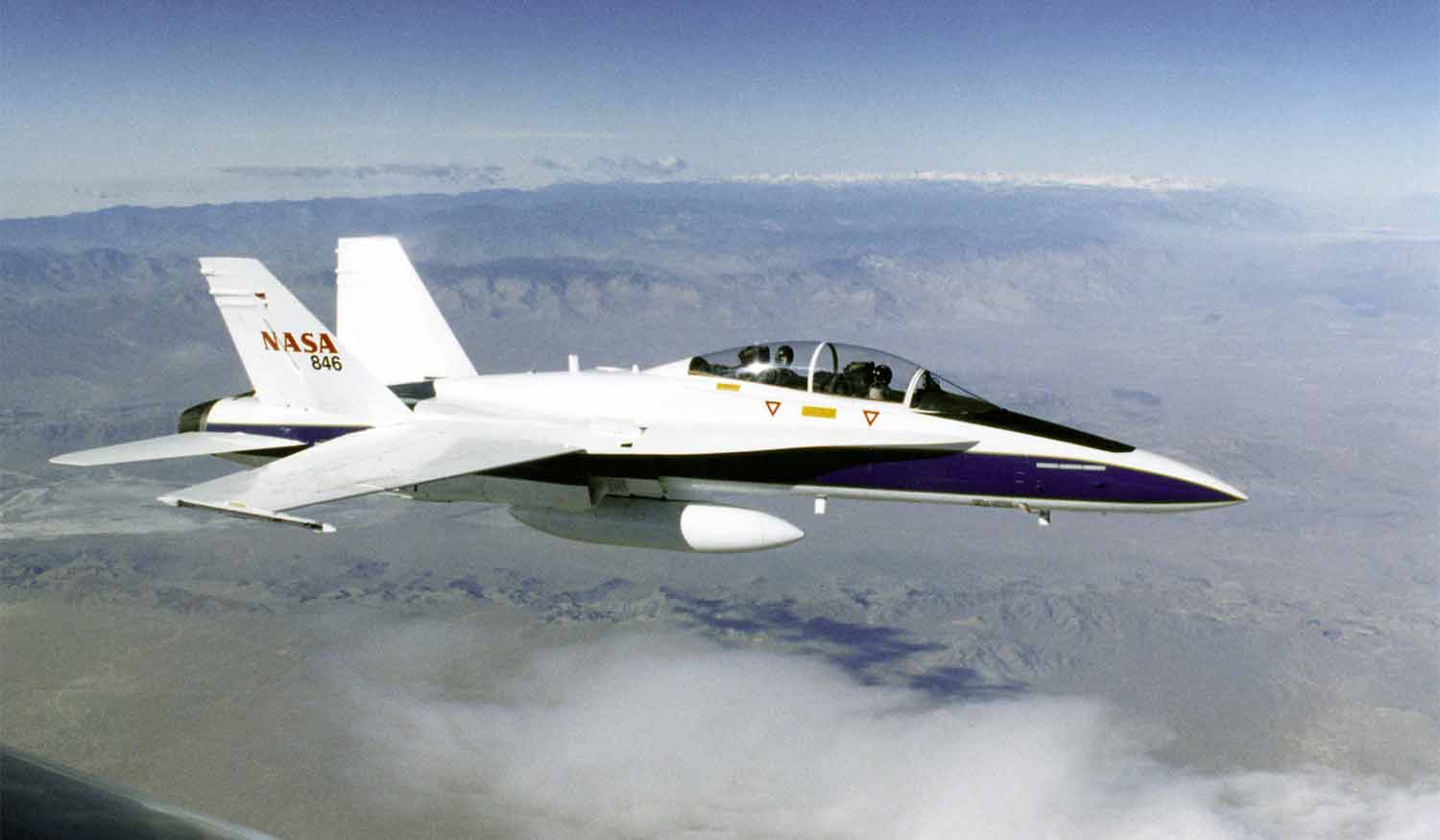
This month, a research program called SonicBAT II (short for Sonic Booms in Atmospheric Turbulence), is set to begin to help understand sonic booms and how to reduce the noise associated with supersonic flight. The program is a partnership between NASA’s Kennedy Space Center in Florida, Armstrong Flight Research Center in California, Langley Research Center in Virginia and Space Florida, with the ultimate goal of developing viable passenger aircraft capable of flying at supersonic speeds.
NASA Continues Sonic Boom Research with F-18s

Key Takeaways:
- The SonicBAT II research program is launching to understand and reduce sonic boom noise, aiming to enable future supersonic passenger aircraft capable of significantly cutting travel times.
- The program's initial phase involves F-18 jets flying at supersonic speeds from Kennedy Space Center to study the effects of low-altitude turbulence on sonic booms and collect data.
- NASA's ultimate goal is to develop a "Low Boom Flight Demonstrator" designed to create a "soft thump" instead of a loud boom during supersonic flight.
Key takeaways sponsored by Aviator Pro | Start Your Training ->
See a mistake? Contact us.