











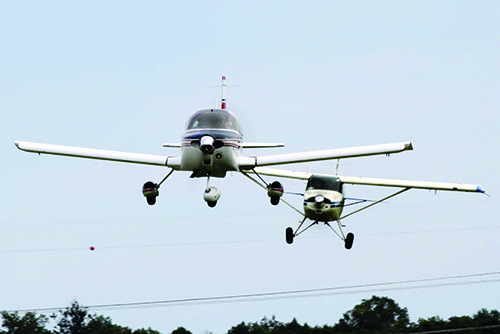


May’s article, “Defensive Flying,” was well-done and long overdue. It brought back vivid memories for most of us who have been in the air for awhile, me in particular. As a VFR-only aviator, I would have appreciated more emphasis on en route transitions, especially when one takes it for granted that they are all alone.
Many years ago, I was flying my Cessna 180 on floats in the middle of “nowhere” Alaska—about 100 miles from the nearest village. It was hunting season and the two of us on board were looking for game on the ground. As luck would have it, I looked up at the right moment and saw an image that is imprinted in my brain for the rest of my life: a one-dimensional view of a deHavilland Beaver, the round radial engine, pointed ends of the floats and the thin frontal image of the leading wing edges. The other pilot did not see us or we could have reacted in the same direction, but we missed a head-on by only 15 feet. The largest remaining parts would have been the engine blocks.

