
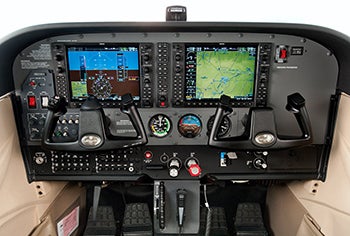


The FAA puts great emphasis on the use of checklists, so much so that failing to use them during a checkride will result in a pink slip. While you should always have a checklist within reach to back you up, there is another easy way to make sure you are not missing any critical items if you are flying small, reasonably simple airplanes. The bottoms up flow can be used in pretty much all phases of flight, such as before departure (after the runup is complete), when established in a climb, after leveling for cruise, during certain intervals in cruise and after landing.
To do a bottoms up flow check, you start on the floor, in the center of a Cessna 172 or on the sidewall of a Piper or Beechcraft, move up along the center column or sidewall and then across the panel. In some airplanes the flow may continue down the sidewall or center column as well for a bottoms up and down flow pattern. Regardless, a good place to start is the fuel selector, which you may or may not need to switch to another tank. As you move up toward the instrument panel, you may encounter trim control, cowl flaps, landing gear or flap switches, and you need to simply verify that each is in a logical position. You may have forgotten to raise the flaps after takeoff, for example. The bottoms up flow check would catch this type of mistake.