











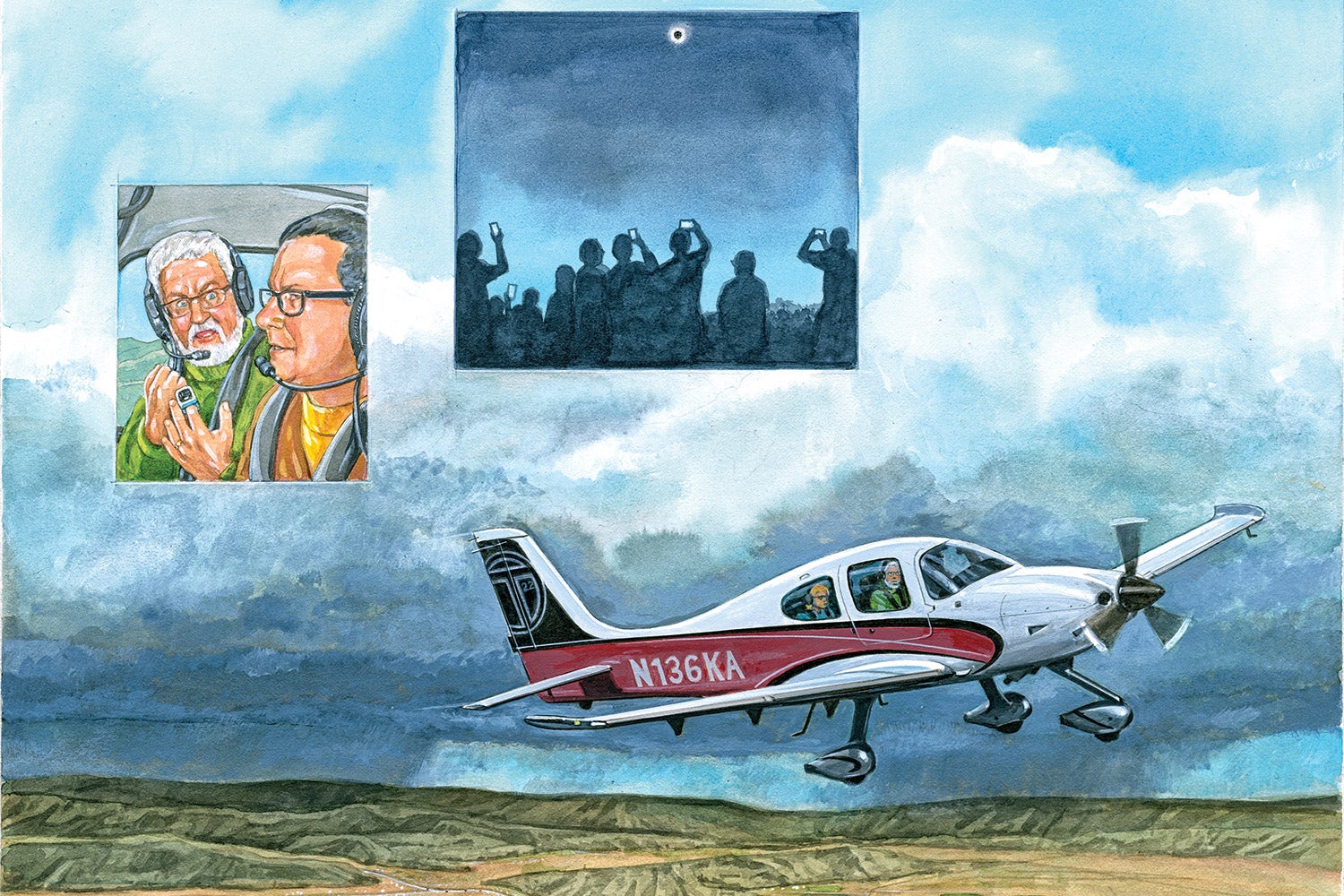
A solar eclipse seemed like the perfect excuse for a cross-country flight to Jackson Hole, Wyoming, from San Diego with friends in our recently acquired Cirrus SR22T. My close friend Howard was just as excited for the trip as I was. Our less adventurous wives, not so much. My wife protested, “I don’t get it, why all the travel? It gets completely dark right here in our backyard every single night.” Five years and 2,000 hours later and she is still anxious about flying, but with prodding she agreed to go.
Flying During a Solar Eclipse

Key Takeaways:
- Flying with non-pilot passengers requires meticulous planning beyond standard pre-flight checks, especially regarding comfort at altitude and managing potential anxiety, as their in-flight experience differs significantly from the pilot's.
- Unexpected challenges, such as a passenger experiencing acute high-altitude discomfort without accessible oxygen or a stubborn engine hot start under pressure, highlight the importance of adaptability, thorough pre-briefing, and not underestimating the impact of passenger stress.
- Despite extensive preparation, some profound events like a total solar eclipse are far more impactful and awe-inspiring when experienced firsthand, underscoring the value of personal experience over theoretical knowledge.
Key takeaways sponsored by Aviator Pro | Start Your Training ->
See a mistake? Contact us.

