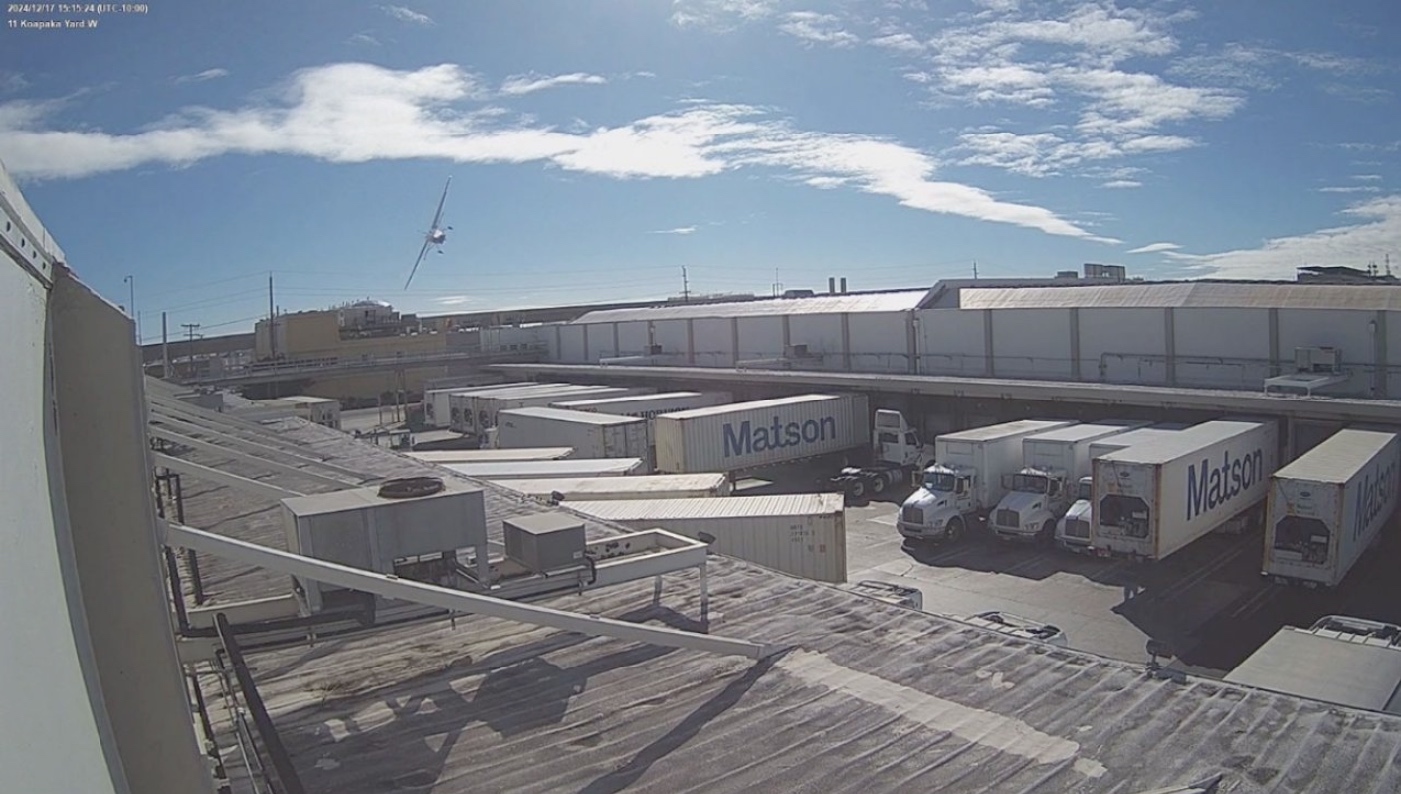
NTSB final report finds poor maintenance procedures led to flap malfunction in crash of Hawaiian Cessna Grand Caravan in 2024. Video image above shows the airplane in steep left bank before impact. [Credit: NTSB]
Key Takeaways:
The NTSB concluded that the fatal December 2024 crash of a Cessna 208B in Hawaii was caused by the in-flight failure of the left flap interconnect rod, which led to asymmetrical flaps and an uncommanded, unrecoverable roll shortly after takeoff.
Investigators determined the failure resulted from improper maintenance and a misrigged flap system with improper cable tension, conditions that would not have been visible to the pilots during a preflight inspection.
The report cited systemic deficiencies at operator Kamaka Air as contributing factors, including failure to follow FAA-approved maintenance procedures, inadequate recordkeeping, rushed field repairs, and a lack of formal mechanic training and supervision.
The National Transportation Safety Board has cited improper maintenance as a causal factor in the crash of a Cessna 208B that killed two pilots during a training flight in Hawaii in December 2024.
According to the NTSB final report released Friday, the pilot of the Grand Caravan reported a control system issue shortly after takeoff.
CREATE A FREE ACCOUNT
Sign up to keep reading
Create a free account to continue. Already a member? Sign in below.
Meg Godlewski has been an aviation journalist for more than 24 years and a CFI for more than 20 years. If she is not flying or teaching aviation, she is writing about it. Meg is a founding member of the Pilot Proficiency Center at EAA AirVenture and excels at the application of simulation technology to flatten the learning curve. Follow Meg on Twitter @2Lewski.