



There is a moment I have heard about hundreds of times from right-seaters.
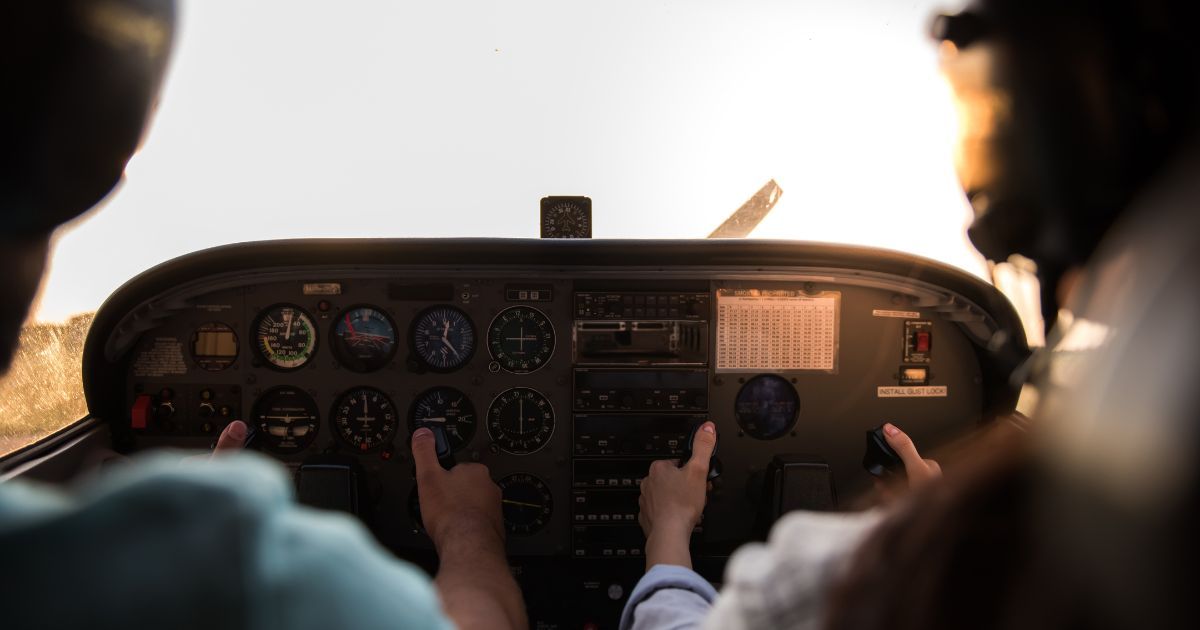
The pilot taxis out for departure feeling excited, focused, and comfortable in an environment that feels almost like home. Sitting beside them is someone they deeply care about—a spouse, partner, family member, or friend—smiling politely while quietly gripping the armrest with white knuckles.
The pilot hears engine sounds, radio calls, and cockpit alerts as normal parts of flying. The plus-one hears uncertainty. The pilot sees routine. The plus-one often sees vulnerability.
For many years, our aviation culture has unintentionally treated non-pilot companions as passive observers—people who were simply “along for the ride.” But over time, I began noticing something important in both my work as a psychotherapist and my life as an aviation safety educator.
The healthiest and safest flying relationships were rarely built around one confident pilot and one silent passenger. Instead, they were built around partnership that includes trust, communication, preparation, and shared situational awareness. That realization eventually led me to create “Pilot Plus-One featuring Right Seat Ready!,” a two-day immersive workshop, and to spend much of my aviation work helping pilots better understand themselves and the emotional and psychological experience of those flying beside them.
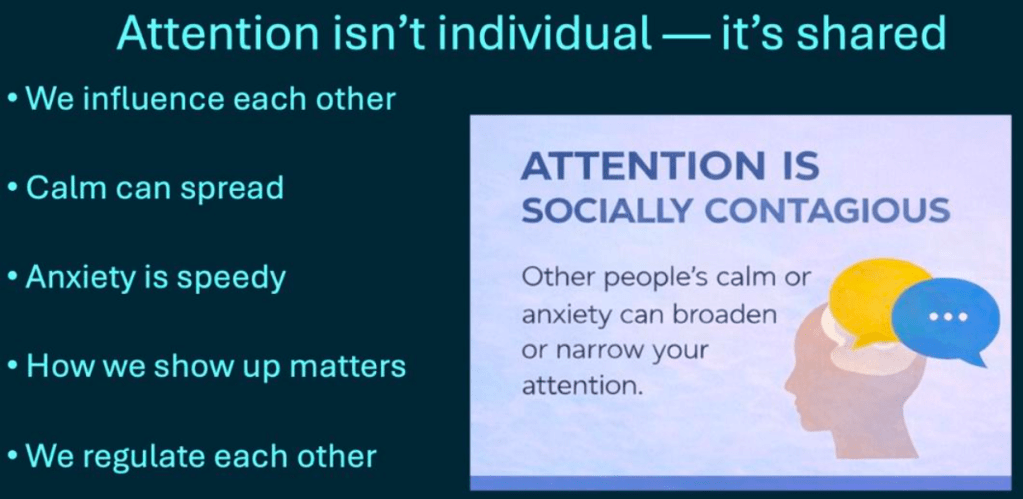
Here is the truth: A calm, informed, engaged plus-one is not just more comfortable. They are often more observant. More helpful and more resilient under stress. Relaxed and confident plus-ones are more capable of supporting good aeronautical decision making. Calm is necessary for both pilots and plus-ones to pay attention and make good decisions.
The good news is that building that kind of confidence usually does not require dramatic changes. Confidence and competence begin with understanding how human beings respond to uncertainty—and how pilots can intentionally create trust before the airplane ever leaves the ground.
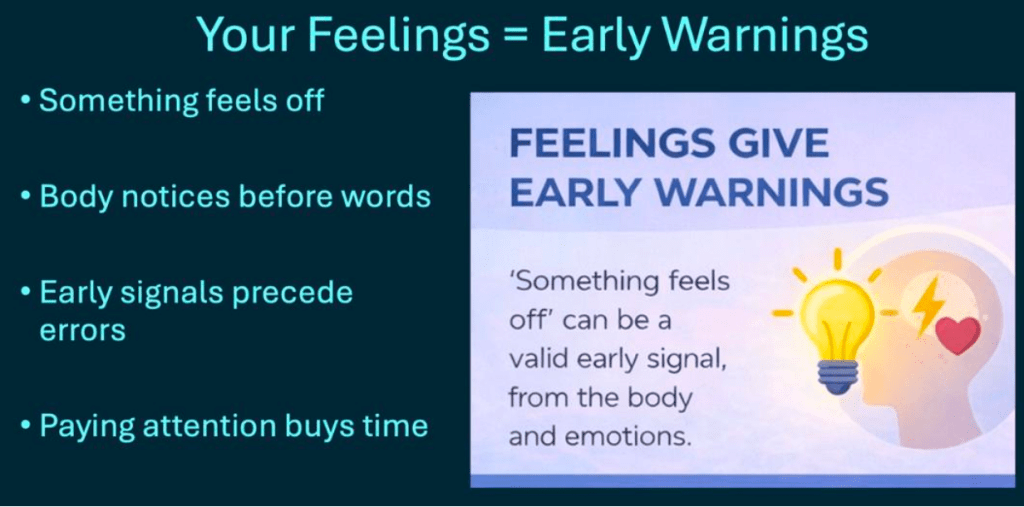
Here are a few infographics that research what cognitive psychology and human factors repeatedly show about our ability to pay attention.
Emotional Difference Between Pilots and Plus-Ones
Pilots often underestimate how psychologically different the flying experience can feel for the person in the right seat.
Remember your first landings as a student pilot? They were probably pretty uncomfortable. A pilot typically develops comfort through repetition. Practice never makes perfect. Practice makes practice and through it we gain mastery.
For the left-seat pilot over time, normal aviation sounds, movements, and procedures become deeply familiar:
• Engine run-ups
• Radio communication
• Turbulence
• Traffic sequencing
• Changes in engine pitch
• Steep turns
• Power adjustments
• Weather deviations
Plus-ones usually do not have the same framework for interpreting those experiences. Without context, the brain tends to treat unfamiliar situations as potential threats. That is not a weakness. That is normal human neurobiology.
Human beings feel safer when they:
• understand what is happening.
• know what to expect.
• feel included.
• have some sense of predictability.
• trust the person guiding the situation.
When those elements are missing, anxiety increases. Interestingly, most fear in aviation is not actually fear of airplanes. It is fear of uncertainty—and uncertainty grows in silence.
Questions Worth Asking Yourself Before Your Next Flight
• Does my companion know what to do if I become incapacitated?
• Have I unintentionally trained them to stay silent?
• Do I explain changes in the flight or simply assume they understand?
• Have I ever mistaken silence for comfort?
• Would my plus-one feel confident helping me during a stressful situation?
One of the Biggest Mistakes Pilots Make
One of the most common errors I see is called well-intentioned emotional minimization.
A plus-one says: “Is that sound normal?”
And the pilot responds: “Oh, yeah. It’s nothing.” Or: “Don’t worry about it.” Or: “You’re fine.”
While pilots usually say these things to reassure, they often have the opposite effect. Why? Because the plus-one still feels the uncertainty internally.
Now they are experiencing two competing realities:
• Their body says something feels concerning.
• The pilot dismisses the concern quickly.
That mismatch can quietly undermine trust. One of the healthiest things a pilot can do is normalize curiosity instead of dismissing it.
A much better response sounds like this: “That’s a good question. What you’re hearing is the propeller changing pitch as I reduce power for descent.” Or: “Yes, we’re getting a little turbulence because of the terrain and heating. It’s uncomfortable sometimes, but the airplane is built for much more than this.”
Notice the difference. The pilot is not becoming alarmed. They are becoming informative. A calm explanation creates psychological safety—and that builds trust.
Scenario Worth Thinking About
A Cessna 182 is on a daytime VFR cross-country with a pilot and a non-pilot companion on board. The flight is expected to take about two and a half hours. Weather ahead is marginal VFR, though the forecast suggests conditions should gradually improve. Below them are rolling hills with scattered airports every 20 to 30 nautical miles.
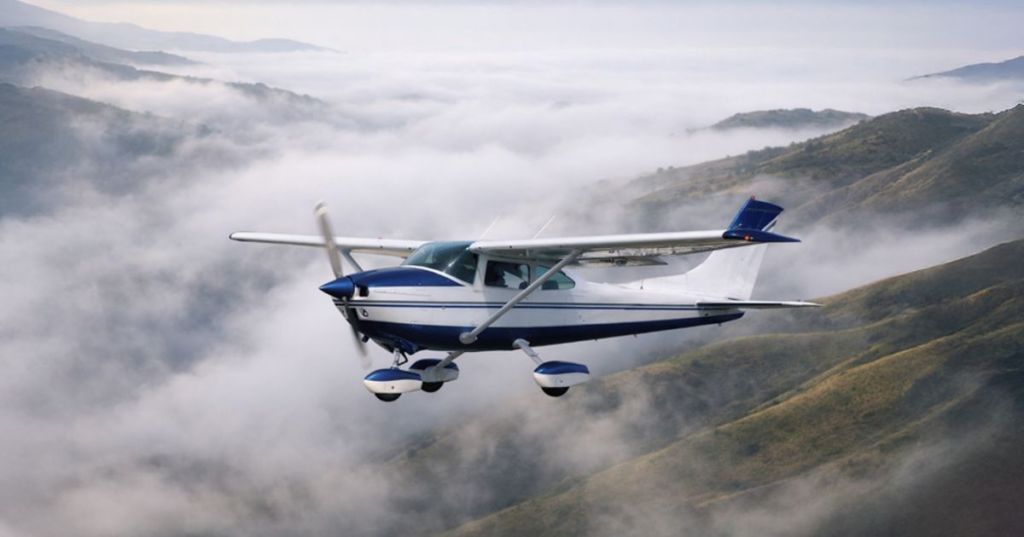
About 10 minutes after leveling off in cruise, the engine does not sound dramatically different, but it no longer sounds quite the same.
The change is subtle. Engine indications are mostly normal. Exhaust gas temperatures remain in the green, though one cylinder’s EGT is consistently a little lower than the others. The airplane is still flying normally. Nothing appears urgent.
Beside the pilot, the non-pilot companion glances over and casually asks: “Is it supposed to sound like that? It’s probably nothing, right?”
At that moment, nothing is actually wrong yet. But something is different. And in aviation, pattern changes matter.
The pilot resists the urge to immediately dismiss the concern. Instead, they begin quietly evaluating possibilities:
• Slight mixture imbalance
• Spark plug beginning to foul
• Induction icing beginning to form
• Early signs of a fuel-flow issue
None of those explanations require panic. But all of them deserve attention.
The passenger is now watching the pilot more closely. Social pressure exists, even if nobody says it out loud. The pilot knows that whatever happens next will shape not only the safety outcome but also the companion’s sense of trust and confidence.
The pilot asks themselves a simple question: “If this gets worse, what does that look like? And what options do I have right now?”
There are nearby airports. It is still daylight. Workload is manageable. Weather remains flyable. Instead of waiting for certainty, the pilot chooses margin.
The mixture is enriched slightly. The roughness improves but does not disappear completely. The pilot advises ATC: “Request vectors to the nearest suitable airport—precautionary.”
Then, just as importantly, the pilot turns to the companion and calmly explains: “Nothing’s unsafe right now. We’re simply choosing to land while everything is still easy.”
That decision is not driven by fear. It is driven by option preservation. Because if the roughness increases, the workload increases with it. Weather could deteriorate. Stress rises. Decision making narrows. The safest diversions in aviation usually happen long before anyone is forced to make them.
The aircraft lands uneventfully at a nearby airport. Later, maintenance discovers a partially fouled spark plug — not yet dangerous, but clearly trending in the wrong direction. The mechanic casually remarks: “Another hour, and this could’ve become a real problem.”
But perhaps the most important takeaway belongs to the companion sitting in the right seat: “I’m glad we didn’t wait for it to get scary.”
And the pilot’s takeaway may be even more valuable: Attention bought time. Time preserved safety.
Five Simple Ways to Make Your Plus-One Part of the Safety Team Before Your Next Flight
1. Explain the plan out loud
Brief:
• Route
• Expected weather
• Turbulence possibility
• Fuel stop
• Approximate flight time
• What “normal” will sound and feel like.
Predictability lowers anxiety.
2. Give them permission to speak up
Say: “If anything feels wrong, confusing, or uncomfortable, I want you to tell me immediately.”
That single sentence dramatically changes cockpit dynamics.
3. Teach three emergency basics
Every regular companion should know:
• how to use the push-to-talk switch.
• how to open the cabin door.
• how to identify the nearest airport on the moving map.
Not because disaster is likely but because confidence matters.
4. Narrate changes
Instead of silently manipulating controls, explain:
• power reductions.
• traffic delays.
• reroutes.
• weather deviations.
Silence creates uncertainty.
5. Debrief after flights
• What felt uncomfortable?
• What confused you?
• What helped you feel informed?
This builds trust over time.
Confidence Is Built Before the Flight
Prepared companions do not appear by accident. Confidence, communication, and calm decision making are skills that can be learned and practiced—just like any other part of aviation safety.
Some of the most important safety conversations in aviation never happen on the radio. They happen quietly before two people climb into an airplane together.
When companions understand what the flight plan is, and what is likely to happen, they feel invited into the process. Then once in the airplane they know they have permission to speak up, and the entire safety environment changes for the better.
Most pilots were never taught how to include a non-pilot companion in the safety process. Traditional flight training focuses appropriately on aircraft control, procedures, navigation, and regulations—but rarely on the interpersonal and psychological dynamics happening in the other seat. Structured companion training and shared learning experiences can help bridge that gap.
This philosophy is at the heart of our in-person weekend programs, “Pilot Plus-One and Right Seat Ready!,” where pilots and companions learn together through discussion, scenario-based training, human factors education, and hands-on simulator experiences designed to strengthen communication, confidence, and shared understanding in flight.
Always remember:
- The goal is not to turn your plus-one into a pilot.
- The goal is to help them become calm, informed, confident, and connected to the flight experience you already love.
- The strongest safety cultures in aviation are rarely built by individuals alone. They are built by people who learn together.
For many pilots, these conversations become the beginning of something much larger. Over time, they begin noticing how often aviation safety depends not only on technical skill but also on communication, emotional regulation, workload management, trust, and the ability to recognize subtle changes before they become emergencies. These human factors shape nearly every aviation decision we make—often quietly and invisibly, long before the engine ever starts.
Much of my work focuses on helping pilots and companions better understand not only airplanes but also the psychology of how human beings function inside them. Through our live weekend programs, “Pilot Plus-One and Right Seat Ready!,” as well as a live video series, “On Second Thought,” we explore the interpersonal and psychological dynamics that influence safety, decision-making, and resilience in flight.
Whether you are a pilot, companion, or someone who simply wants to become more confident and informed in aviation, these conversations matter.
Safety is rarely built by one person alone.
To explore upcoming seminars, live events, pilot and companion training opportunities, and new episodes of “On Second Thought,” visit JolieLucas.com and OnSecondThought.me.