
















The global aviation industry faces a familiar tension with the promise of revolutionary technology on one hand and the immediate demands of operators, flight schools, and private owners on the other. Italian aircraft manufacturer Tecnam has built its strategy around refusing to choose between the two.
In a conversation with FLYING, Giovanni Pascale Langer, Tecnam’s managing director, laid out the company’s vision across three growth pillars: professional flight training, commercial regional operations, and the private owner market. The Capua-based manufacturer believes pragmatism and innovation are not mutually exclusive as it tackles these challenges.
“Our focus is strategically divided into three primary avenues: the professional flight training market, the commercial regional/utility sector, and the private owner market,” Pascale said.
On the training side, Tecnam knows the world needs airline pilots, and the academies producing them need modern, capable fleets.
“There is an unprecedented global demand for airline pilots, and academies need modern, integrated fleets to prepare them,” Pascale said. “We provide that complete ecosystem, from basic trainers to advanced IFR and multi-engine platforms.”

Rather than selling individual airframes, Tecnam offers a progression path from the single-engine Tecnam P2008 to the Tecnam P-Mentor for advanced instrument work, then to the multi-engine Tecnam P2006T. All of these are built around shared design logic and Garmin avionics. The result is a cohesion that keeps students inside one manufacturer’s ecosystem from first flight to commercial rating.
“A student can start in a single-engine P2008, move to the P-Mentor for advanced IFR, and transition to the multi-engine P2006T, all while staying within the same design logic and Garmin avionics environment,” Pascale said, pointing to strong global adoption. “In Europe, academies like Canavia in Spain are flying their Tecnam fleets for over 1,000 hours per aircraft annually due to our dispatch reliability.”
The P-Mentor, Tecnam’s newest dedicated trainer, has drawn particular attention from flight schools due to its total cost of ownership. Pascale called it a “revolution in flight training,” given that it bridges a gap between basic VFR trainers and expensive complex aircraft by packing a variable pitch propeller, simulated retractable gear, a ballistic parachute, and a full Garmin G3X Touch flight deck into a single certified airframe.

But the headline number is fuel burn.
“The P-Mentor burns an incredible 14 liters per hour [3.7 gph],” he said. “When you compare that to traditional legacy IFR trainers, which typically burn anywhere from 8 to 10 gallons per hour of expensive avgas, the P-Mentor slashes fuel costs and carbon emissions by more than half.”

On the commercial side, the Tecnam P2012 Traveller continues to gain ground with Part 135 and commuter operators seeking modern replacements for aging Cessna 402s and Britten-Norman Islanders. The order book is incredibly strong and diverse, with repeat purchases from high-frequency operators across the United States, the Caribbean, Europe, and Australia.
“What we hear consistently from operators is how transformative the modern avionics and dispatch reliability are for their bottom line,” Pascale said. “The legacy aircraft they are replacing were great in their day, but they are 50-year-old designs requiring massive maintenance hours. The P2012 brings 21st-century aerodynamics, Garmin G1000 NXi glass cockpits, and a cabin volume that passengers actually enjoy, all while keeping piston-twin operating economics.”
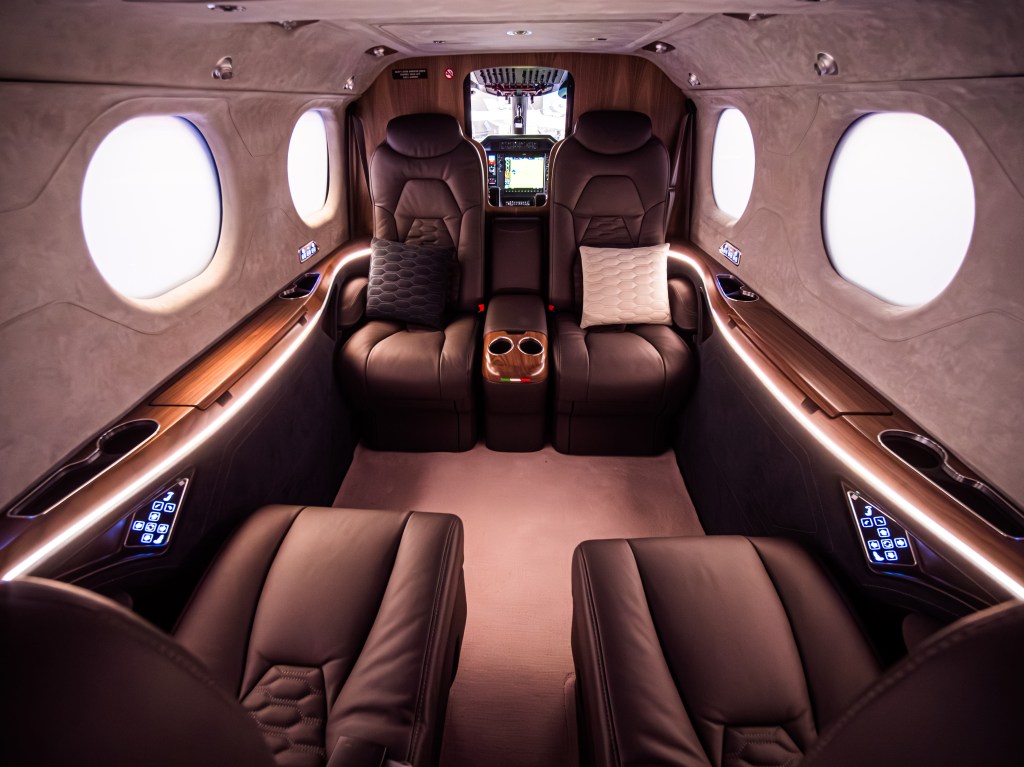
The P2012 line has also expanded into STOL and VIP configurations, broadening its reach into short-field island operations and premium charter.
Underpinning all of it is Tecnam’s vertically integrated manufacturing operation in Capua, which Pascale called an “absolute superpower.” Where competitors have struggled with post-pandemic supply chain disruptions, Tecnam’s in-house control of fuselage, wing, and component production has allowed it to maintain delivery timelines.
“By controlling the manufacturing process at our Capua aerospace hub, we insulate our customers from the severe supply chain shocks that have plagued the rest of the industry,” Pascale said.
The company recently spun out Altair Solutions, an independent aftermarket support entity located adjacent to the factory, to handle Part 145 maintenance and FBO services. This move was designed to let the manufacturing side stay focused on production while operators get dedicated support infrastructure.
Tecnam also occupies a distinctive position in the sustainability conversation. The company’s H3PS program (a parallel hybrid-electric powertrain developed with Rolls-Royce and BRP-Rotax under EU Horizon 2020 funding) flew a modified P2010 in December 2021, making it the first general aviation aircraft with a parallel hybrid configuration to take flight.
The demonstrator was primarily a research platform rather than a production precursor, but it proved that hybrid technology could deliver significant fuel savings and emission reductions in general aviation.
“Currently, our R&D teams are evaluating how to best integrate the massive amount of data we collected into future scalable designs,” Pascale said.
While the industry debates distant zero-emission timelines, Tecnam is focused on what it can deliver now: efficient aerodynamics, lightweight construction, modern piston engines, and support for unleaded aviation fuels.
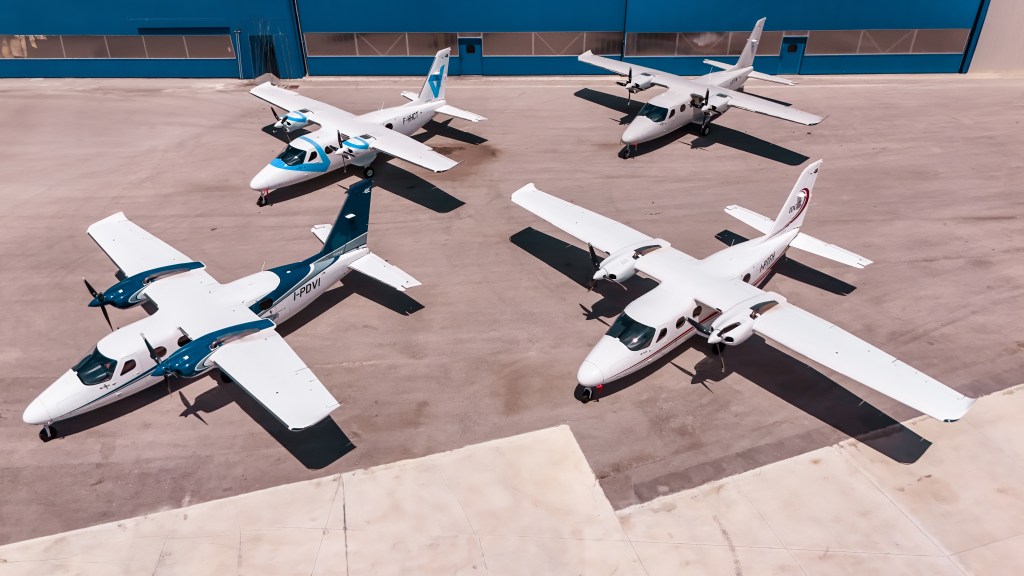
“We are reducing emissions right now,” Pascale said. “A Tecnam P2012 or P2006T burns a fraction of the fuel of the legacy turboprops or older pistons they replace.”
Tecnam’s strategy is product-led in the North American market, where the manufacturer competes with other legacy brands that are household names.
“When a U.S. buyer or flight school evaluates the lifecycle costs, the modern safety features, and the sheer ramp appeal of a Tecnam against a 40-year-old legacy design, the decision is very clear,” Pascale said.
Tecnam has built out a North American headquarters and parts distribution center in Sebring, Florida, and continues to appoint experienced sales directors and service centers across the Americas to close the support gap that has historically kept European manufacturers at arm’s length from U.S. operators.
If you’ve never sat in a Tecnam, the brand’s Italian DNA is immediately apparent, as FLYING has discussed in the past.
“When you sit in a Tecnam, you immediately notice the ergonomic brilliance, the exceptional visibility, and the modern glass cockpit,” Pascale said. “But the real surprise comes when you take the controls. A Tecnam flies with a beautiful, harmonious balance. It’s incredibly responsive and crisp, much like a high-performance European sports car, yet it remains remarkably forgiving and stable. It reminds pilots that an efficient, modern airplane doesn’t have to be sterile. It can still be an absolute joy to fly.”
The FAA’s Modernization of Special Airworthiness Certification (MOSAIC) rule is set to reshape the light sport aircraft landscape, with its LSA certification changes taking effect on July 24. MOSAIC replaces the legacy 1,320-pound weight limit with performance-based criteria, most notably a 59-knot clean stall speed threshold. This opens the door for four-seat aircraft, retractable landing gear, constant-speed propellers, and even twin-engine configurations within the light sport category.
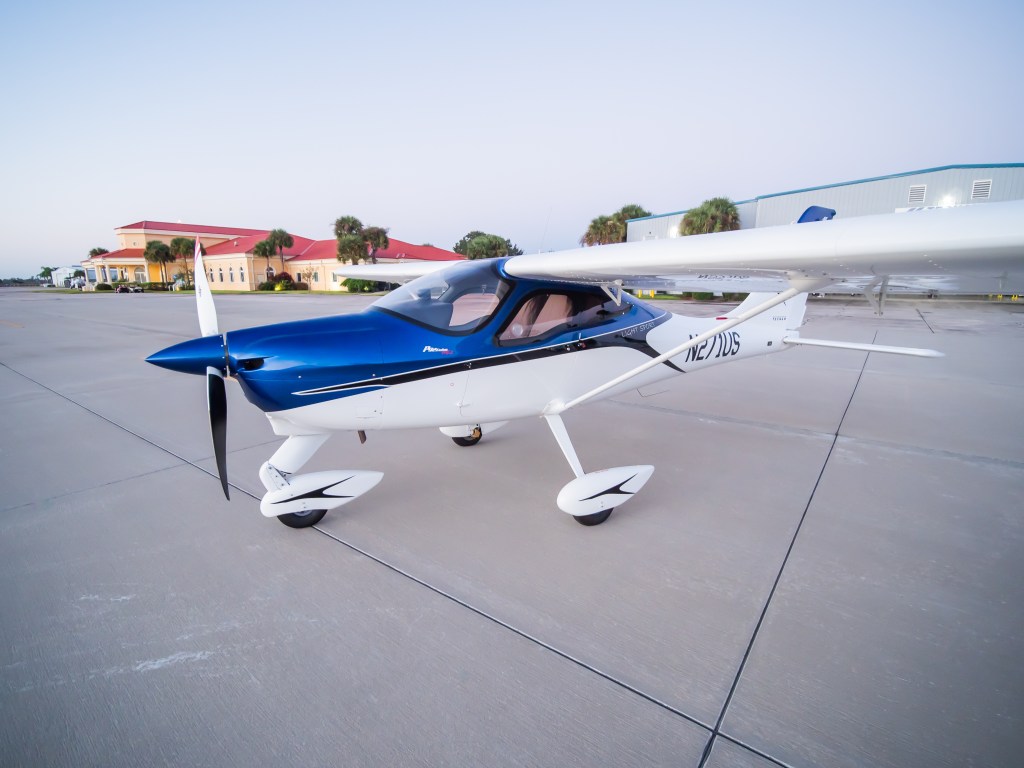
Tecnam has responded by launching its MOSAIK59 product family, a lineup of existing models engineered to meet the new 59-knot stall speed requirement. The family includes updated versions of the Tecnam P92 Echo MKII, Tecnam P2008, Tecnam Astore GT, Tecnam P2010, and the Tecnam P2006T NG, making this one of the most comprehensive MOSAIC-compliant fleets in the industry.
“As the FAA expands the definition and capabilities of LSA aircraft through MOSAIC, Tecnam is arguably the best-positioned manufacturer in the world to take advantage of it,” Pascale said. “We already have the airframes, the data, and the engineering pedigree.”
Pascale highly recommends that everyone stay tuned for EAA AirVenture Oshkosh on July 20-26.
“There will be some big surprises waiting for you at the Tecnam booth,” he said.
Click here to learn more about Tecnam.
FAQ
Which Tecnam aircraft replaces the Cessna 402?
The Tecnam P2012 Traveller is an 11-seat, twin-engine utility aircraft designed specifically as a modern replacement for the Cessna 402 and similar legacy piston twins like the Britten-Norman Islander. Cape Air, the U.S. commuter airline that originally approached Tecnam with the need for a Cessna 402 successor, now operates 30 P2012 Travellers across its network with plans to eventually acquire up to 100.
What does the Tecnam P-Mentor burn per hour?
The Tecnam P-Mentor burns approximately 3.7 U.S. gph (14 liters per hour) using its Rotax 912iSc engine. That’s roughly half the fuel consumption of traditional legacy IFR trainers, which typically burn 8010 gph of 100LL avgas. Tecnam estimates operating costs for the P-Mentor at approximately $65 per hour.
Is Tecnam MOSAIC-compliant?
Yes. Tecnam has launched its MOSAIK59 product family, a lineup of aircraft engineered to meet the FAA’s MOSAIC requirements. MOSAIC replaces the previous 1,320-pound LSA weight limit with performance-based criteria, including a 59-knot clean stall speed threshold. The MOSAIK59 family includes the Tecnam P92 Echo MKII, Tecnam P2008, Tecnam Astore GT, Tecnam P2010, and the Tecnam P2006T NG. Initial MOSAIK59 deliveries are expected to begin in early 2027.
Can the Tecnam P2006T run on unleaded fuel?
Yes. The P2006T is powered by two Rotax 912 engines that can operate on both 100LL avgas and unleaded 92-octane automotive gasoline (mogas), giving operators fuel flexibility and lower operating costs.
Where is Tecnam’s U.S. headquarters?
Tecnam’s North American headquarters and parts distribution center is located in Sebring, Florida, with a growing network of authorized sales directors and service centers across the Americas.

